
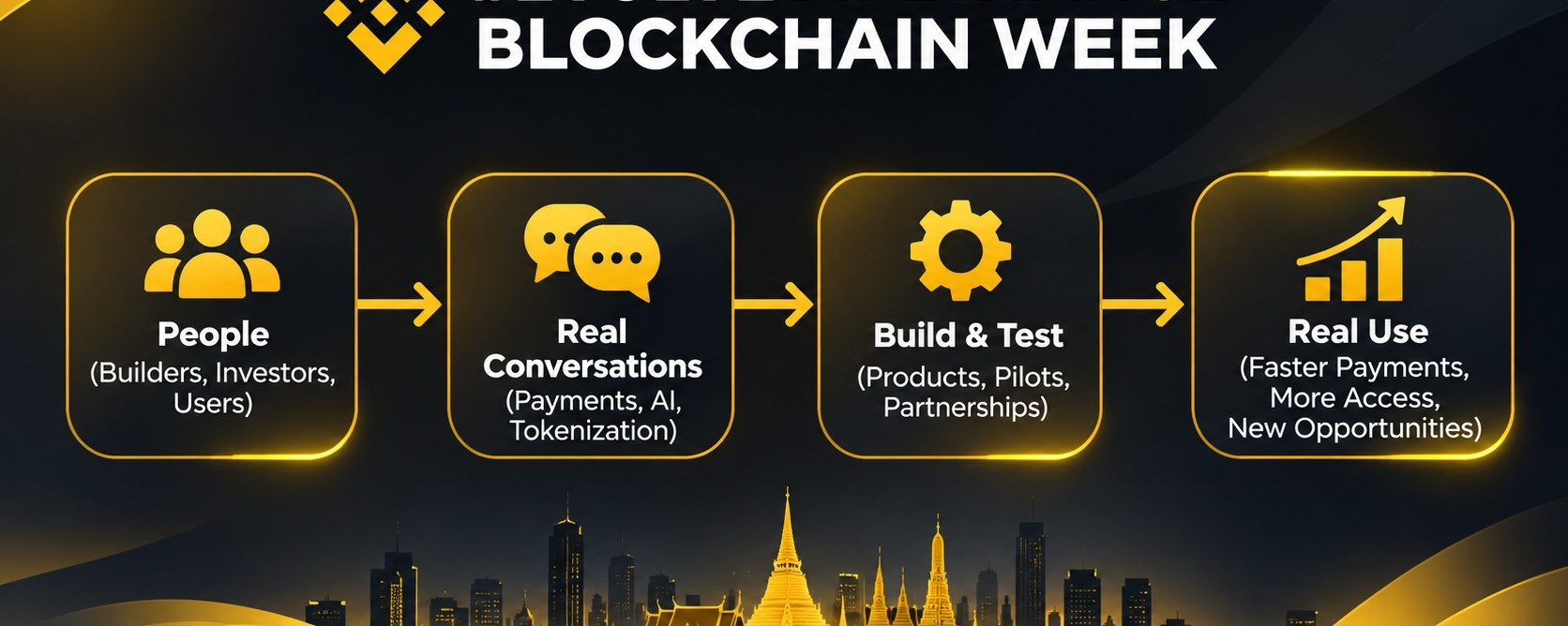


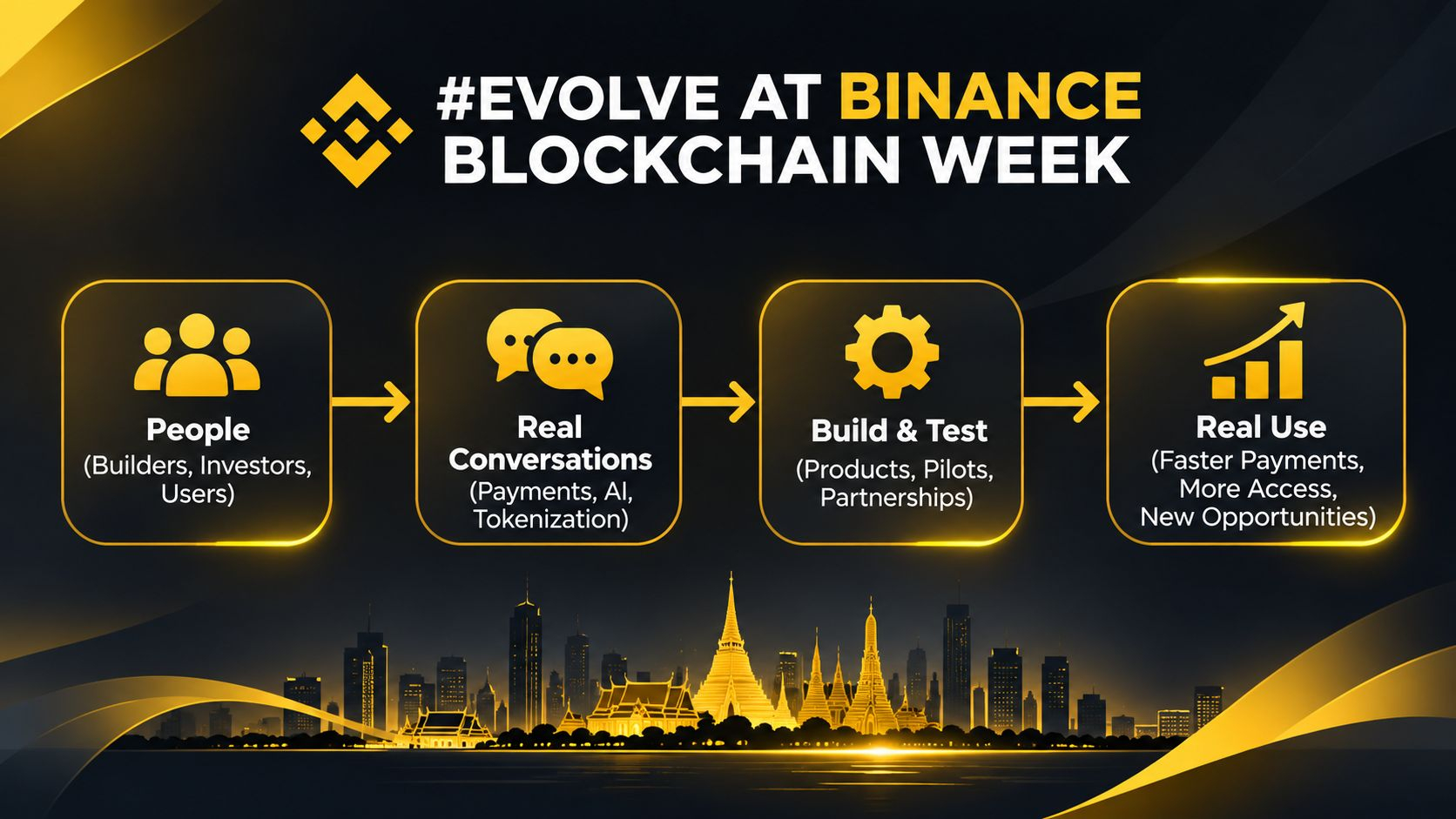
I've seen enough crypto hype to know that not every big announcement deserves my attention. By late 2026, scrolling through new projects and their promises has become almost a daily habit. Everyone seems to be building the next big thing. Big claims. Bigger expectations. Then, a few months later, you barely hear about some of them. I've been caught up in that excitement before, so these days I take my time. When #EvolveAtBinanceBlockchainWeek started catching my eye, I didn't immediately get excited. I wanted to see what was actually happening and whether there was anything worth paying attention to.
What got me curious was the bigger idea behind it. Blockchain keeps moving, and there's always someone promising to change how money works. Fine. But who's actually building something people can use, and who's just good at talking? That's what I want to figure out this time. I'm interested, but I'm not going in with my eyes closed. Because I've learned that a great announcement doesn't mean much if nothing useful comes out of it afterward.
Binance Blockchain Week started back in 2019. The idea was simple enough: bring together developers, founders, investors, businesses, and crypto users so they could meet, share ideas, and talk about what comes next. Since then, the event has been held in places like Singapore, Paris, Istanbul, and Dubai. Now the 2026 edition is heading to Bangkok on November 28–29, with Evolve as its theme. I actually like that word in this context. The crypto industry needs to grow up a bit. There's been plenty of talk about coins and trading, but people still want to know what blockchain can do for them in real life.
And there are problems worth fixing. Sending money to another country can still cost too much and take longer than it should. Traditional financial markets have their own limits, and getting access to certain investments isn't always easy. Blockchain payments, stablecoins, and tokenized assets might help make some of this easier. That's the idea, anyway. Imagine sending money without dealing with several middlemen or waiting around for a payment to clear. Sounds good. But I keep wondering how much of this actually works smoothly for someone who isn't already familiar with crypto.
Let's talk about the problems, too. Crypto transactions can be confusing, fees can change, and one wrong move can cost you real money. Sometimes there's no way to get it back. Stablecoins might make payments easier, but you're still trusting the company behind them and the system keeping them stable. Tokenized assets sound interesting as well, but there are still questions about who owns what, how people can sell those assets, and what happens when something goes wrong. These aren't small details. People need answers before they're going to trust their money to a new system.
Then there's adoption. Honestly, this is where I still have doubts. We've heard promises about bringing millions of people into blockchain for years, but most ordinary people aren't waking up thinking they need a crypto wallet. Why would they? Wallets can be confusing, scams are everywhere, and keeping your funds safe isn't always easy. Regulations are another headache. Big companies can announce partnerships and make impressive presentations, but that doesn't mean people will actually use their products. Getting attention is easy. Getting people to trust something takes time.
I'm also curious about the discussions planned around institutional adoption, AI, payments, and tokenization. Seeing familiar names from traditional finance alongside crypto companies makes it worth paying attention to. But the names aren't what interest me most. I want to know what they're actually building. What's working? What's still broken? And are these products being made for everyday people or mostly for businesses already involved in crypto? Maybe I'm being a little too cautious, but I've seen enough impressive presentations to know that a good-looking announcement can disappear pretty quickly.
As the Bangkok event gets closer, I'm more interested in the conversations happening away from the main stage. What are developers struggling with? What are investors worried about? Are businesses finding real uses for blockchain, or are they still testing things because everyone else is doing it? I'd rather hear honest answers to those questions than sit through another hour of big promises. I don't expect every announcement to be exciting, and I won't pretend every project deserves attention just because it has a famous name behind it. Sometimes one useful idea says more than ten flashy presentations.
Maybe that's why I'm following #EvolveAtBinanceBlockchainWeek with interest but without getting my expectations too high. I've watched crypto change direction plenty of times, and I still wonder how much of the excitement around these events turns into something people can actually use. I'll be watching, listening, and questioning things as they happen. No rush to be impressed. For now, I just want to see what feels real when everyone stops talking and the work begins.