
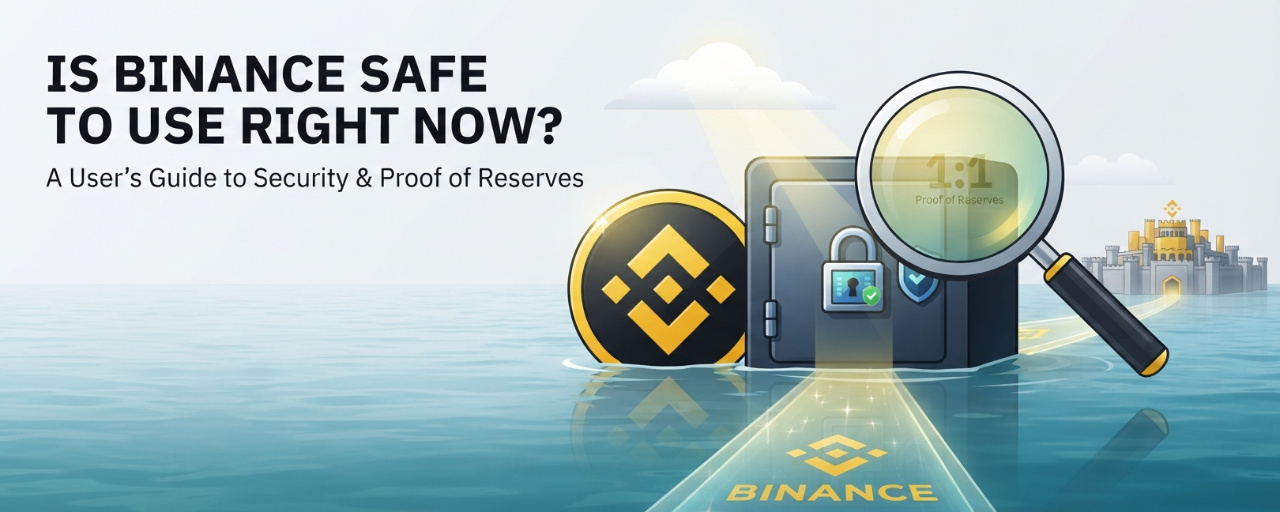
Recent security developments have raised an important question among cryptocurrency users: Is Binance still safe to use?
The short answer is that Binance has completed coverage of the assets affected by its October 29 security incident, published an updated Proof of Reserves report, and continued restoring withdrawal services across supported networks.
As of November 20, Binance's recovery process has made significant progress. However, withdrawals are still being restored in phases, so users should check the availability of their specific asset and network before initiating a transaction.
Let's look at what happened, how Binance responded, and what users can do to independently verify and protect their accounts.
Is Binance Safe to Use Right Now?
Security should never be treated as an absolute guarantee, especially in the cryptocurrency industry.
Following the October 29 incident, Binance implemented emergency security measures, reviewed affected infrastructure, worked with industry partners to freeze assets, and committed company resources to cover the financial impact.
On November 19, Binance confirmed that it had completed coverage of the assets affected by the incident. Its latest Proof of Reserves snapshot, taken on November 12, covers 198 tokens, with a zero-knowledge proof generated on November 14.
Users can independently verify that their eligible assets are backed at a minimum of 1:1.
For users, this represents an important step toward restoring confidence through measurable and independently verifiable information.
What Happened and What Was Affected?
On October 29, 2026, Binance experienced a serious and sophisticated security incident involving unauthorized transactions from its hot wallets.
According to Binance's investigation, attackers exploited unauthorized access to an internal wallet transaction-signing service, enabling transfers across several blockchain networks.
Approximately $6.34 billion in digital assets were impacted.
Binance immediately initiated containment measures, temporarily suspended withdrawals, revoked unauthorized permissions, and coordinated with law enforcement agencies, blockchain intelligence firms, asset issuers, and other industry partners.
Approximately $2.85 billion in assets were frozen or intercepted, according to Binance's initial investigation update.
It is important to distinguish between the assets affected by the incident and customer balances. Binance committed to absorbing the financial impact rather than passing the stolen-fund losses on to its users.
How Swiftly Did Binance Take Action to Help Users?
Binance's response focused on three priorities: protecting users, containing the incident, and restoring normal services safely.
Key actions included:
Emergency containment: Temporarily suspending withdrawals while investigating and securing affected infrastructure.
Asset recovery: Working with blockchain partners, law enforcement, and token issuers to trace and freeze affected assets.
Security improvements: Rebuilding or replacing affected systems, tightening device controls, strengthening wallet-service risk controls, and expanding AI-based behavioural anomaly detection.
Financial coverage: Allocating company resources to cover the full financial impact of the incident.
Service restoration: Gradually reopening withdrawals after completing security and readiness checks.
Binance also committed to publishing further technical findings and engaging independent security firms for additional reviews.
How Are User Funds Protected on Binance?
Binance uses several layers of protection to safeguard customer assets.
1. Proof of Reserves (PoR)
Proof of Reserves allows users to check whether Binance holds sufficient assets to back eligible customer balances.
The latest report covers 198 tokens and incorporates zero-knowledge verification, allowing users to check their own balances without publicly exposing other users' account information.
2. Wallet Security
Binance uses multiple security controls around its wallet infrastructure, transaction authorization, and asset management. Following the October incident, additional controls were introduced to strengthen these systems.
3. Risk Monitoring
Security monitoring and risk-detection systems help identify unusual activity and potential threats. Binance has also announced expanded AI-based behavioural anomaly detection.
These safeguards work together, but no centralized exchange or cryptocurrency platform is completely free from security risks.
What Is SAFU and When Does It Apply?
The Secure Asset Fund for Users (SAFU) is Binance's emergency protection fund, established to provide an additional layer of protection for users in certain extreme circumstances.
SAFU is designed to help protect users when qualifying unexpected security incidents affect the platform.
During the October incident, Binance used a combination of SAFU resources, corporate treasury funds, and other allocated company resources to cover the affected assets.
Binance has also committed to replenishing SAFU to approximately US$1 billion, ensuring that it remains a well-funded emergency reserve.
SAFU is an additional protection mechanism, not an unlimited insurance policy or a guarantee against every type of trading loss, market movement, or individual account compromise.
How Can I Verify My Own Balance Is Backed?
One of the most important advantages of Proof of Reserves is that users do not have to rely entirely on statements from the exchange.
You can check your own balance using Binance's official verification tools.
Follow these steps:
Visit Binance's official Proof of Reserves page.
Select the available balance verification option.
Follow the instructions to access your verification information.
Check the assets and balances included in the report.
Review the verification result to confirm that your eligible assets are backed.
You can also follow Binance's official guide:
How to Verify My Binance Balance
Visit Binance Proof of Reserves
Transparency is most meaningful when users can verify information independently.
What Should I Do to Secure My Own Account?
While exchanges have a responsibility to protect their infrastructure, users also play an important role in account security.
Here are some practical steps:
Enable two-factor authentication (2FA): Use an authenticator app or supported security key.
Activate an Anti-Phishing Code: This helps distinguish genuine Binance emails from fraudulent messages.
Use withdrawal address whitelisting: Restrict withdrawals to trusted addresses where supported.
Review account activity: Regularly check login history, devices, and active sessions.
Protect your API keys: Disable unused keys and restrict permissions for active ones.
Avoid suspicious links: Always access Binance through its official website or application.
Never share your verification codes: Binance employees will never need your password, 2FA codes, or private keys.
If you notice suspicious activity, contact Binance Customer Support immediately through official channels.
Final Thoughts: Stay Informed, Stay Secure
The October 29 incident was a serious reminder that security in the cryptocurrency industry requires continuous investment, transparency, and accountability.
Binance's subsequent actions including completing coverage of the affected assets, publishing updated Proof of Reserves, strengthening security controls, and progressively restoring withdrawals, demonstrate the importance of addressing security incidents with concrete measures.
However, users should remain informed, verify their balances independently, and maintain strong personal security practices.
Don't just trust. Verify.
Your security is a shared responsibility.
#Binance #BinanceSecurity #ProofOfReserves #safu #CryptoSecurity