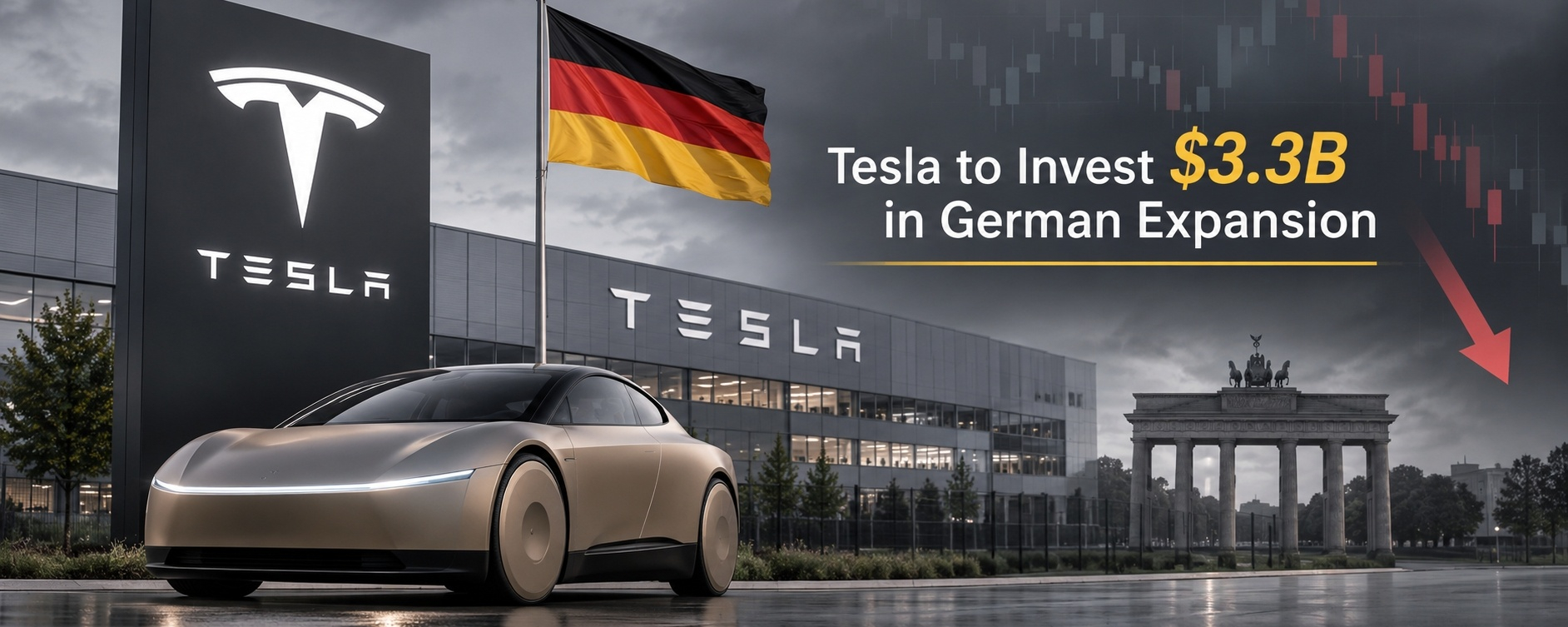

Tesla is making a major move to expand its autonomous vehicle ambitions, announcing a €3 billion ($3.31 billion) investment in its Gigafactory Berlin-Brandenburg in Grünheide, Germany.
The investment will fund a new production facility dedicated to manufacturing its driverless Cybercab robotaxis, with the long-term target of producing up to 1 million vehicles annually.
Here's what we know:
Major German Factory Expansion
Tesla plans to submit its building permit application before the end of 2026, with construction expected to begin in the first half of 2027. Cybercab production is targeted to start in 2029.
The expansion could make Grünheide one of Germany's largest automotive production sites by capacity.
The factory currently produces Model Y vehicles, battery cells, battery packs and electric drivetrains. It has an installed vehicle production capacity exceeding 375,000 units annually and employs approximately 12,600 people.
Tesla also plans to recruit several hundred additional workers for the initial construction and production planning stages.
Cybercab Moves Closer to Mass Production;
The Cybercab is a two-seat autonomous vehicle designed without a steering wheel or pedals. Tesla has already started deploying these vehicles through its robotaxi operations in the United States.
On November 13, Tesla also began inviting selected US customers to purchase Cybercabs for personal use, with an estimated upfront price of $29,990 and a $299 monthly subscription for autonomous driving software.
The company is also looking to supply fleet customers, although most vehicles are expected to remain under Tesla's ownership.
Meanwhile, Tesla plans to wind down Cybertruck production at its Texas factory by the end of summer 2027 to free up manufacturing capacity for Cybercabs.
Tesla Stock Falls Despite the Announcement
Interestingly, the massive investment announcement didn't give Tesla shares a boost.
TSLA dropped approximately 2.5%–3.4% during Monday's trading session, according to reports, as investors weighed the company's expansion plans against the challenges surrounding its autonomous driving business.
JPMorgan has become more constructive on Tesla's robotaxi opportunity, describing the rapid expansion of its robotaxi fleet and the launch of customer Cybercab sales as early validation of its long-term ambitions. However, the bank maintained a Neutral rating.
🇪🇺 Growing Competition in Europe
The investment comes as European automakers face weaker demand, high manufacturing costs and growing competition from Chinese EV manufacturers.
Tesla is also seeing signs of improving demand in Europe. Its Model Y recorded nearly 42,000 registrations in September, while BYD recorded 28,309 registrations, up 111.4% year over year.
The German expansion could strengthen Tesla's European manufacturing presence while positioning the company for a much larger role in autonomous transportation.
My take: Tesla is clearly shifting more resources toward AI, robotics and autonomous mobility rather than traditional vehicle manufacturing. But the real test will be whether Cybercab production can scale successfully and whether regulatory approval and commercial demand can support such ambitious targets.
Can Tesla turn its Cybercab vision into a profitable global business?