
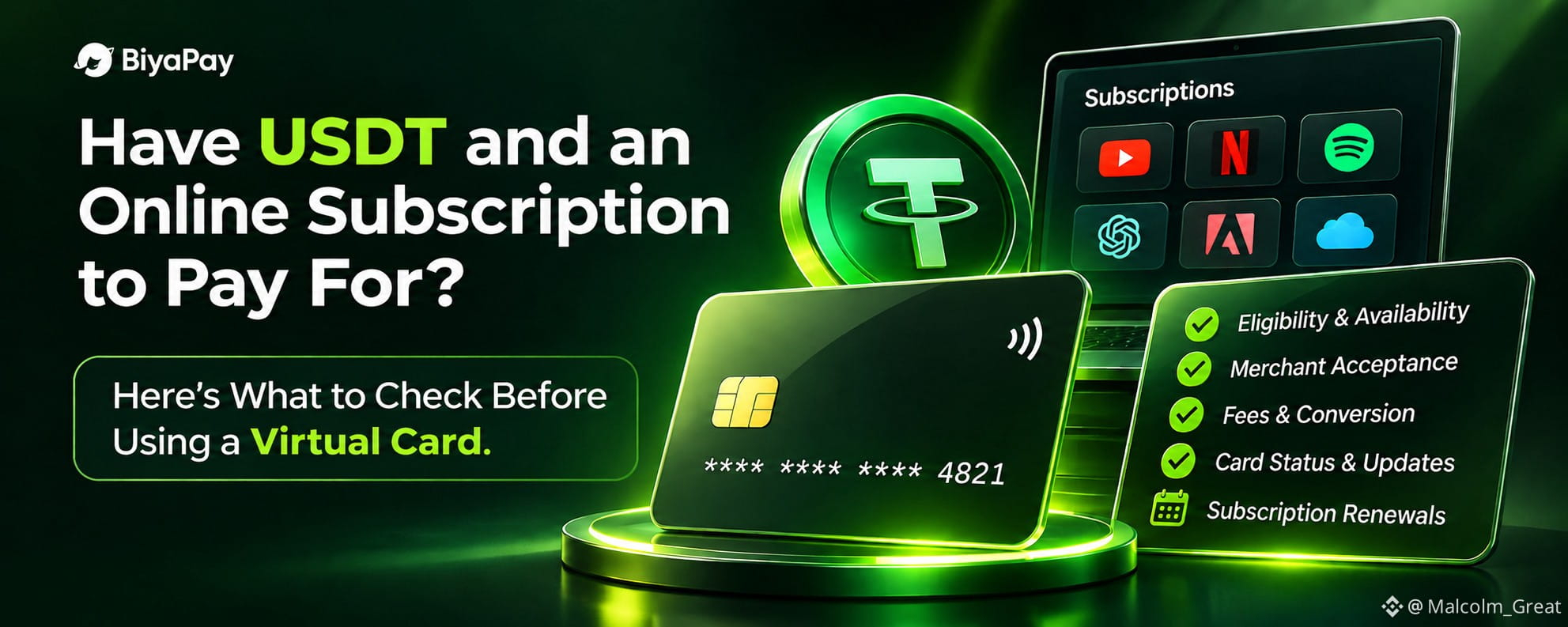

Paying for an online subscription can become frustrating when the service requires an international payment card.
Maybe you need a tool for work, an AI subscription for content creation, cloud storage for your files, or a streaming service you use every month. You have USDT available, but the payment page asks for card details.
That leaves you with a practical question: how can you use the digital assets you already hold to pay for an online service?
Virtual payment cards are one option worth understanding. However, before funding one, there are a few things you should check. A card that works for one online purchase may not necessarily work for every subscription.
Start with the actual payment problem
Online subscriptions often require more than having enough money in your account.
The merchant may check the card type, billing country, currency, payment address and other details before approving a transaction. Some services also have restrictions on which cards they accept.
This can create a problem for people who hold USDT but don't have a conventional card that works with the subscription they want.
Using a virtual card funded through a digital asset platform may offer another payment route. But it's important to understand how the card works before relying on it for recurring payments.
Understand how a USDT-funded virtual card works
A virtual payment card provides card details that can be entered on websites and supported online payment platforms. It doesn't require a physical card to make an online payment.
With a USDT-funded card, the general idea is that you use your digital asset balance to fund the card or its associated payment balance. The platform handles the conversion into the currency used for spending, according to its current payment process.
BiyaPay's official EasyCard announcement describes a virtual payment instrument that supports the conversion of digital currencies, including USDT, into fiat currency for payments.
The announcement also identifies subscription services, international shopping and game payments among its intended use cases.
Its Help Center lists examples of services and platforms in areas such as streaming, software, AI tools and online shopping.
That gives users an idea of the intended use cases, but it should not be interpreted as a guarantee that every merchant will accept the card.
What should you check before applying?
This is where I would slow down and pay attention. Before moving any USDT, consider the following.
1. Check whether the card is available to you
Don't assume that a payment card is available in every country simply because the provider describes it as a global payment product.
Check the application page and the current card terms for your country or region. Confirm that you can complete the required identity verification and that the card range currently offered to your account is available for use.
For users in Nigeria, this is particularly important. Check the current eligibility information in your own account and make sure your intended use complies with applicable local requirements.
If the application page does not clearly confirm your eligibility, contact the provider before funding anything.
2. Confirm that your subscription accepts the card
Make a distinction between a platform being listed as a supported use case and your particular subscription payment being approved.
For example, a virtual card may be intended for online software or AI subscriptions, but the merchant can still apply its own payment rules.
Check the payment methods accepted by the subscription provider. Pay attention to its billing-country requirements, currency and any restrictions on prepaid or virtual cards.
If you're unsure, ask the merchant or card provider for clarification before relying on the card for an important subscription.
3. Understand all the fees
The amount you spend on a subscription may not be the only cost involved.
Depending on the provider's current terms, you may need to account for card issuance, funding, currency conversion or transaction charges.
For example, imagine a subscription costs $20 per month. You should check how much USDT is required to fund the card with enough USD to cover that payment, including any applicable charges.
Don't calculate the cost using an assumed one-to-one USDT-to-USD conversion. Review the actual conversion quote and fee information displayed before confirming.
Also check whether a failed payment or refund could involve additional charges.
4. Check the card's current status and terms
Card availability and card number ranges can change when a provider's upstream payment arrangements change.
This is worth checking rather than relying on old tutorials, screenshots or recommendations from other users.
BiyaPay published an announcement on October 23, 2026, stating that EasyCards beginning with 400, 436 and 472 had been discontinued following upstream bank adjustments. The announcement said affected balances and corresponding top-up fees had been refunded to users' Funding Accounts.
This is a useful reminder to check the current card options displayed in your account before applying. An older card tutorial may no longer describe the available options.
5. Plan for automatic subscription renewals
Subscriptions often renew automatically.
If your card balance is insufficient when the next billing date arrives, the payment may fail. Depending on the merchant's policy, your subscription could be interrupted or you may need to update your payment method.
Keep track of renewal dates and maintain enough available balance for the upcoming charge, including any applicable fees.
If you no longer need a subscription, review the merchant's cancellation process. Removing a card from a payment page may not automatically cancel the subscription itself.
6. Protect your card details
A virtual card still contains sensitive payment information.
Avoid sharing your full card number, expiry date, security code or account credentials in public posts, screenshots or private messages with strangers.
Only access the provider through its verified official website or application. Be cautious of people offering to activate cards, process payments or solve account problems in exchange for your login details.
If you notice an unfamiliar transaction, contact the provider through its official support channels.
Where does BiyaPay EasyCard fit into this?
For someone who already holds USDT and needs to pay for eligible online services, BiyaPay's EasyCard is one option to investigate.
BiyaPay describes it as a virtual payment card designed for online payments, with digital assets such as USDT used as part of its funding and conversion process.
Its official materials mention subscription-related use cases, including services in streaming, software and AI tools.
The important part is to check the current application instructions, available card range, fees and merchant compatibility before making a decision.
You can find examples of its stated use cases in the official virtual card Help Center. Those examples explain the intended payment scenarios; they don't guarantee approval by every merchant.
My take
If you already hold USDT and regularly pay for online subscriptions, understanding how a virtual card works could help you assess another way to manage those payments.
But I wouldn't move a large amount of USDT into any card before checking the details.
Start by confirming eligibility, reviewing the full cost, checking whether your intended merchant accepts the card and understanding how recurring payments work. If everything checks out, you can decide whether the option makes sense for your needs.
The goal is to make an informed payment decision and avoid unexpected charges or interrupted subscriptions.
Disclaimer: This article is for educational and informational purposes only. It is not financial, legal or payment advice. Card availability, eligibility, supported merchants, fees and payment conditions may change. A listed merchant or use case does not guarantee successful payment. Always review the provider's current terms, confirm local eligibility and check the subscription merchant's payment requirements before funding a card.
#BiyaPay #EasyCard #USDT #VirtualCard #OnlineSubscriptions #CryptoPayments #DigitalPayments #CryptoEducation