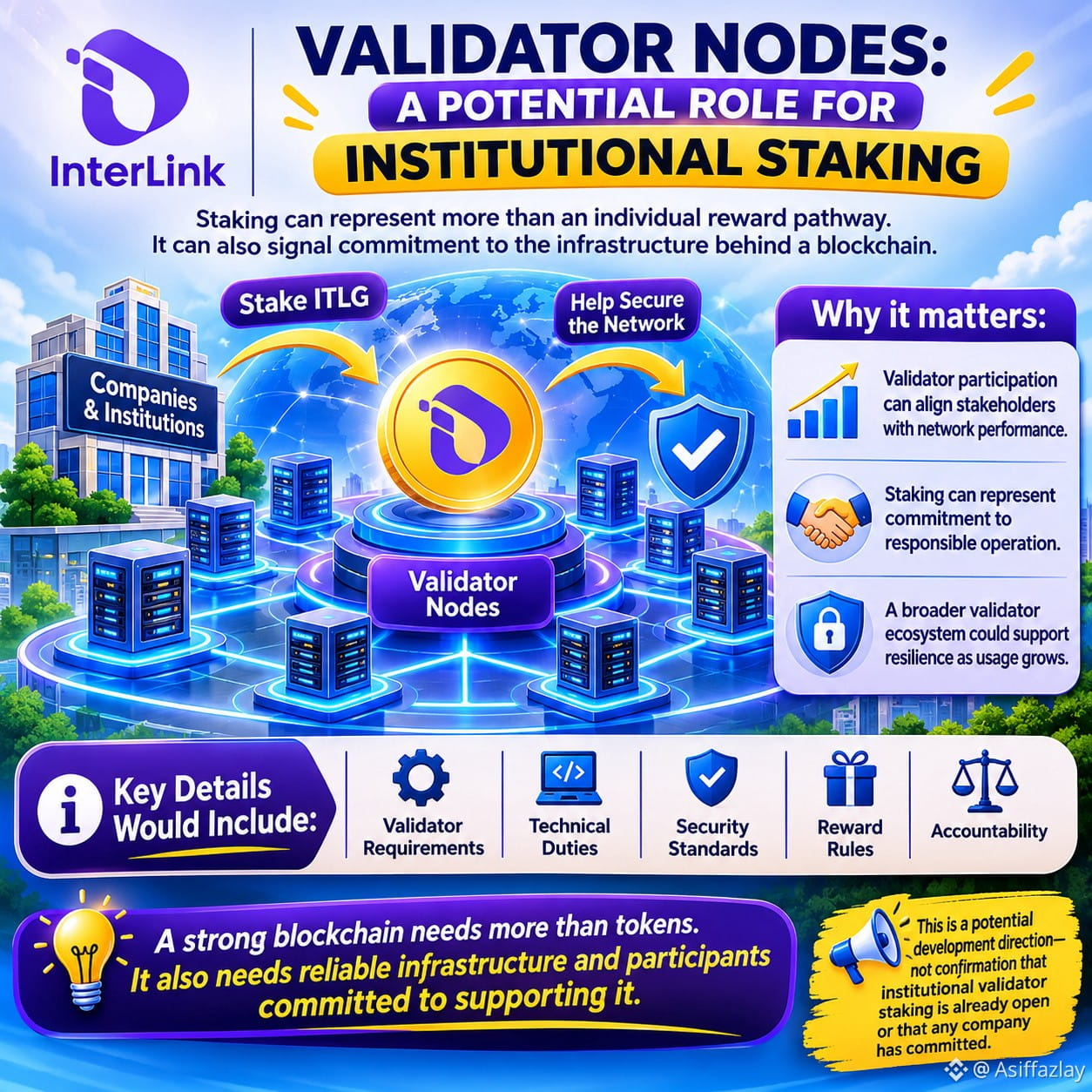
𝗩𝗔𝗟𝗜𝗗𝗔𝗧𝗢𝗥 𝗡𝗢𝗗𝗘𝗦: 𝗔 𝗣𝗢𝗧𝗘𝗡𝗧𝗜𝗔𝗟 𝗥𝗢𝗟𝗘 𝗙𝗢𝗥 𝗜𝗡𝗦𝗧𝗜𝗧𝗨𝗧𝗜𝗢𝗡𝗔𝗟 𝗦𝗧𝗔𝗞𝗜𝗡𝗚
Staking can represent more than an individual reward pathway. It can also signal commitment to the infrastructure behind a blockchain.
One potential direction for InterLink is for companies and institutions to stake ITLG to operate Validator Nodes. Validators would participate in transaction validation and help strengthen network security and reliability.
𝗪𝗵𝘆 𝗶𝘁 𝗺𝗮𝘁𝘁𝗲𝗿𝘀:
• Validator participation can align stakeholders with network performance.
• Staking can represent commitment to responsible operation.
• A broader validator ecosystem could support resilience as usage grows.
This is a potential development direction—not confirmation that institutional validator staking is already open or that any company has committed.
Key details would include validator requirements, technical duties, security standards, reward rules, and accountability.
A strong blockchain needs more than tokens. It also needs reliable infrastructure and participants committed to supporting it.
#InterLink #ITLG #ITL