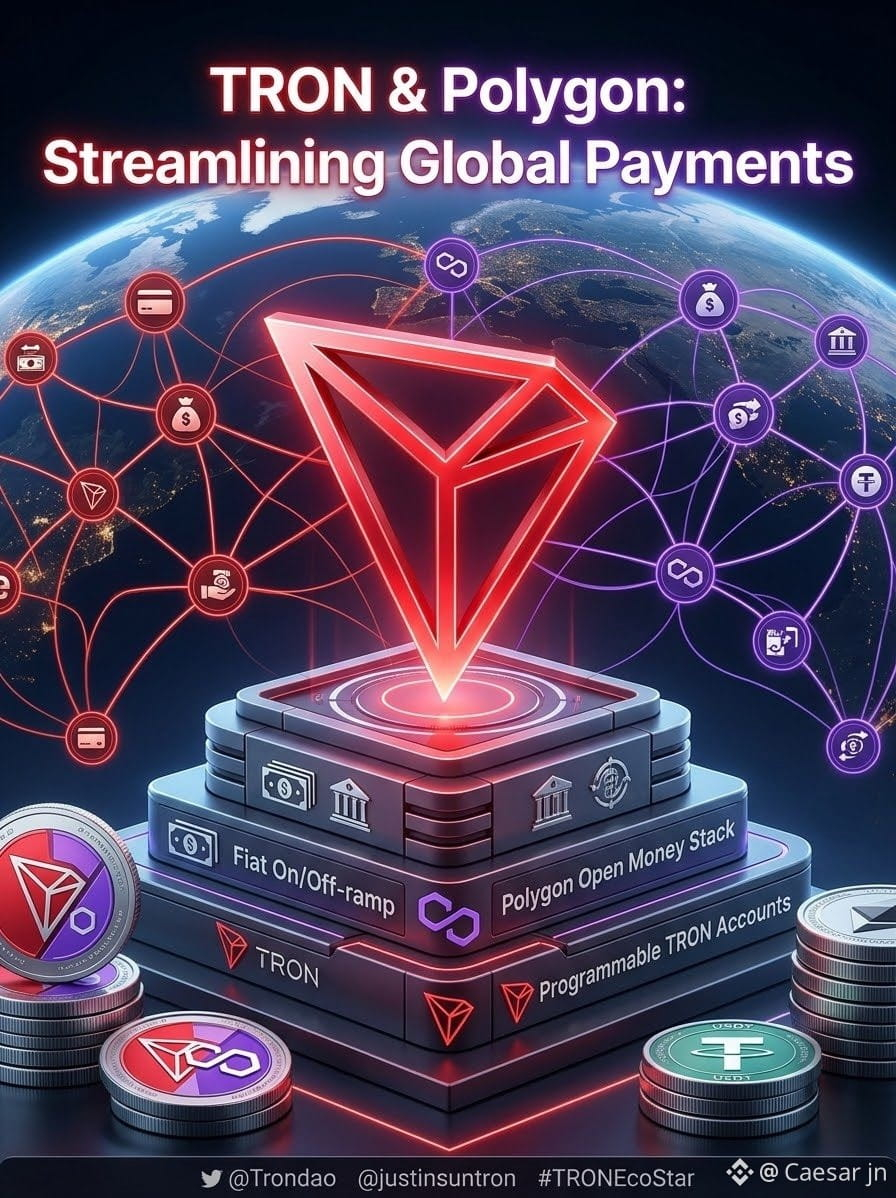
𝗧𝗥𝗢𝗡 𝗔𝗡𝗗 𝗣𝗢𝗟𝗬𝗚𝗢𝗡 𝗔𝗥𝗘 𝗘𝗫𝗣𝗔𝗡𝗗𝗜𝗡𝗚 𝗧𝗛𝗘 𝗙𝗨𝗧𝗨𝗥𝗘 𝗢𝗙 𝗗𝗜𝗚𝗜𝗧𝗔𝗟 𝗣𝗔𝗬𝗠𝗘𝗡𝗧𝗦.
One of the most important ecosystem integrations announced in October connects TRON to Polygon’s Open Money Stack.
The integration is designed to help fintech companies, payment providers, and remittance platforms connect traditional financial rails with TRON’s stablecoin ecosystem.
What makes this interesting is the infrastructure being brought together.
Businesses can access:
• Regulated fiat on-ramps and off-ramps.
• Programmable TRON accounts.
• Cross-chain stablecoin movement.
• Payment routing between supported blockchain networks.
• Connections between traditional banking systems and on-chain liquidity.
Consider a practical example.
A remittance provider could receive funds through traditional payment channels and deliver USDT to a recipient’s TRON wallet without independently assembling every component of the infrastructure.
This creates opportunities for more streamlined payment experiences.
For TRON, the integration provides another pathway for bringing its substantial USDT liquidity closer to businesses operating across traditional and decentralized financial systems.
The long-term opportunity is making blockchain payments more accessible and practical.
This is the kind of infrastructure development that deserves attention.
@TRON DAO @Justin Sun孙宇晨 #TRONEcoStar