

In October 2026, at least four Bitcoin addresses that had remained inactive for 13 to over 16 years resumed moving cryptocurrency. According to Galaxy Research, owners transferred a total of 555.27 BTC, which were valued at approximately $44.97 million at the time of the transactions.
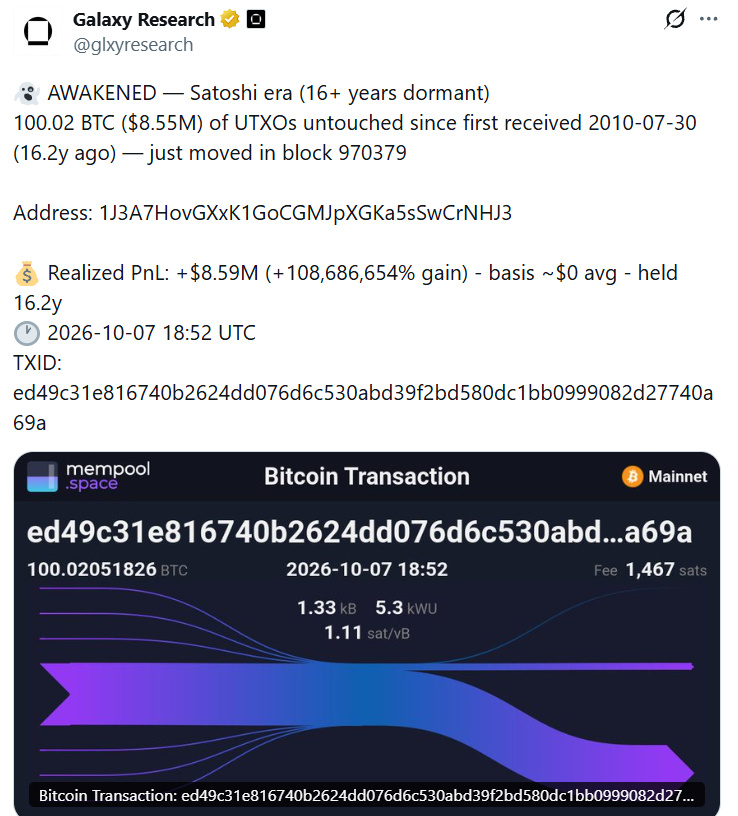
On October 7, the oldest of the activated addresses was recorded. The owner moved 100.02 BTC, which had been received back on July 30, 2010. The coins had remained dormant for about 16.2 years, and their value at the time of the transaction was $8.55 million. According to Galaxy Research, the realized profit reached $8.59 million, with a return of 108,686,654%. The cryptocurrency exchange Kraken became the recipient of the funds.
On that same day, another address moved 28.46 BTC valued at $2.43 million. The coins had been stored since June 12, 2011, and their initial average cost was about $15 per 1 BTC. Analysts estimated the owner's profit at $2.44 million, which corresponds to an investment value growth of 582,198%.
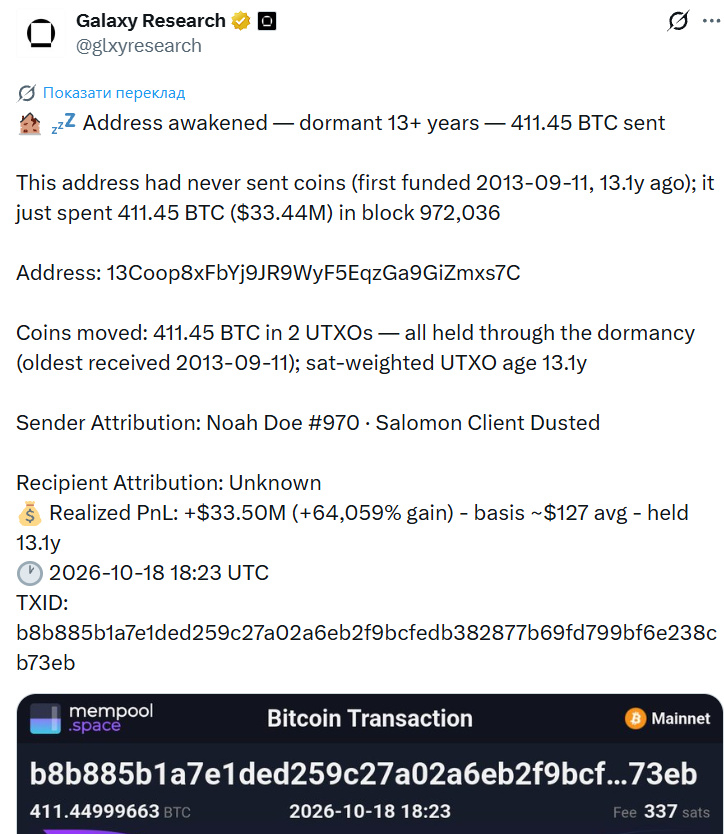
On October 18, another address that had not made outbound transactions for over 13 years transferred 411.45 BTC. At the time of the transfer, this amount was worth approximately $33.44 million. The average cost of the coins was roughly $127 per 1 BTC, and the realized profit, according to analysts' estimates, was $33.5 million. The recipient of the funds has not been identified.
On October 21, Galaxy Research reported yet another case of renewed activity. An address moved 5.34 BTC valued at approximately $443,000. The coins had arrived in the wallet on August 2, 2011, and had been stored there for about 15.2 years. The initial average cost was approximately $12 per Bitcoin, and the realized profit was estimated at $443,000.
Recall that in August, "dormant" Bitcoin wallets moved over 800 BTC, and in September, over 2,184 BTC. According to Galaxy Research estimates, the total realized profit of the owners of the latter coins was around $178 million.
Meanwhile, the number of Bitcoin whales recently reached an absolute maximum — large holders are increasing their positions during the recovery.