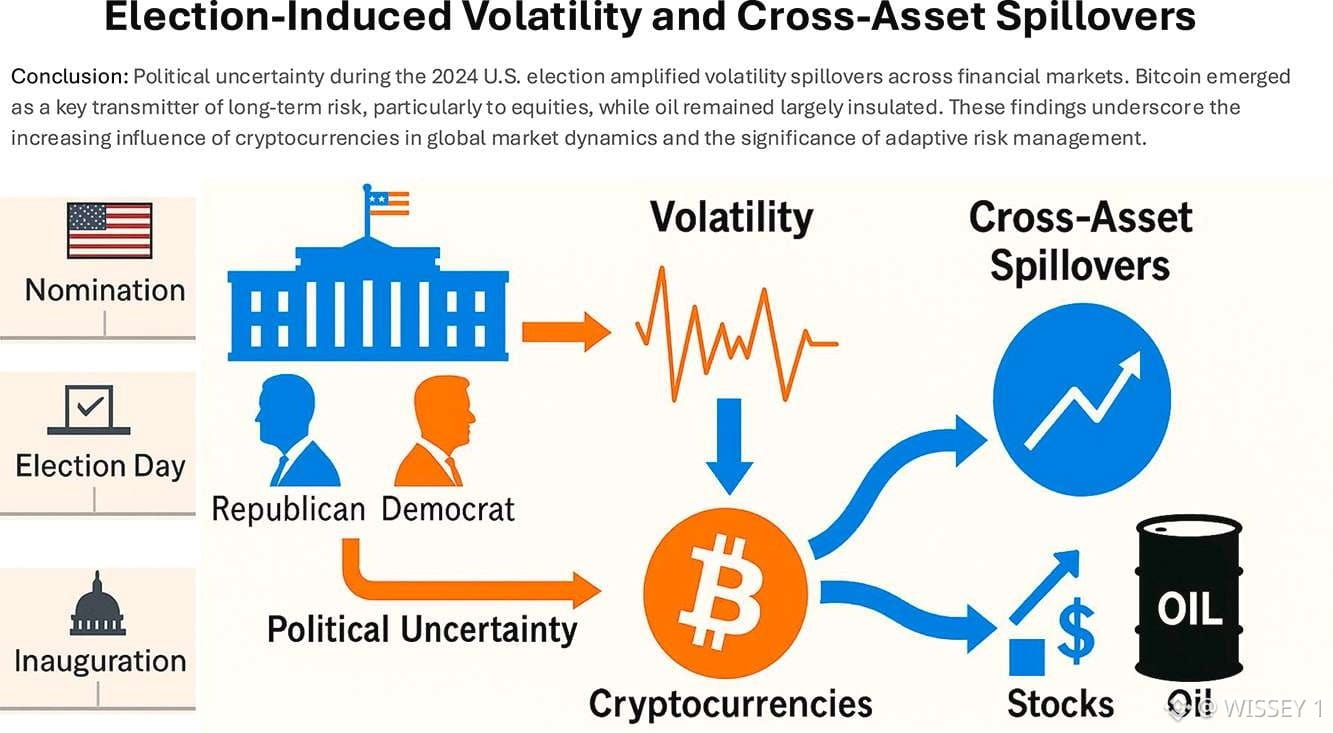
BTC has two powerful forces competing for its attention.
One operates in Washington, where politicians and regulators shape the industry's future.
The other operates on Wall Street, where institutional investors, portfolio managers and macroeconomic conditions influence the flow of capital.
Both are important. But which one has the impact on $BTC price?
The Washington Effect: Politics and Regulation.
Political decisions can change how the market values BTC and the wider crypto industry.
When Washington moves towards clearer crypto regulations, it can improve institutional confidence and strengthen the industry's long-term outlook.
When legislation fails or regulatory uncertainty increases, sentiment can quickly turn negative.
We saw an example in September 2026 when the U.S. Senate failed to advance the CLARITY Act. The development dealt a blow to hopes for comprehensive crypto market-structure legislation, and BTC fell alongside other crypto-related assets.
Washington can change the rules of the game but political headlines don't always translate into sustained buying or selling.
The Wall Street Effect: Liquidity and Institutional Flows.
This is where things get interesting.
BTC has become increasingly connected to traditional financial markets, particularly since institutional participation expanded.
BTC daily returns had a positive correlation of ~0.30 with both the S&P 500 and Nasdaq-100 during 2023–April 2025.
This means when investors become uncomfortable with risk, they may reduce exposure across several asset classes, including equities and BTC.
Other factors:
Interest rates
ETF flows
Portfolio rebalancing
Market liquidity
Who Moves BTC More?
My take is that the answer depends on the timeframe.
Washington has the power to change BTC's long-term regulatory environment.
Wall Street and broader macroeconomic conditions can exert a more persistent influence on daily market sentiment and capital flows.
#BTC Price Analysis# #Macro Insights#