

Open a Binance account with the code THEBESTCODE and your Spot trades are charged a flat 20% less in trading fees for as long as the account exists. Next to that, Binance's welcome bonus offers up to $19,800 for eligible users through a ladder of tasks. Both start from the link below.
👉 Sign up on Binance with a bonus
The bonus page looks short. A big number, a table, a timer. Yet nearly every word on it hides a condition, and most disappointment with the offer comes from reading one of those words the way it sounds instead of the way Binance defines it. This article takes the terms one by one, shows what each costs you in practice, and points out where new users usually misread them.
Why add the code to a new account first?
The terms below are about the bonus. The code is the part with no terms attached, which is why it comes first:
Lower Spot fees: Every Spot fill, buy or sell, is charged 0.080% instead of the standard 0.100%.
Same welcome program: Every code leads into the same task-based bonus, worth up to $19,800 for eligible users, so choosing this one costs nothing there.
Active from the first order: There is no waiting period and no task to complete before the lower rate applies.
Nothing to maintain: No subscription, no minimum balance and no renewal date. The rate stays with the account.
One limit to know up front: THEBESTCODE covers Spot. Futures fees are charged at the regular rate on an account opened with it.
Where do you enter the code when you register?
Open the Binance sign-up page: Our link loads the registration form with THEBESTCODE prefilled. On a phone, the app's first screen has a Sign Up button.
Enter an email address or phone number: Use one you can reach right now, because a six-digit verification code arrives within a minute.
Find the code line: Some versions hide it behind a little arrow under the contact field. Expand it and confirm it shows the code. Blank? Type it yourself, all capitals, nothing extra.
Tap Register: Press it once the code line is filled. Next comes the six digits from your inbox or SMS and a password unique to this account.
Complete identity verification: A photo ID plus a selfie. Trading and the welcome tasks both depend on it.
Ten seconds on step three decides the fee rate for the life of the account.
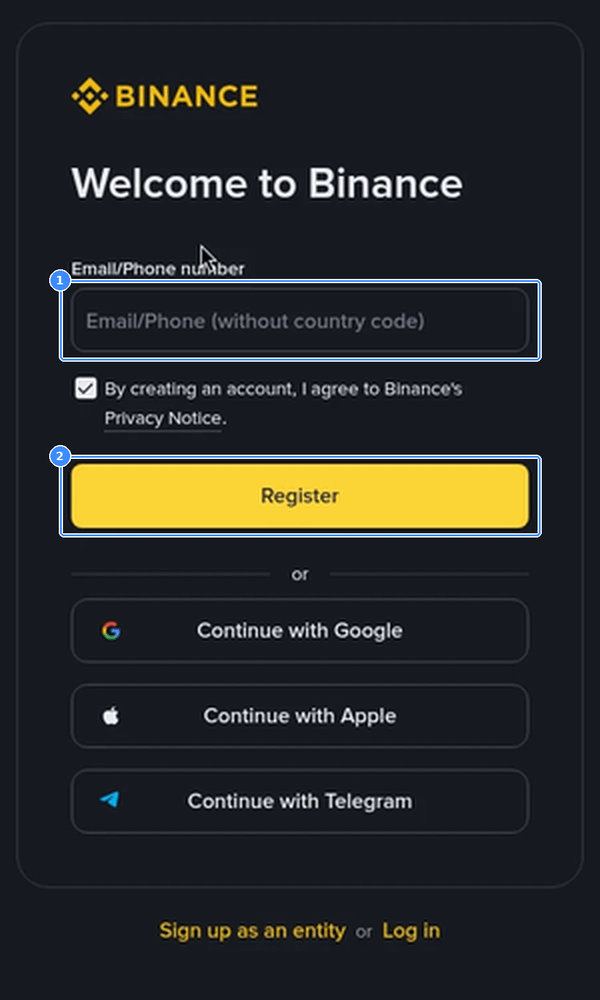
The form above shows the collapsed state. If you don't see a code line at all, look for the arrow before you tap the yellow button.
What does up to $19,800 really mean?
It is a ceiling, added up across every tier of the task table. Nobody receives it as one lump sum for signing up. To collect the full figure you would have to complete the top tier, which on recent versions of the page asks for a net deposit in the tens of thousands of dollars and trading volume in the tens of millions inside a month.
For a typical new account the realistic part of the offer sits in the first one to three tiers. Read the number as the size of the program, not as the size of your reward.
Who counts as one of the eligible users?
This phrase does more work than any other on the page. On most versions of the campaign, eligibility depends on a few things at once:
A genuinely new account: Accounts registered before the campaign, or reopened by someone who already had one, usually don't qualify.
Completed verification: Tasks tend to stay locked until identity verification is approved.
Your country of residence: Some regions see a different program or none at all, because local rules limit what Binance can offer there.
One person, one account: Duplicate accounts and sub-accounts are excluded, and Binance can withdraw rewards it finds were claimed through them.
The practical test is simple. After verification, open the task page on your own account. The tasks you see there are the ones you are eligible for, whatever any screenshot elsewhere shows.
What is a net deposit?
Net deposit is money in minus money out during the task period. Deposit $500 and withdraw $300 a few days later, and your net deposit is $200, not $500.
Two things trip people up here. First, internal transfers between your own Binance wallets are not deposits, so moving USDT from Funding to Spot adds nothing. Second, not every funding route is always counted the same way. The task rules list which methods count, and that list is worth a look before you send money in a way you wouldn't normally use.
A withdrawal made before the task period ends can also pull you back under a tier you had already reached. If you plan to move funds out, do it after the period closes.
How is trading volume counted?
Volume is the total value of your filled orders. A $1,000 buy adds $1,000. Selling the same coins later adds roughly another $1,000. So one round trip of $1,000 counts close to $2,000 toward a volume target.
Orders that never fill add nothing, and a cancelled limit order is invisible to the counter. Which markets count can differ between tasks: some tiers count Spot only, others include Futures or Convert. The wording next to each task says which.
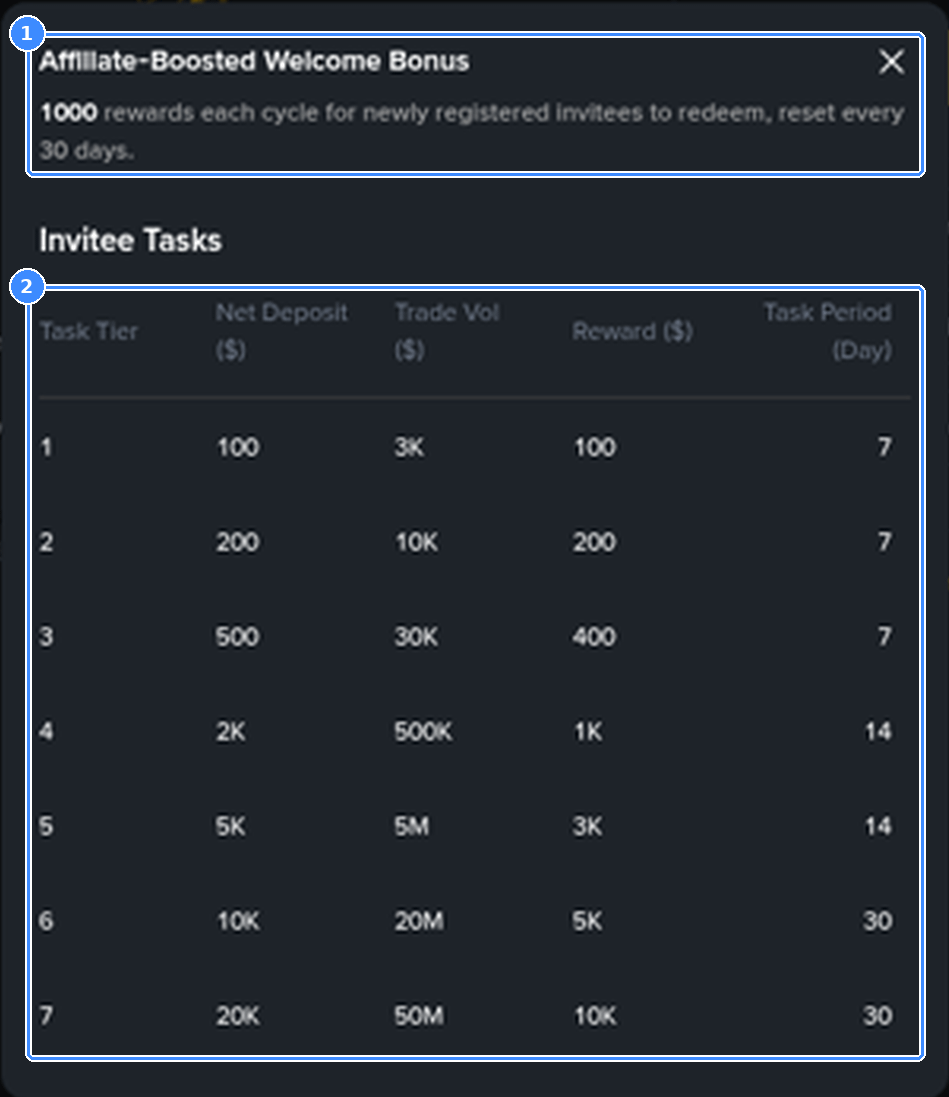
The table above is an older capture. Tiers, deposits, volumes and periods on your account may differ, so read the version Binance shows you after verification.
When does the task period start and end?
Each tier comes with a number of days, seven for the early tiers in the example table and up to thirty for the top ones. The clock usually starts from registration or from the moment the task is activated, depending on how the campaign is written. It does not start from your first deposit.
That detail matters if you register on a Monday and only fund the account the following week. A seven-day tier may already be half gone. If you want time to finish a task, register when you are ready to fund and trade, not days before.
What arrives when you finish a tier?
Rewards are typically issued as vouchers rather than cash in your balance. Depending on the campaign that can mean trading fee vouchers, token vouchers or other credits, each with its own use rules and an expiry date.
Vouchers appear in the Rewards Hub on your profile. Some must be activated by hand before they can be used, and an unclaimed voucher just lapses when its date passes. Check the Rewards Hub after each tier you finish so nothing expires unnoticed.
What do the volume terms cost you in fees?
This is the term nobody prints on the bonus page. Volume is produced by trading, and trading is charged a fee on every fill. Spot fees for each volume target in the sample table, regular rate first, code rate second:
$3,000 of volume: $3.00 at 0.100%, or $2.40 at 0.080%.
$10,000 of volume: $10.00 at the regular rate, $8.00 with the code.
$30,000 of volume: $30.00 becomes $24.00.
$500,000 of volume: $500 against $400, which is real money even at the lower rate.
For the first tiers the fee cost is small next to the listed rewards, provided that volume matches what you'd trade regardless. The danger starts higher up. Chasing a tier you wouldn't reach through normal trading means wider spreads crossed more often, rushed entries and more exposure to price moves, and together those easily outweigh any voucher. Pick a tier that fits your habits and let the rest go.
If you'd rather follow a day-by-day routine for the early tiers, this seven-day plan for a new Binance account lays one out.
Whatever tier you aim for, the 20% applies to every one of those fills.
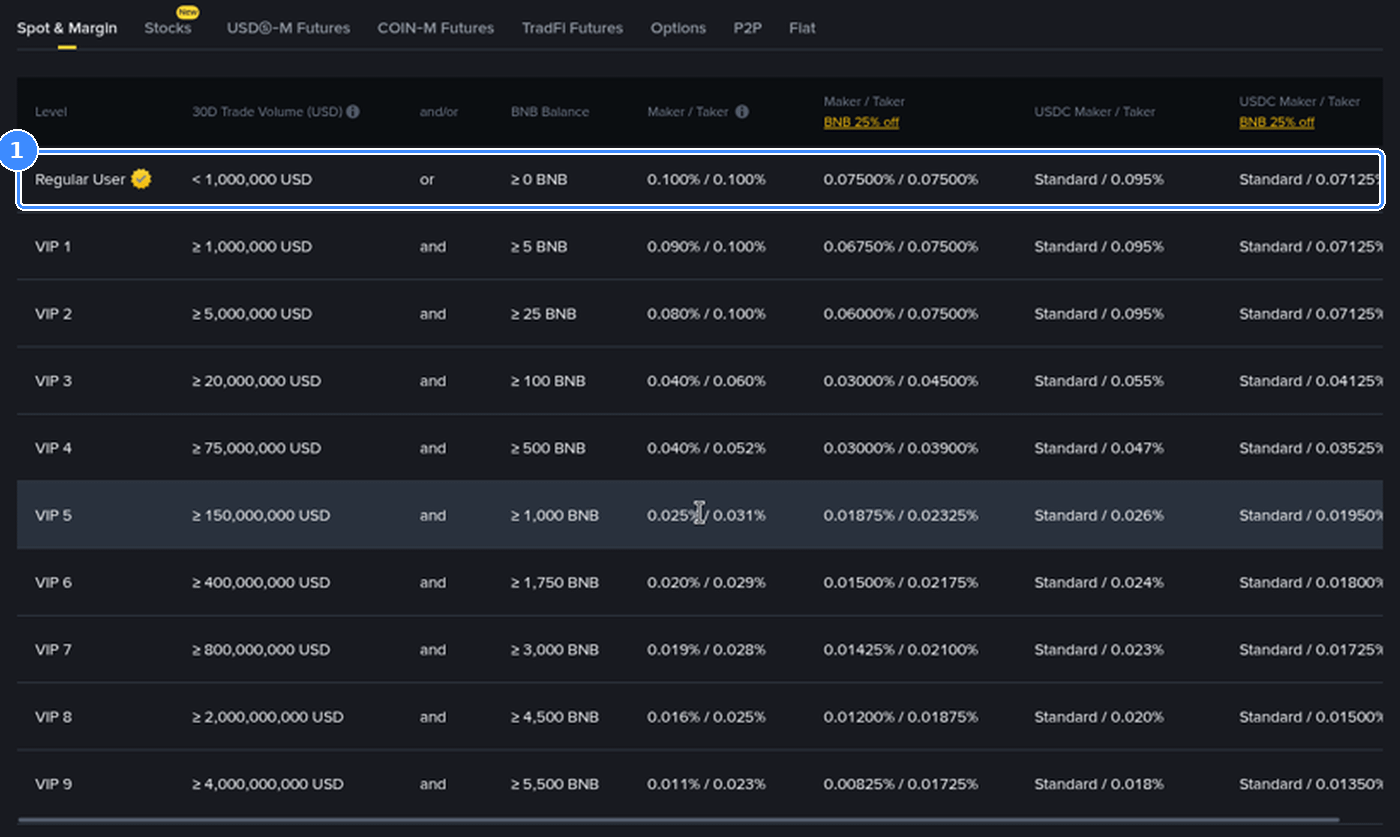
The Regular User row is where a new account starts. The 0.100% maker and taker rate shown there is the one the code takes 20% off.
What do the terms leave out?
The bonus page is silent on the part of the account that lasts longest. The task window closes after a few weeks. The fee rate set at registration keeps applying long after the last voucher has been used or has expired.
Put a number on it. An account trading $8,000 of Spot volume a month would be charged $96 a year at 0.100% and $76.80 at 0.080%. At $40,000 a month the figures are $480 and $384. Those numbers describe fees alone and don't predict whether any trade makes or loses money.
The page also says nothing about spreads, slippage or deposit charges from your bank or card provider. The code doesn't touch those either. It changes the trading fee line and nothing else.
For more on how the 20% on Spot works and what it doesn't cover, see these facts about 20% lower Spot fees at sign-up.
Doubts that come up before people register
I already have a Binance account: Existing accounts keep the setup they were created with, and Binance permits a single account for each verified individual. A partner or adult child opening a separate account of their own is free to use the code there.
Is it safe to enter a code: Yes. The code line is part of the registration form Binance itself built, and filling it hands nobody control over your login, money or data. Stick to the official website or app, and keep passwords and 2FA numbers to yourself.
Can I add it later: No. Whatever the code line held at the moment you pressed Register is fixed into the account. Left blank, it stays blank.
Open your account with the code in place
Every term on the welcome page comes with a condition: eligibility, net deposit, volume, a deadline and an expiry date. The 20% on Spot fees comes with one condition only, and it is met in the first minute. Open the sign-up page, check that the code line reads THEBESTCODE, then finish the form.
👉 Register with THEBESTCODE and every Spot trade on the account is charged 20% less in fees.
Tier rules move between campaigns, so look over the current Binance welcome bonus rules before you count on a particular reward.
FAQ
Is the lower fee tied to completing any welcome task?
No. The fee rate and the tasks are separate. You can ignore every task and the 20% still applies to each Spot trade.
Does paying fees in BNB change anything?
BNB fee settlement is a separate toggle with its own line in the fee schedule. Once it's on, open a recent fill in trade history and compare the fee with the order value.
What if my task page shows different tiers from the ones in this article?
Go by your own page. Campaigns are updated, and the tiers on your account after verification are the ones that apply to you.
Disclosure: this article includes a Binance sign-up link with the code THEBESTCODE. Crypto prices swing in both directions and trades can lose money. Nothing here is financial advice.