


🚨
📅 October 21, 2026
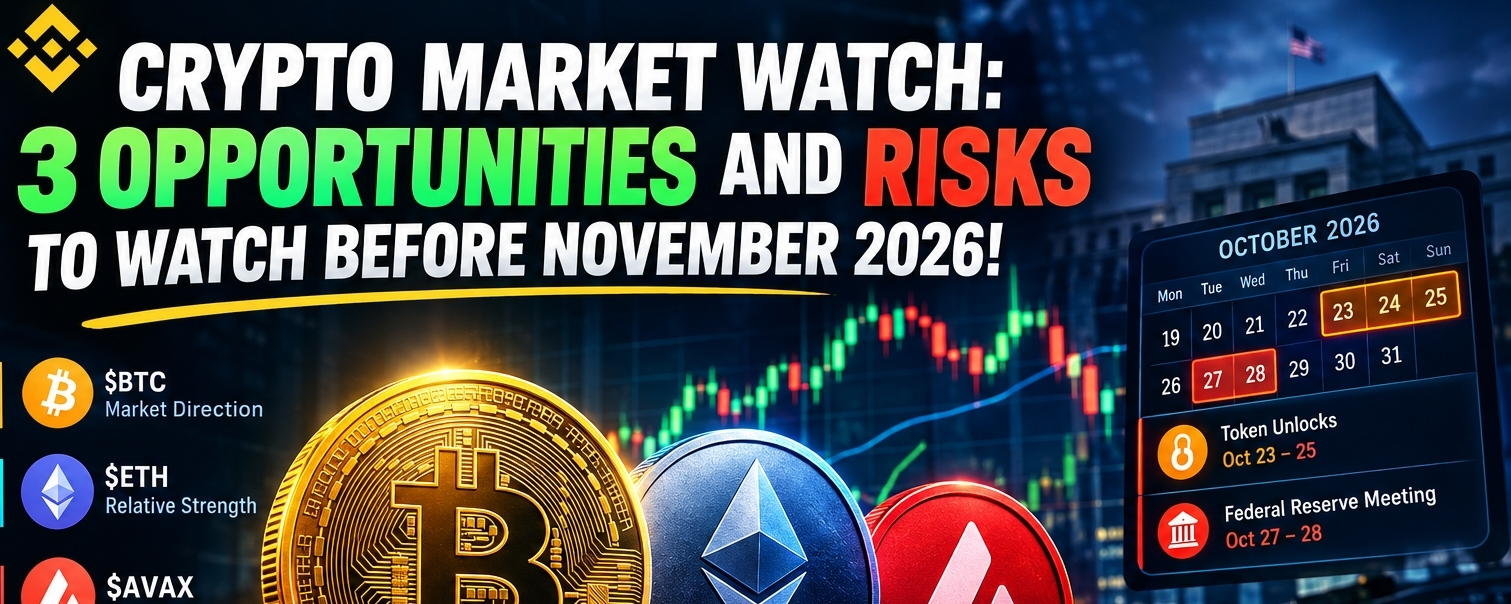
The crypto market is heading toward an important period as October comes to an end. Bitcoin ($BTC), Ethereum ($ETH), and major altcoins could experience increased volatility as traders monitor market momentum, upcoming token unlocks, and the next US Federal Reserve meeting.
But remember: a price rebound does not automatically mean a new bull run has started!
🟠 1. Bitcoin ($BTC): Can the Recovery Continue?
Bitcoin remains the most important cryptocurrency to watch.
Bullish signals to monitor:
- A higher low on the 4-hour chart.
- Increasing buying volume.
- A confirmed resistance breakout.
- A successful retest of the breakout level.
Bearish warning signs:
- A failed breakout.
- Increasing selling pressure.
- A breakdown below recent support.
My approach is simple: wait for confirmation instead of chasing green candles. If the market structure is unclear, NO TRADE may be the smartest decision.
🔵 2. Ethereum ($ETH): Watch for Relative Strength
Ethereum could offer interesting opportunities if it begins outperforming Bitcoin.
Keep an eye on the ETH/BTC chart, trading volume, and whether ETH maintains its strength during market pullbacks.
A rising price alone is not enough. Stronger relative performance and sustained buying can provide additional evidence, but neither guarantees future gains.
🔺 3. Avalanche ($AVAX): Token Unlock Watch
Token unlocks deserve attention because they can change the amount of a token available to holders.
An unlock does not automatically mean a price crash. The impact depends on factors such as the size of the release, market expectations, liquidity, and whether recipients decide to sell.
Before trading $AVAX or any other token approaching an unlock, check the latest official schedule and current market conditions.
⚠️ Two Major Risks Before November
Risk 1: Token unlocks
Large token releases can create uncertainty and sometimes increase volatility. Traders should check the unlock size relative to circulating supply rather than looking only at the dollar value.
Risk 2: The Federal Reserve meeting
The US Federal Reserve's scheduled October 27–28, 2026, meeting is an important event to monitor. Changes in interest-rate expectations or policy guidance may influence risk appetite across financial markets, including crypto.
Do not assume the outcome will be bullish or bearish. Unexpected developments can move prices in either direction.
📈 A Simple Trading Plan
Before entering any trade:
1. Identify the broader trend on the 4-hour chart.
2. Mark important support and resistance levels.
3. Wait for confirmation on a lower timeframe.
4. Define your stop-loss and take-profit levels before entry.
5. Calculate position size based on the amount you can afford to lose.
6. Avoid excessive leverage during major news events.
For a potential LONG, look for confirmed bullish structure. For a potential SHORT, look for a confirmed breakdown or failed breakout. Never enter simply because a coin is trending on social media.
💡 My Final Take
The most attractive opportunity is not necessarily the coin that pumps the fastest. It is the setup that offers clear confirmation, manageable risk, and a defined invalidation level.
My watchlist:
🟠 $BTC — Market direction
🔵 $ETH — Relative strength
🔺 $AVAX — Token unlock developments
Watch first. Confirm second. Manage risk always.
💬 Let's Discuss!
Which factor do you think will influence the crypto market most before November?
A) Bitcoin's recovery
B) Ethereum gaining strength against Bitcoin
C) Token unlocks and potential volatility
D) The Federal Reserve meeting
Comment A, B, C, or D and explain your reasoning!
#Bitcoin #Ethereum #CryptoMarket #CryptoTrading #Altcoins #TokenUnlocks #TechnicalAnalysis #RiskManagement #BinanceSquare
Disclaimer: This article is for educational and informational purposes only and is not financial advice. Cryptocurrency trading involves substantial risk, and you may lose some or all of your capital. Token unlocks and technical indicators cannot reliably predict future prices. Verify current market data and do your own research before making investment decisions.