

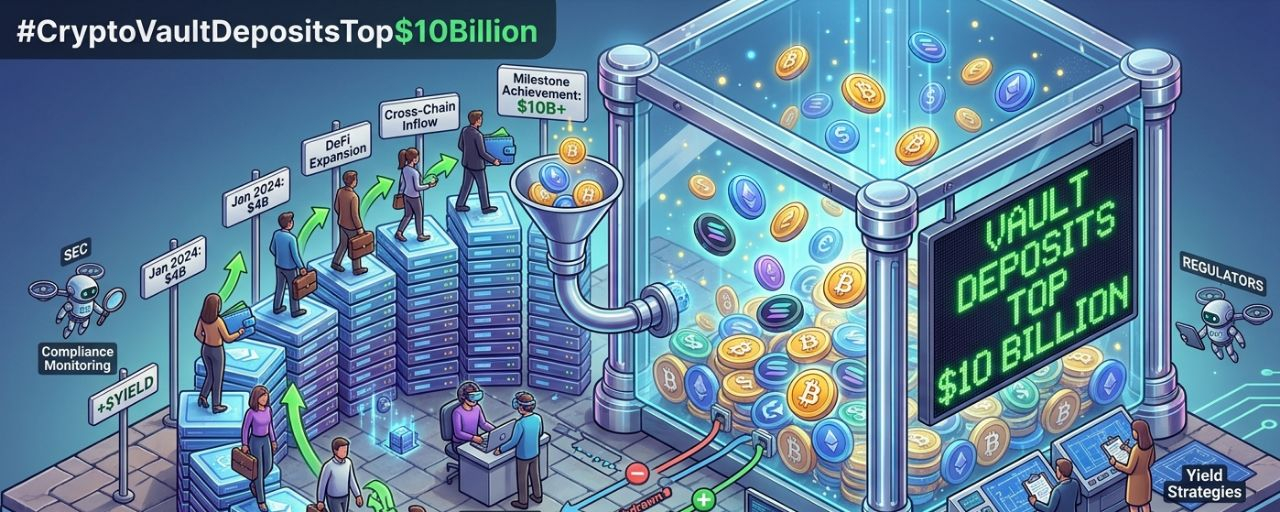

#CryptoVaultDepositsTop$10Billion
Crypto Lending Vaults Cross $10B Milestone
From ~$4B at the start of 2025 to over $10B now. More than 150% growth in under two years. Capital is rotating hard into onchain yield.
What the numbers show
Deposits more than doubled as stablecoin holders and institutions chase returns
Typical strategies delivering 3–10% APY
Higher-risk curator strategies advertising 20%+
Primary depositors have shifted from retail degens to fintech treasuries digital asset treasury companies and hedge funds
Infrastructure consolidating around a few core protocols with professional curators managing risk parameters fees and allocations
How the model works
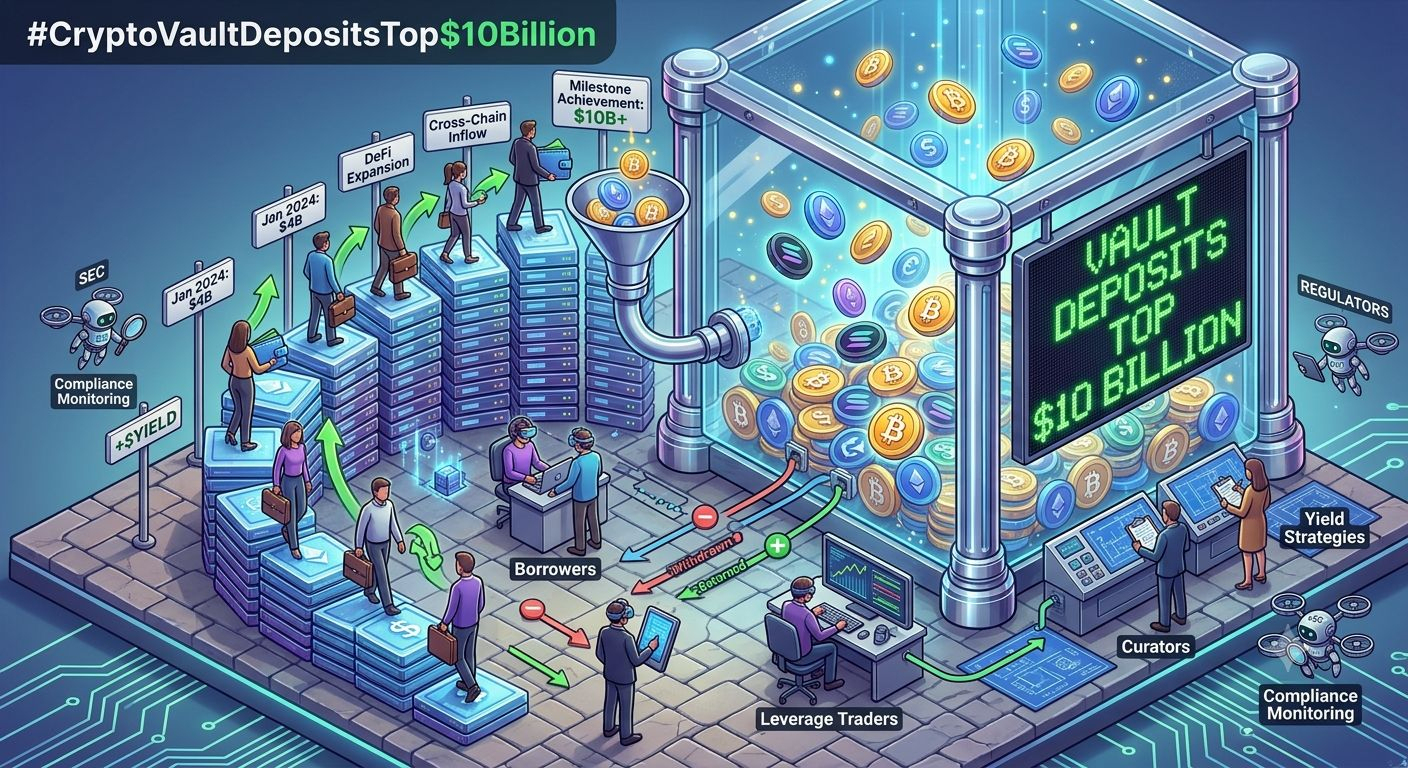
Users deposit into smart-contract vaults. A curator acts as the strategy manager selecting markets setting LTVs oracles collateral rules and rebalancing. Yield is generated by lending against crypto or tokenized collateral. Depositors keep custody onchain but outsource the active decisions.
Market effects
Strong validation for modular lending infrastructure and curator as a service models
Capital concentration rising among top curators and platforms
Institutions now able to offer yield products without holding the assets themselves
Liquidity and risk becoming more professionalized but also more correlated across vaults that share the same collateral types
Positive for protocols powering the rails negative for pure retail-focused high-risk farms that cannot compete on scale or compliance optics
Sentiment and risk reality
Bullish on the demand side. Real institutional money is treating onchain vaults as a legitimate yield sleeve.
Cautious on the structure side.
Key pressure points include:
Liquidity fragmentation across isolated markets → withdrawal queues and rate spikes possible even with zero bad debt
Collateral opacity and correlation risk when multiple vaults accept the same exotic or “dollar-equivalent” assets
Potential conflicts when curators are also significant borrowers or market makers
No federal deposit insurance
Regulatory Attention
Regulators are no longer asking what a vault is. They are asking who controls it. SEC focus on managerial effort and the Howey “efforts of others” test. European proposals targeting the gatekeepers and front-end intermediaries that route users into these products.
The rapid growth has caught the attention of authorities in the U.S. and Europe:
U.S. SEC: The Securities and Exchange Commission is examining whether certain vaults holding securities should be regulated as investment companies .
European ESMA: The European Securities and Markets Authority has proposed regulating "gatekeepers" or intermediaries that provide access to DeFi services, which could impact lending vaults
Bottom line
$10B is proof of product-market fit. The next phase will test whether the curator model can absorb real stress and whether regulation forces these strategies into traditional fund wrappers or creates a tailored framework that preserves the efficiency while closing the accountability gaps.
Capital has spoken. Risk and regulation will decide the durability of the yield.


#BitcoinSurpasses$83,000 #USD1StablecoinLoses$400MMarketCapInTwoWeeks #JapanFSAPublishesOnChainFinanceForumMinutes #BitcoinReboundsAbove$82,000