

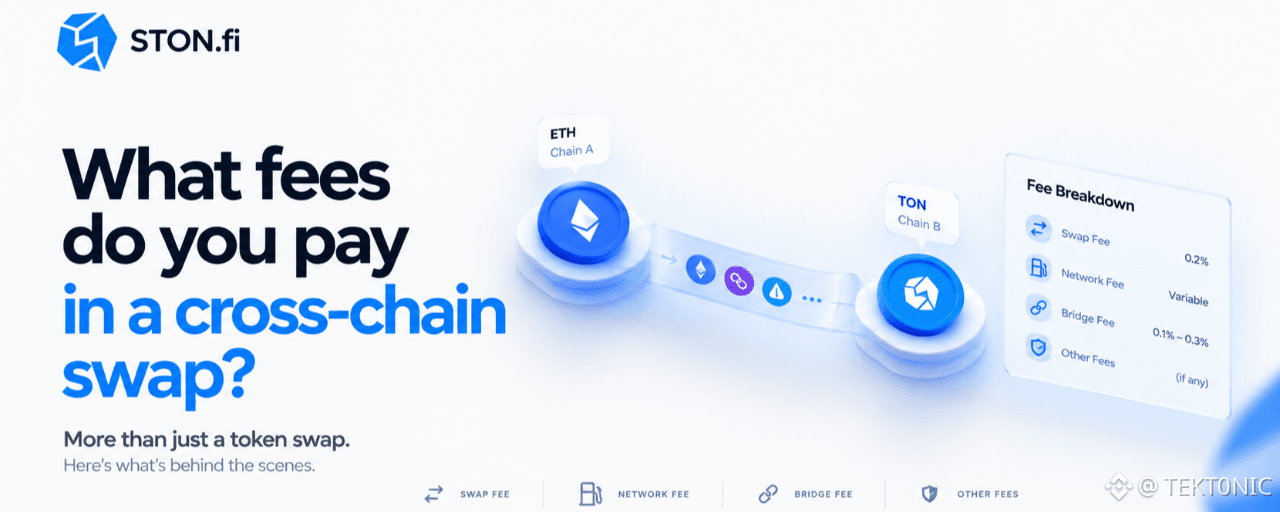

first, understand what we’re actually trying to find out
the objective is not simply to look at the gas fee, see a small number on the screen, and assume you’ve found the cheapest way to swap your crypto.
the objective is to understand how much the entire transaction costs, why those costs exist, and how much of your money you can expect to receive on the destination chain.
let’s say you have $500 worth of USDT on Ethereum and want to receive USDT on another blockchain.
you need to understand more than the fee charged to initiate the transaction. depending on the route, you may also encounter protocol fees, execution costs, destination-side transaction fees, and differences between the market value of your assets and the amount you actually receive.
some of these costs may appear as separate charges. others may already be reflected in the quoted exchange rate or final output.
this is where many users get confused. they compare the visible fees on two platforms without checking whether both quotes include the same costs or whether one route delivers a different amount of the destination token.
STON.fi gives us a practical way to explore these details because its swap interface displays the amount being exchanged, the estimated output and several execution details before a user proceeds.
the goal is to understand those differences so you can assess a cross-chain swap before committing your funds.
to understand what you are actually paying, we need to break the total cost into four parts.
let’s look at what each one means, why it matters and how to avoid counting the same cost twice.
1. understand the four parts of a cross-chain swap’s total cost
the first thing to understand is that a cross-chain swap can involve several different costs, and each one serves a different purpose.
source-chain gas: what does it cost to start?
gas is the fee paid to a blockchain to process a transaction.
if you initiate a swap from Ethereum, the transaction may require ETH to pay for network processing. the amount depends on the gas required by the transaction and the network’s current gas price.
however, the amount you are swapping does not automatically determine how much gas you pay. a $100 swap and a $1,000 swap can have similar network fees if they require comparable transaction operations.
the important detail is that not every cross-chain service works the same way. a route may require a separate token approval or another on-chain transaction, while an integrated service may handle the process differently.
STON.fi Cross-chain uses its own execution model, so you shouldn’t assume that the gas requirements of a manually executed Ethereum transaction apply directly to every swap through its service.
before estimating this cost, you need to understand which transactions the particular route requires and which network is responsible for processing them.
protocol and execution costs: what are you paying the service to do?
moving value between blockchains is not always as simple as sending a token from one wallet to another.
the service needs to execute the transaction according to the route you’ve selected. depending on the system, this may involve a bridge, liquidity providers, swaps on decentralized exchanges, or an integrated cross-chain execution protocol.
some services charge an explicit fee for this process. others may include some of their costs in the exchange rate or the amount you receive.
this is why you should not assume every service has a separate bridge fee, protocol fee and swap fee. the structure depends on how the service works.
for example, STON.fi Cross-chain advertises a single transparent fee before confirmation, without a separate bridge surcharge or destination swap fee. this differs from manually bridging an asset and then swapping it through a separate decentralized exchange, where several distinct charges may apply.
what matters is understanding what the service charges, what the quote already includes, and whether you are expected to complete any additional transactions yourself.
destination-side costs: are you paying again after the assets arrive?
let’s say you want to move value from Ethereum to Base and finish with USDC in your wallet.
depending on the route, the service may deliver USDT directly. in another transaction, you might receive a different token first and need to swap it into USDT yourself.
that second transaction can introduce another swap fee and a Base network fee.
these are possible costs, not charges that every cross-chain swap automatically incurs. if the service handles the entire operation and delivers the token you requested, you shouldn’t add the cost of a separate destination swap that never takes place.
before confirming, ask yourself: does this route deliver the asset i actually want, or will i need to spend more to finish the job?
check the destination token selected in the STON.fi interface and make sure it matches what you intend to receive. that way, you can distinguish the costs associated with the quoted cross-chain operation from any additional transaction you might choose to make later.
price effects: why the amount you receive also matters
imagine the network fees and service charges are relatively small, but the amount of USDT quoted for your swap is lower than you expected.
where did the difference come from?
it could be the exchange rate, available liquidity, price impact or other execution conditions. the difference is not necessarily another fee charged by the service.
this is why we need to consider both the explicit charges and the trading outcome. a route with a low advertised fee is not automatically the route that gives you the most value.
when using STON.fi, don’t stop at the fee displayed in the quote. look at the estimated amount of the destination token you will receive. that amount gives you a more practical starting point for understanding the outcome of the transaction.
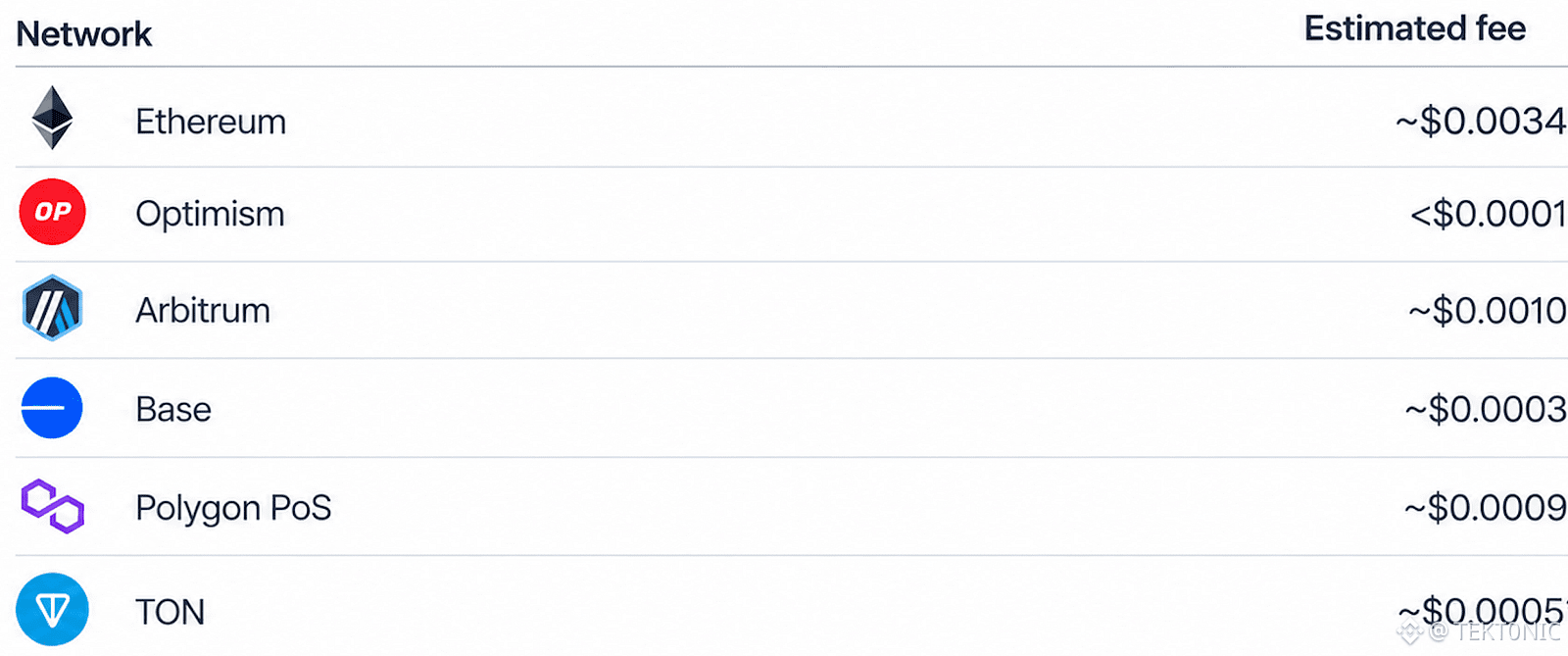
2. why do fee profiles vary by chain?
each blockchain has its own way of pricing transaction processing.
ethereum, for example, charges gas based on the computational work required and the gas price at the time. when demand for block space increases, transactions can become more expensive.
transactions also require different amounts of work. a simple token transfer is different from a transaction that interacts with several smart contracts, swaps tokens and initiates a cross-chain operation.
the route matters too. one service may handle the transaction through an integrated system, while another may require a source-chain transaction, a bridge operation and a separate destination swap.
finally, liquidity and exchange rates affect the amount you receive. two routes may have similar network costs but produce different outputs because their execution prices or service charges differ.
these differences are important when assessing a STON.fi cross-chain quote. the network you select, the assets you want to swap and the route available can all influence the transaction’s execution and the output presented to you.
so when comparing fees, don’t look at the blockchain name alone. look at the transaction, the route and the final amount you receive.
3. why can ethereum differ from base or polygon?
let imagine making a similar token swap on Ethereum, Base and Polygon. you might expect the transactions to cost roughly the same because you’re swapping a similar amount of crypto.
but the amount being swapped is only one part of the picture.
ethereum mainnet has its own block space and fee market. when demand increases, users may have to pay more to get transactions processed.
base is an Ethereum layer-2 network. its fee structure includes execution costs and costs associated with publishing transaction data to Ethereum. its architecture can make many transactions cheaper than comparable Ethereum mainnet transactions, although costs still vary.
polygon has its own transaction-fee market, so its costs depend on the gas required and current network conditions.
in practical terms:
ethereum: costs can rise when demand for mainnet block space increases.
base: its layer-2 design can reduce costs for many transactions, but fees are not fixed.
polygon: transaction costs depend on its own fee market and the complexity of the operation.
ethereum is not always the most expensive, and Base or Polygon are not always the cheapest. the actual result depends on the transaction and when you make it.
to understand this better, let’s look at a practical example involving TON and Base.
both networks operate differently, which means moving assets between them requires a cross-chain route rather than a regular token transfer.
for example, STON.fi allows users to swap assets from TON to Base through a single cross-chain process, without manually moving funds through several platforms.
the important part is understanding what happens before the transaction is confirmed. the route may involve network and execution costs, while the exchange rate determines how much of the destination asset you receive.
STON.fi explains this process in its https://ston.fi/cross-chain-swap-from-ton-to-base, including how users can review the transaction details, fees and expected output before confirming.
this is a good example of why comparing cross-chain swaps requires looking beyond the network fee alone.
there is another important detail: the cheapest network to transact on is not necessarily the route that gives you the best final output.
a route with lower gas costs might have a less favorable exchange rate or require additional steps. another route might charge more in network fees but deliver more of the destination asset.
that’s why we need to compare the complete quote rather than just the gas fee.
4. where should you review the quote before confirming?
understanding the costs is useful, but the real test is knowing where to look before approving a transaction.
let’s use STON.fi’s cross-chain interface as our practical example.
open the https://app.ston.fi/swap?mode=cross-chain&in=ethereum%3AUSDT&out=ton%3AUSD%E2%82%AE. choose a supported source chain and token, select the destination chain and token, and enter the amount you want to swap.
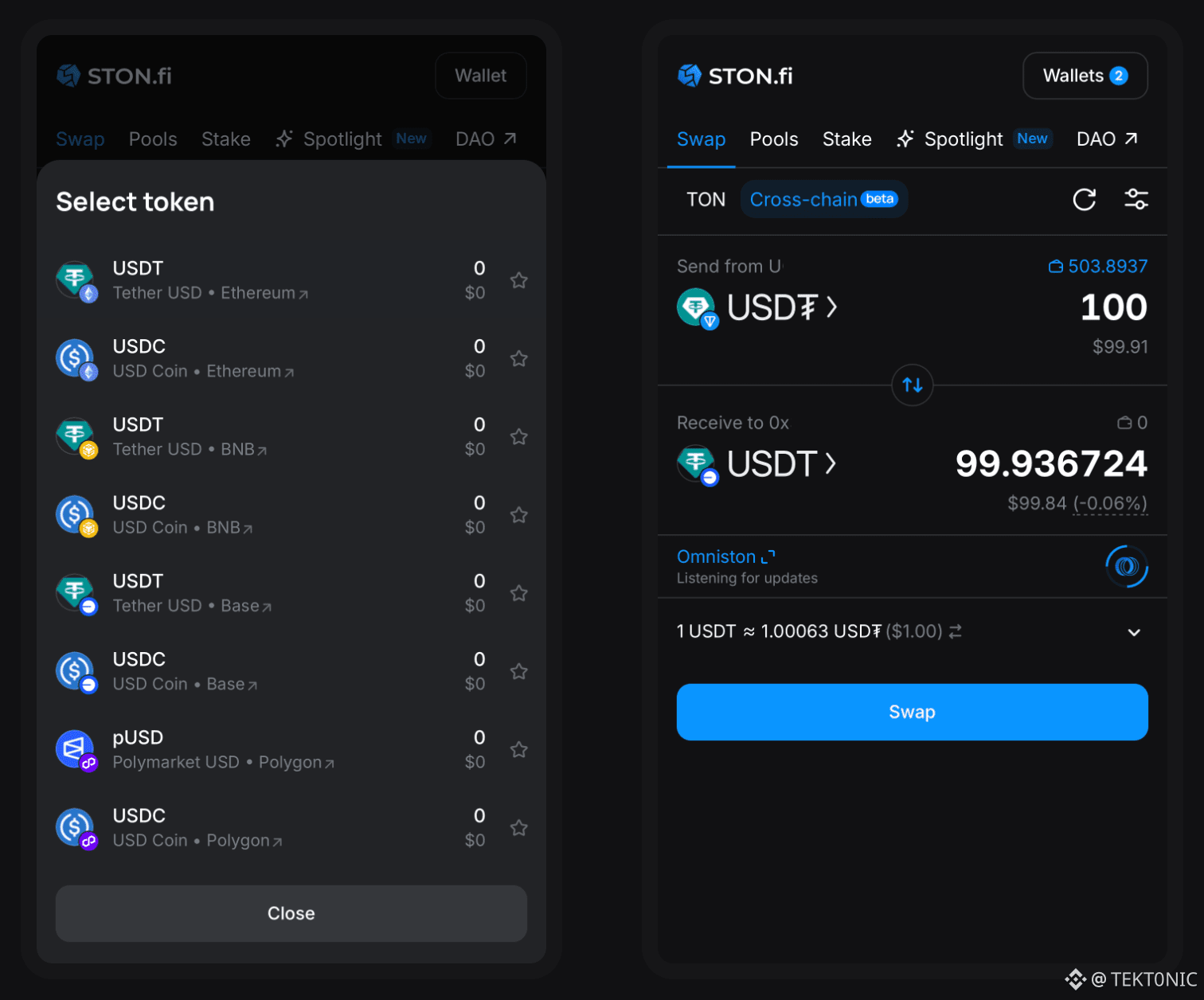
once the quote appears, pay attention to three things.
first, check the amount you’re sending: make sure the source token, source network and amount are correct. this is the starting point for understanding the transaction.
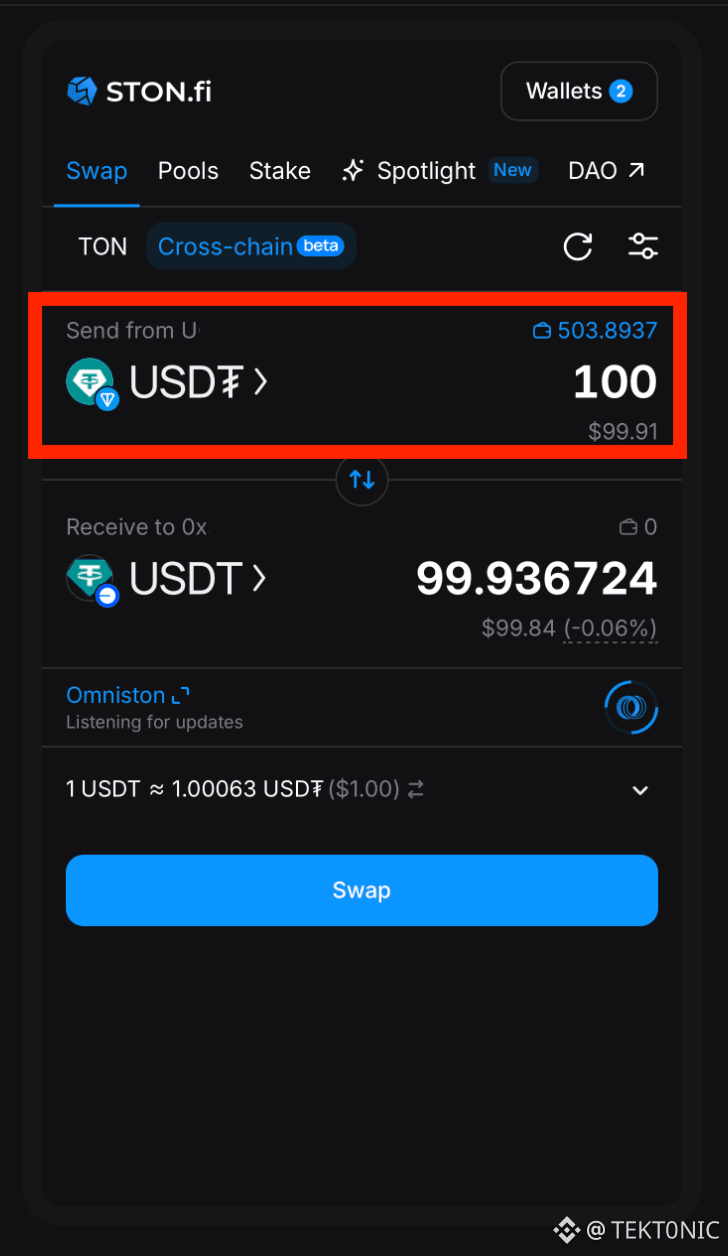
next, review the fee and estimated output: check the fee information shown for the route and how much of the destination token you are expected to receive. STON.fi advertises a single transparent cross-chain fee before confirmation, without a separate bridge surcharge or destination swap fee.
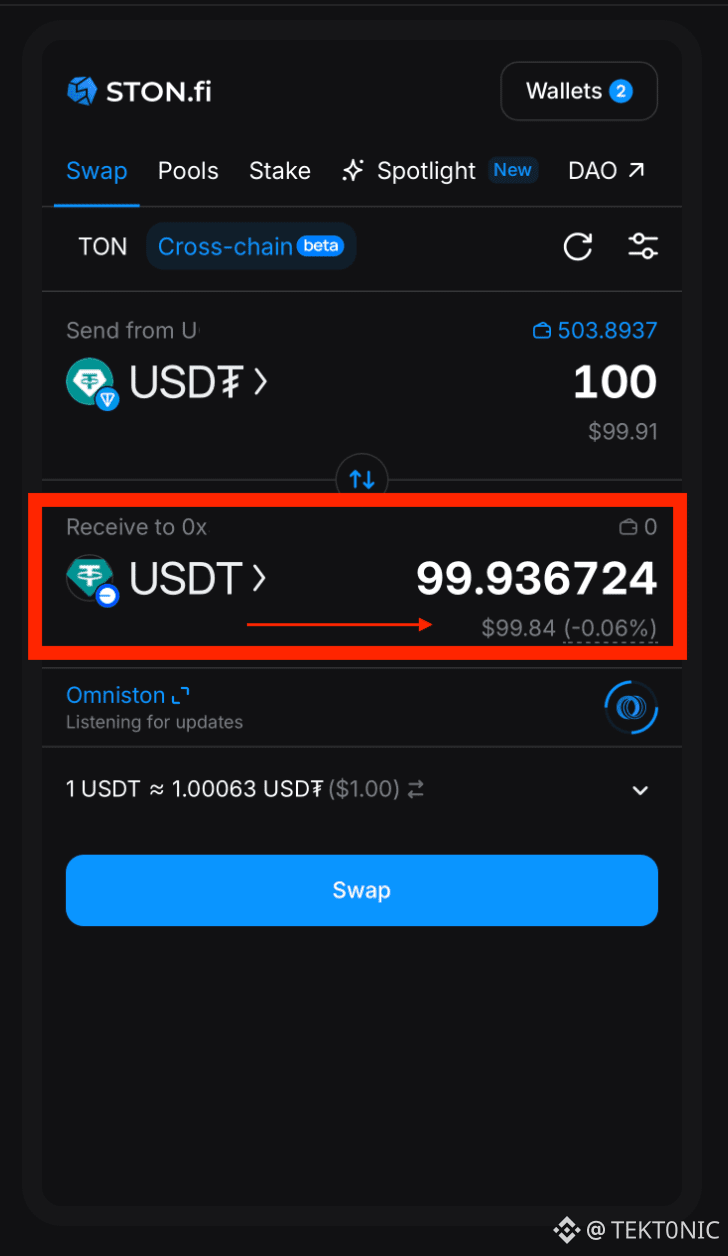
finally, review the execution details available in the quote: check the exchange rate and any minimum-received or price-impact information the interface provides. these details help you understand the expected outcome and whether the transaction meets your requirements.
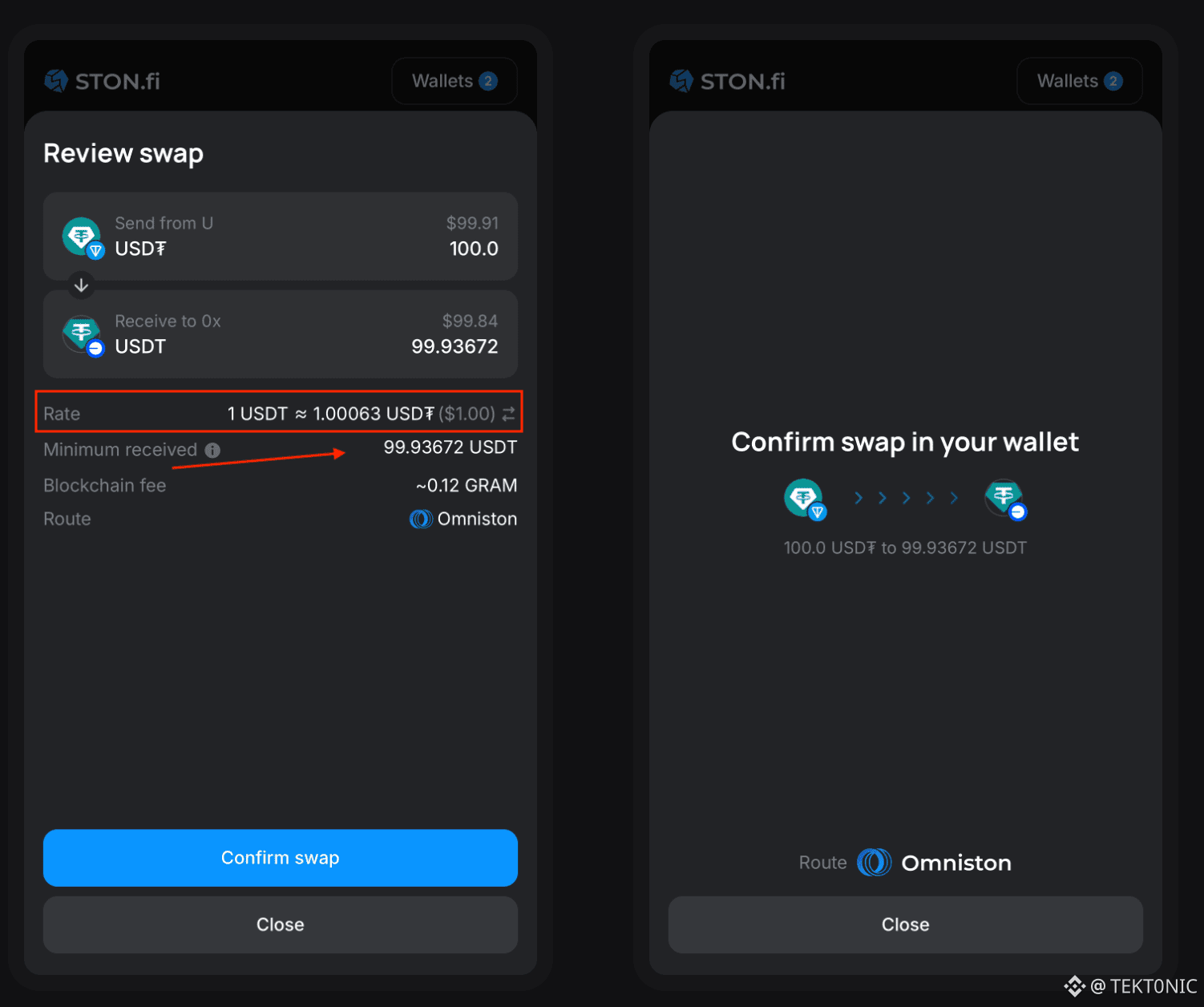
the estimated amount received is particularly important because it shows what the quote expects to deliver. the fee helps explain the explicit charge, while the other details help you understand the exchange outcome.
for example, if you’re swapping USDT on TON Blockchain to USDT on Base, don’t stop after seeing the fee. check how much USDT the quote says you will receive and make sure you understand the conditions attached to that estimate.
quotes can change as market and execution conditions change, so review the details displayed for your actual transaction before confirming.
5. fees vs price impact vs slippage: what’s the difference?
these three things can affect the result of your swap, but they don’t mean the same thing.
fees are what you pay for the transaction
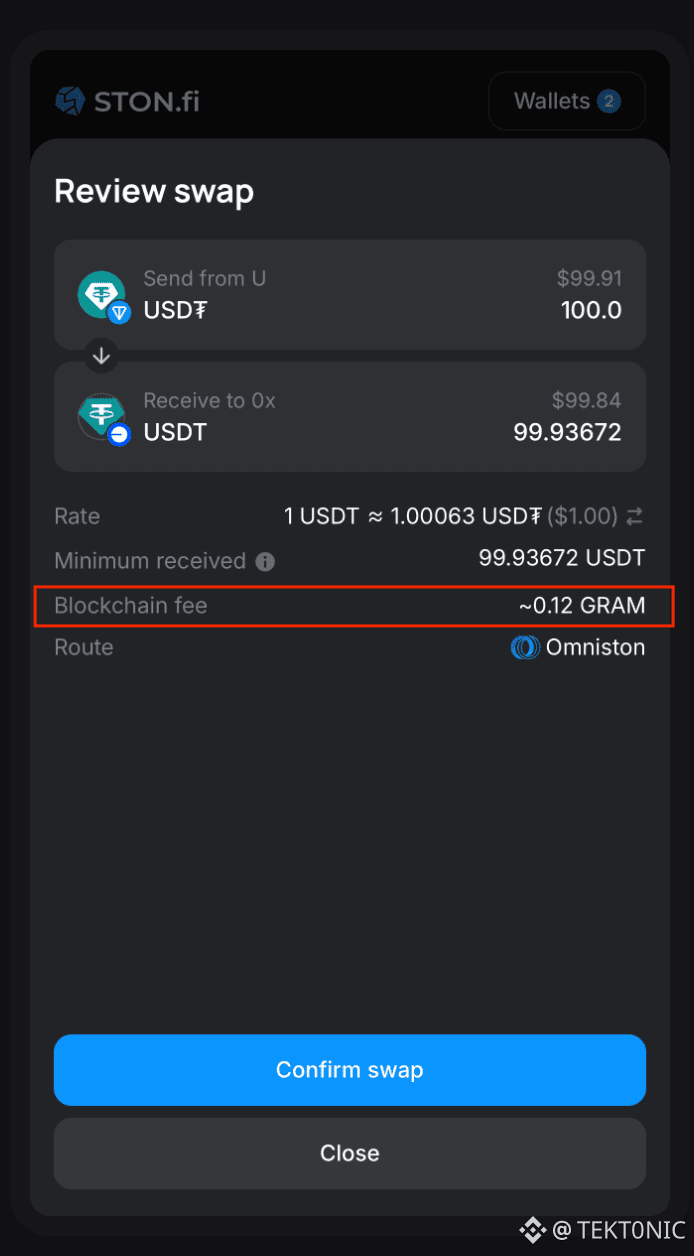
a fee is a charge associated with processing or executing the swap. depending on the route, this may include network fees and service charges.
when reviewing a STON.fi quote, identify the fee the service displays and consider it alongside the amount you are expected to receive.
price impact is how your trade affects the execution price
price impact occurs when your trade changes the price available through a liquidity pool or another execution mechanism.
imagine a pool has limited liquidity. a small swap might execute close to the current pool price, while a much larger swap could consume more of the available liquidity and receive a less favorable average price.
the difference between the price before the trade and the execution price is the price impact.
slippage is the difference between the expected and actual execution
you might receive a quote, but the price can change before the transaction completes. slippage tolerance determines how much unfavorable price movement you’re willing to accept before the transaction is rejected under the applicable conditions.
a higher slippage tolerance does not automatically mean you pay a fee of that percentage. it changes the execution conditions you’re willing to accept.
here’s the distinction:
fee: what the network or service charges.
price impact: how your trade affects the execution price.
slippage: how execution differs from the expected result.
before confirming a STON.fi swap, review all three where the interface provides them. don’t treat slippage tolerance as an extra fee, and don’t assume that a low explicit fee guarantees a favorable exchange rate.
the final thing to understand
when comparing cross-chain swaps, you’re not just choosing a blockchain or looking for the smallest fee displayed on a screen.
you’re choosing a route that determines how your transaction is processed, what charges apply, whether additional transactions are necessary and how much of the destination asset you can expect to receive.
STON.fi Cross-chain gives users a way to review a quoted fee and estimated output before confirming, making it important to understand both figures rather than focusing on the fee alone.
understand the source-chain gas, identify the protocol and execution costs, check whether destination-side transactions are necessary, and consider how the exchange rate and price effects influence the final amount.
most importantly, compare what you will actually receive, not just the fee advertised by the service.
the real cost of a cross-chain swap is about more than what you pay to move your assets. it’s also about how much value reaches the other side.