



#BrentHits$110ForFirstTimeSinceMay
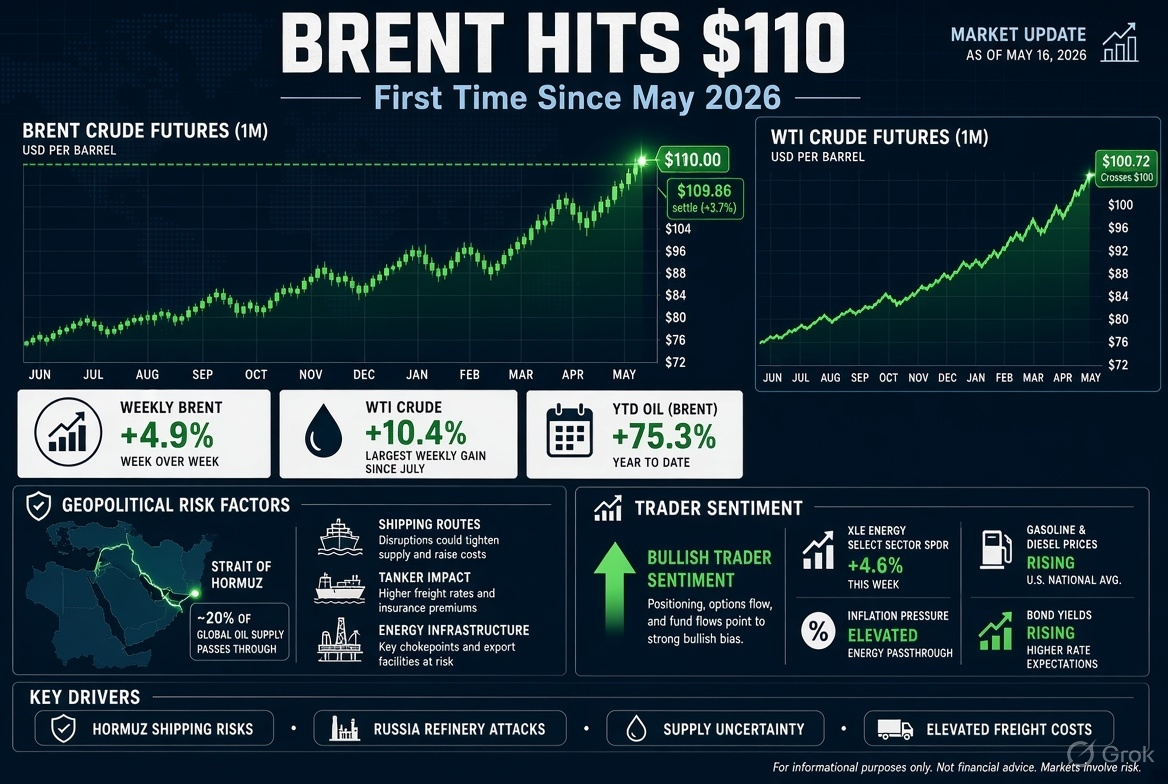
Brent Crude Hits $110/bbl — First Time Since May 2026
Market Update | Statistical Snapshot | Geopolitical Drivers | Sentiment & Leverage Points
(As of close Friday, 16 October 2026)
Key Price Action & Statistical Data
Brent (ICE Dec futures): Touched $110.00 intraday, settled $109.86 (+3.7% / +$3.94). Highest settlement since 19 May 2026.
WTI (NYMEX Nov): Settled b (+3.5% / +$3.44) — first close above $100 since mid-September.
Weekly performance: Brent +4.9% (4th consecutive weekly gain); WTI +10.4% (largest weekly % gain since mid-July).
Related products: ULSD (heating oil) +1.1% to ~$4.90/gal; RBOB gasoline +1.7%.
YTD context: Crude has risen >70–80% in 2026 amid prolonged Middle East and Russia-Ukraine disruptions. Earlier peak above $120 in April/May before the mid-year pullback below $80.
Supporting data points: Large U.S. crude inventory draw (8.6 mbbl previous week), elevated freight & insurance costs on Gulf routes, and thinning accessible on-land stocks despite some recovery in Hormuz transit volumes.
Geopolitical Effects Driving the Move
Multiple overlapping supply risks are keeping a persistent risk premium embedded in prices:
1. Middle East / Strait of Hormuz: Intensified Iranian attacks on shipping (multiple vessels hit/sunk in recent days). Iran-backed Houthi missile/drone strikes targeting Saudi Arabia (including attempts near critical Red Sea/Yanbu infrastructure used to bypass Hormuz). Flows through Hormuz remain fragile and below fully reliable pre-conflict levels despite partial recovery.
2. Russia–Ukraine energy war: Ukraine resumed strikes on Russian refineries (notably Ryazan) after abandoning a short-lived energy ceasefire framework. This raises doubts over any near-term increase in Russian diesel/product availability.
3. Policy & reserve responses: U.S. and IEA continue emergency stock releases (including diesel). Attempts at a U.S.–Russia diesel arrangement face legislative pushback. Naval and sanctions dynamics continue to influence tanker availability and costs.
These factors have shifted market focus from temporary disruption to a more structural re-pricing of geopolitical risk in oil.
Market Effects & Sentiment
Energy equities: Strong outperformance. Energy Select Sector (XLE) +~4.8% on the week; top S&P movers included several oil & gas names (Targa, Diamondback, EOG, Kinder Morgan, APA all +4%+ on Friday).
Downstream / consumer impact: U.S. regular gasoline ~$4.33/gal; diesel >$6.30/gal. Cumulative extra consumer spend on fuels since early March already in the tens of billions.
Macro transmission: Higher energy prices are feeding into inflation readings and expectations, supporting higher bond yields and reducing odds of aggressive monetary easing. Cost-push pressure remains a key concern for central banks.
Trader sentiment: Clearly bullish short-term. Traders are increasing long exposure heading into the weekend on the view that supply relief is not imminent. Technicals show resilience above key supports; $110 is now a psychological and technical level being tested. Some analysts flag potential further upside toward the $115–125 zone on any escalation, while noting that sustained high prices will eventually test demand elasticity.
Overall tone: Risk-on for energy, cautious for rate-sensitive and consumer-discretionary assets. The market is pricing persistent rather than transitory disruption.
Leverage Points & Implications
For traders / portfolio managers
Long energy equities, oil futures, or product cracks as a direct geopolitical/supply hedge.
Inflation-linked assets and higher-duration short positions as secondary plays.
Watch Hormuz transit data, Russian refinery run rates, and any new reserve-release announcements for inflection points.
Position sizing caution: Weekend geopolitical event risk is elevated.
For corporates / economies
Producers & energy exporters: Revenue windfall and stronger cash flows.
Importers, refiners, and transport-heavy industries: Margin compression and higher input costs.
Consumers & inflation-sensitive sectors: Further pressure on real incomes and discretionary spending.
Policy makers: Balancing SPR/IEA releases against the risk of drawing buffers too thin while conflicts persist.
Bottom line
$110 Brent marks a clear re-assertion of the geopolitical risk premium after the summer lull. With multiple active conflict theatres, fragile chokepoints, and limited near-term supply relief, the path of least resistance remains higher until credible de-escalation or larger inventory responses materialise. Volatility is likely to stay elevated.
Data sources: Exchange settlements, Reuters, Bloomberg, EIA, market reports as of 16–17 Oct 2026. Prices subject to rapid change.



#ETHDropsBelow2400USDT #OpenAIAgentTookFundsFromUnownedTestnetWallet #ArgentinaUSDTPriceTops1600Pesos #CrossRiverBankAddsRLUSDToCoreBankingPlatform