

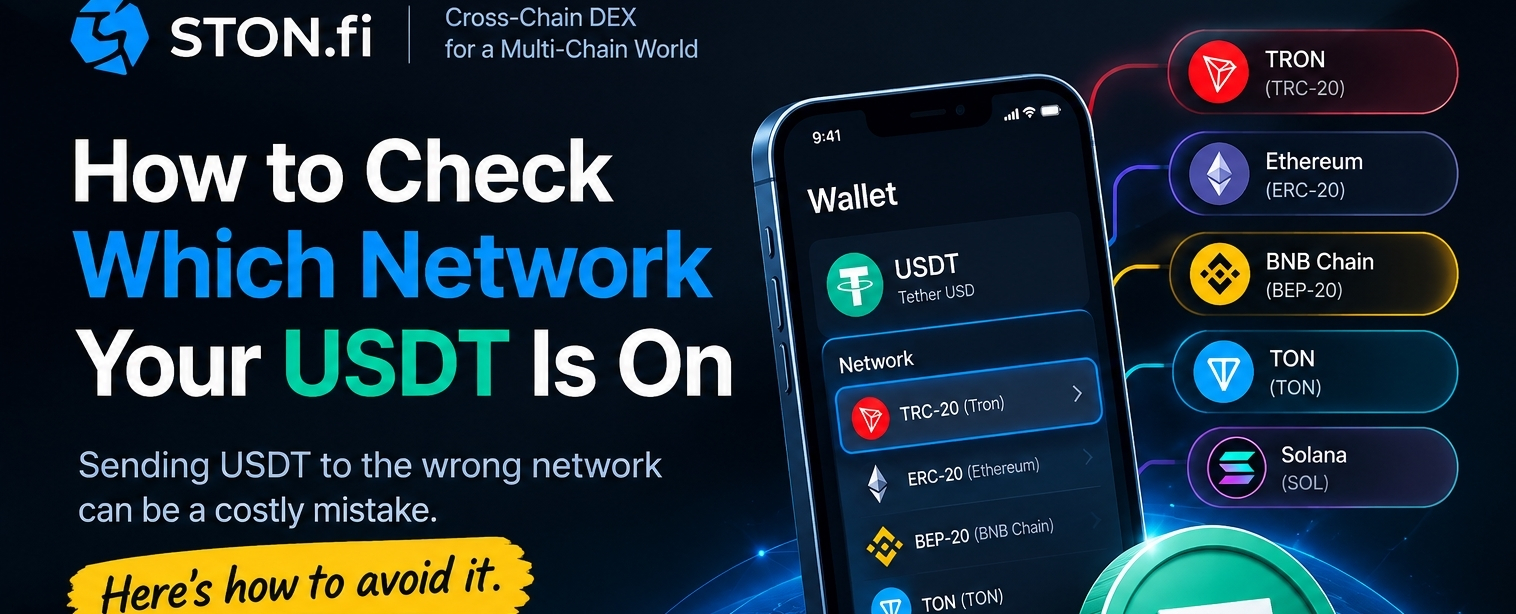

Sending USDT to the wrong network can be a costly mistake. Here’s how to avoid it.
USDT is available on multiple blockchains, including Ethereum, Tron, TON, BNB Chain, and others.
Although they share the same name, USDT on one network is not automatically interchangeable with USDT on another.
Before sending or swapping your USDT, you need to identify the network on which it currently exists.
1️⃣ Check Your Wallet
Open your crypto wallet and select USDT.
Look for the network name displayed beside the asset or in its details. Depending on the wallet, you may see labels such as Ethereum (ERC-20), Tron (TRC-20), TON, or BNB Smart Chain (BEP-20).
Never assume the network based on the token name alone.
2️⃣ Check Your Exchange Withdrawal Page
If your USDT is on a centralized exchange, open the withdrawal page and select USDT.
The exchange may offer several networks. Check which network currently holds your funds and ensure the withdrawal network matches the receiving platform's supported network.
Remember: the network selected for withdrawal determines how the transaction is sent.
3️⃣ Understand That Addresses Can Be Misleading
Some blockchain networks can use similar-looking address formats. Two addresses that look alike do not necessarily belong to the same network or represent the same asset.
Always verify the network, token, and destination address before confirming a transaction.
4️⃣ Check the Receiving Platform
Before depositing or swapping, confirm that the receiving wallet or platform supports USDT on your chosen network.
If you are moving assets between TON and another blockchain, explore the available route and requirements through STON.fi's cross-chain swap guide:
https://ston.fi/cross-chain-swap-from-ton-to-base
Always verify the current route, estimated fees, expected amount received, and destination details before proceeding.
5️⃣ Make a Final Check Before Sending
Use this simple checklist:
✅ Correct token: USDT
✅ Correct sending network
✅ Correct receiving network
✅ Correct destination address
✅ Sufficient funds for network fees
✅ Receiving platform supports the selected network
For large transfers, consider a small test transaction when practical and when the additional fees are reasonable.
Final Thoughts
Understanding which network your USDT is on is a basic but essential crypto skill.
A few seconds of verification can help prevent unnecessary delays, failed transfers, or potentially irreversible losses.
In crypto, checking the network is just as important as checking the amount.
Not financial advice. Always verify network compatibility before making a transaction.