

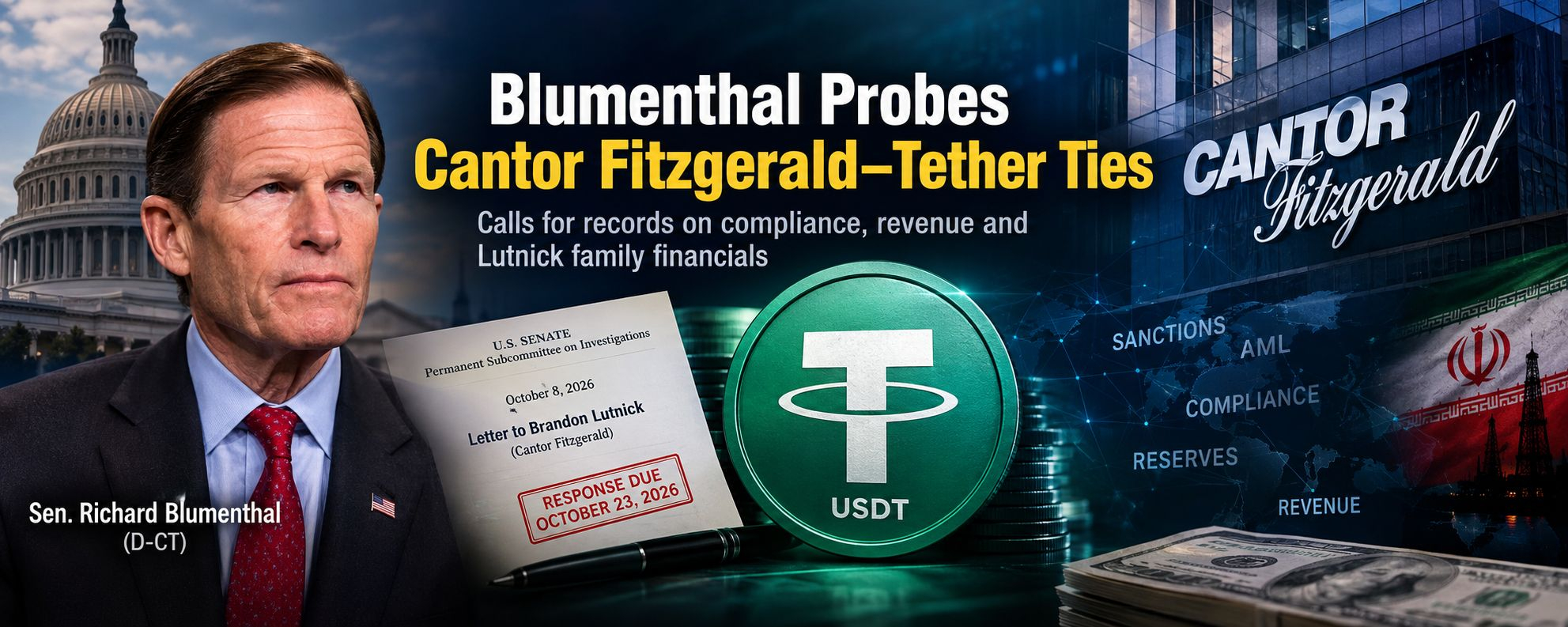


Tether is facing renewed scrutiny in the U.S., this time over its relationship with Cantor Fitzgerald and questions about how effectively the stablecoin industry handles financial crime risks.
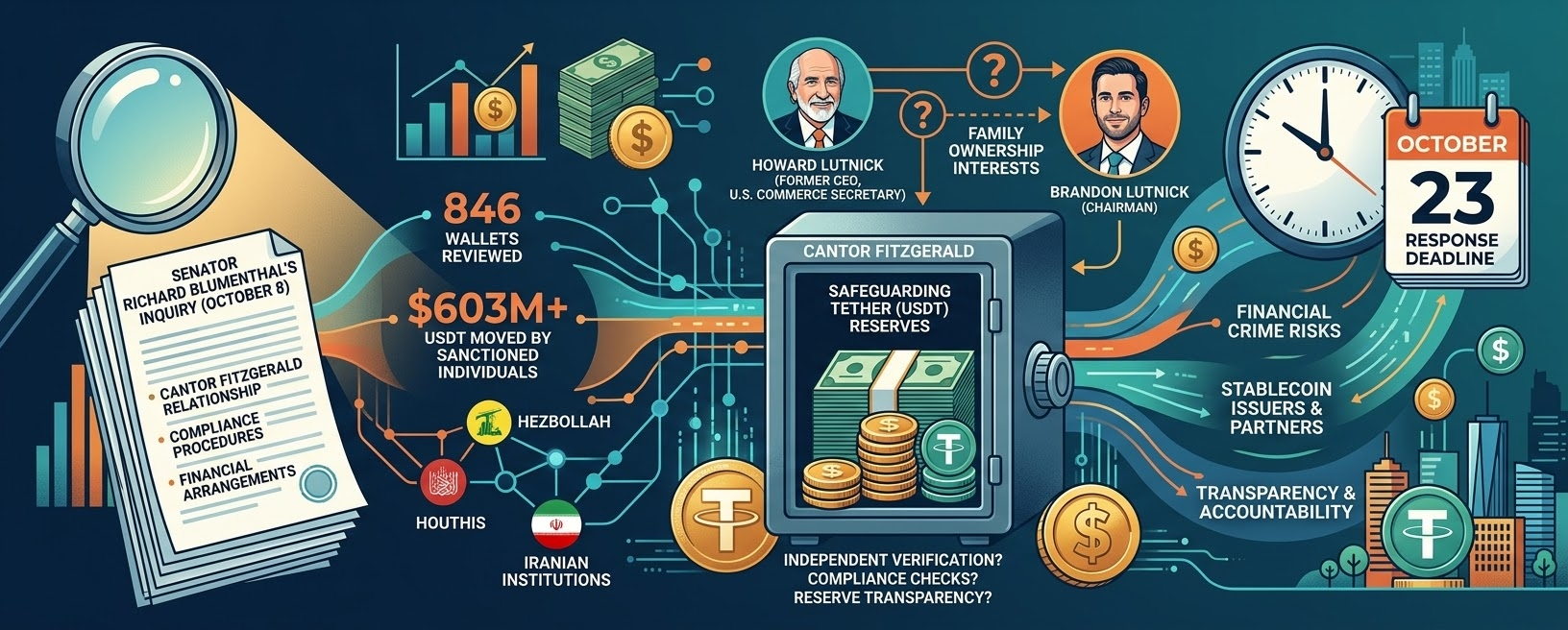
On October 8, Senator Richard Blumenthal sent a letter to Cantor Fitzgerald Chairman Brandon Lutnick asking for details about the firm's relationship with Tether, its compliance procedures, and financial arrangements involving the Lutnick family. The response deadline is October 23.
The move follows a September 28 report by Democratic staff that examined how USDT was used by wallets linked to sanctioned individuals and entities.
Here's what caught attention 👇
📊 846 wallets reviewed: The report examined wallets designated by U.S. and Israeli authorities between June 2021 and August 2026. It found that around 84% used USDT almost exclusively or exclusively.
💰 More than $603 million in USDT: The report alleges that two sanctioned Iranian oil smugglers moved this amount between 2021 and 2025 through networks linked to Hezbollah, the Houthis, and Iranian institutions.
⚠️ Transactions after sanctions: Investigators also reported that $34.6 million continued moving through certain wallets after they were designated.
🏦 Cantor's connection: Cantor Fitzgerald plays an important role in Tether's financial operations, including handling or safeguarding U.S. Treasury assets associated with its reserves. Blumenthal wants to know more about the firm's compliance checks, its earnings from the relationship, and its approach to independent verification of Tether's reserves.
The letter also raises questions about the financial interests of Howard Lutnick, the former Cantor chief executive who now serves as U.S. Commerce Secretary, and arrangements involving the transfer of family ownership interests.
Why does this matter?
The concern isn't simply about whether criminals have used USDT. It's also about how stablecoin issuers and their financial partners respond when suspicious activity is identified.
Tether has reportedly said it helped freeze approximately $550 million in Iran-affiliated USDT during 2026, highlighting its cooperation in enforcement efforts.
Still, questions remain about compliance practices, reserve transparency, and whether financial relationships could create potential conflicts of interest.
For the broader crypto market, the investigation could add pressure on stablecoin companies to improve disclosures and demonstrate that their safeguards are working effectively.
What happens next?
Cantor Fitzgerald has been asked to respond by October 23. Its response could provide more clarity on the issues raised and determine whether the inquiry leads to further scrutiny.
For now, this remains an ongoing investigation led by Democratic lawmakers. The allegations have not established wrongdoing by Cantor Fitzgerald or Tether, and the report's findings should not be taken as evidence that USDT's reserves are insufficient.
My takeaway: Stablecoins are becoming a bigger part of the financial system, and with that comes greater responsibility. Transparency, strong compliance, and accountability will be crucial to maintaining trust as the industry continues to grow.
#USDT #CryptoNews #Stablecoins
#CryptoRegulation #DigitalAssets