
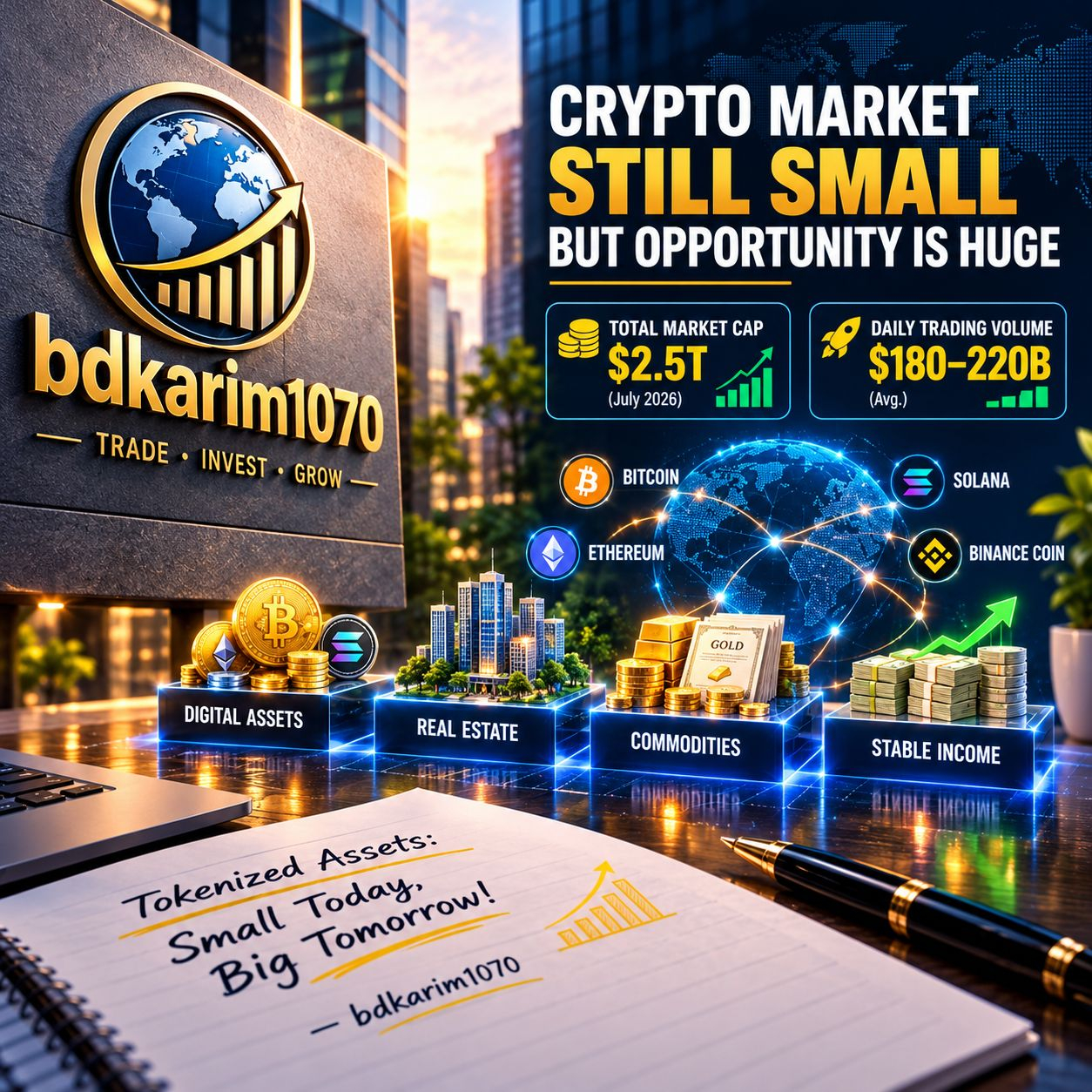
The IMF recently categorized tokenized markets as "small," a description that surprisingly hits on something critical. They peg non-repo, non-stablecoin tokenized assets at roughly $65B (as of July). Tokenized repo activity, however, is boasting daily volumes of $300-350B. This is substantial, real-world financial action. Yet, the IMF isn't wrong; this is still a fraction of traditional finance.
But the most critical discussion isn't simply how fast tokenization will grow. The real elephant in the room is: can this new infrastructure withstand true market stress?
Currently, despite the excitement, tokenized markets operate with notable gaps:
Liquidity is noticeably thinner.
Market fragmentation persists.
Legal certainty is still evolving.
Interoperability between blockchains remains a core challenge.
Programmable, automated liquidations could paradoxically accelerate a crisis during times of stress.
##BTC
Adoption in crypto always looks easy when the numbers go up. The decisive test arrives when liquidity vanishes.
Consider a tokenized asset used as collateral across multiple platforms simultaneously. A price drop triggers liquidations. The resulting liquidations sap liquidity. The shrinking liquidity triggers further panic selling.
Blockchain technology might not create this fundamental financial risk. However, it significantly increases the speed at which that risk travels.
Therefore, my thesis is: The definitive, long-term value in RWA (Real World Assets) won't belong to those who tokenize the most assets. It will reside with those who build tokenized markets that remain reliable under extreme stress.
This isn't about simply "putting an asset on-chain." That part is becoming relatively straightforward. The much harder, more critical problem is creating an asset that is trustworthy and tradable when everyone simultaneously decides to exit.
That, in my view, is where the true winner of the RWA race will emerge. Success will be determined by solutions for robust liquidity, dependable custody, instantaneous but stable settlement, true interoperability, and sophisticated risk controls.