



Navigating digital assets requires distinguishing between ownership and authorized access. For ERC-20 tokens, these concepts are your balance and your allowance. A balance defines the number of tokens recorded for your wallet. An allowance represents a distinct permission you grant a designated spender to move a specified amount of those tokens on your behalf.
Smart contracts can require permission to use your assets through an approval. Executing an approval transaction does not itself move tokens out of your wallet. Instead, it modifies the token contract to establish or change an allowance, telling the approved spender how many tokens it may access. An approval is distinct from a transfer, which actively relocates assets.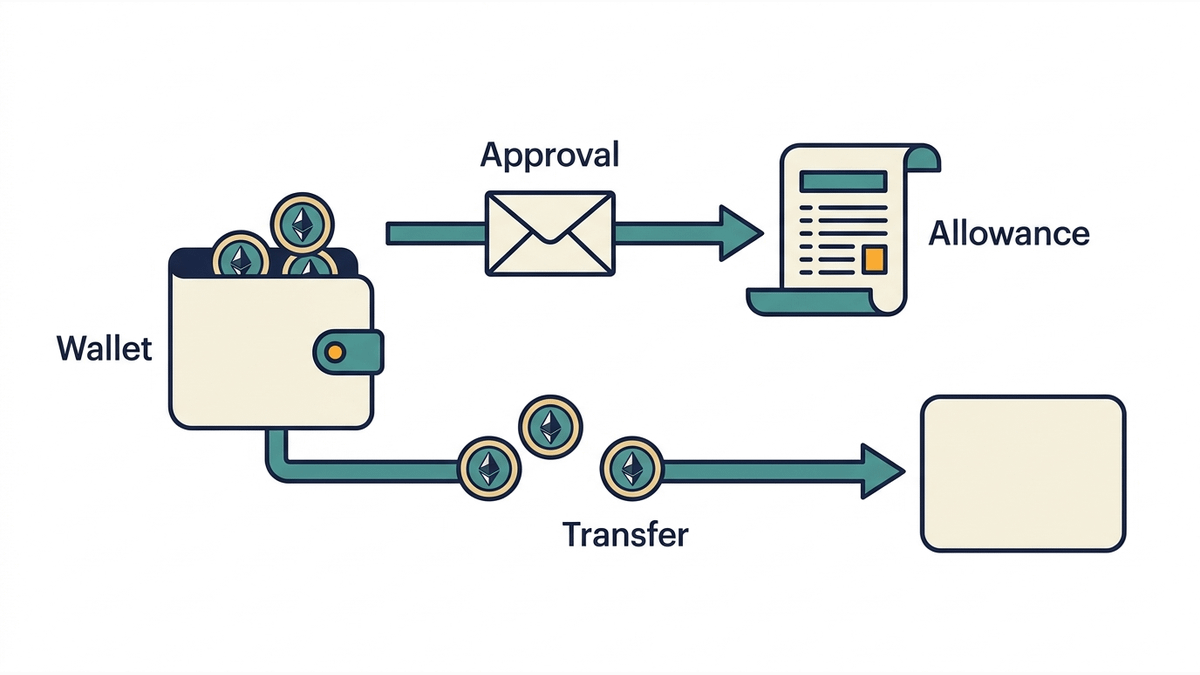
After an allowance is set, the authorized spender can initiate asset movements using a mechanism called transferFrom. The token contract checks the relevant balance and allowance before processing the transaction. The requested amount must not exceed the available wallet balance or the approved allowance limit. If either limit is insufficient, the attempted movement fails.
Each approval is scoped to a particular token contract and a particular spender. Authorizing an allowance for one ERC-20 asset does not provide access to different tokens recorded by other token contracts in the same wallet. This is not a blanket authorization over a portfolio. Approvals also do not apply to native blockchain coins.
Monitoring a wallet balance does not show which spenders have permission to move tokens. Because an approval changes permission data rather than immediately changing the token balance, a wallet can retain its recorded balance while a spender has unused authority to transfer tokens. A balance alone therefore does not describe spender permissions. Identifying allowances requires examining the relevant token contract data.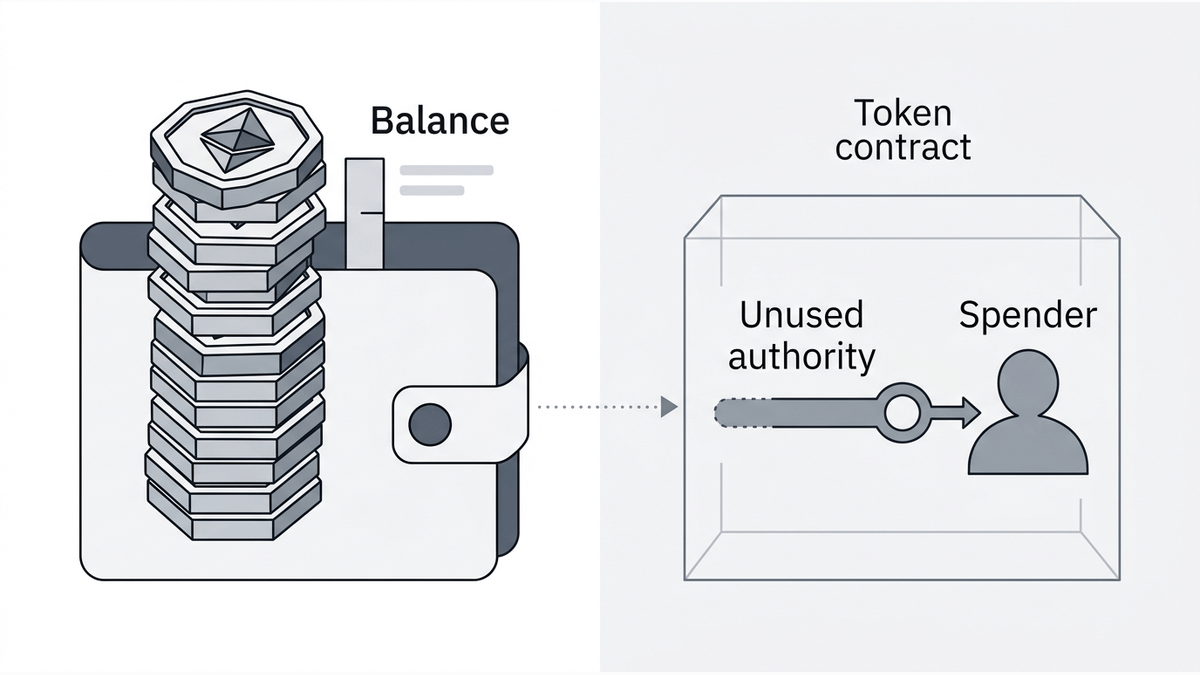
An allowance can be changed by submitting a new approval for the relevant token contract and spender. Setting the allowance to zero prevents that spender from using the allowance for later token movements, subject to the token contract’s behavior. Changing an allowance affects later actions; it does not reverse transfers that the spender has already completed.