


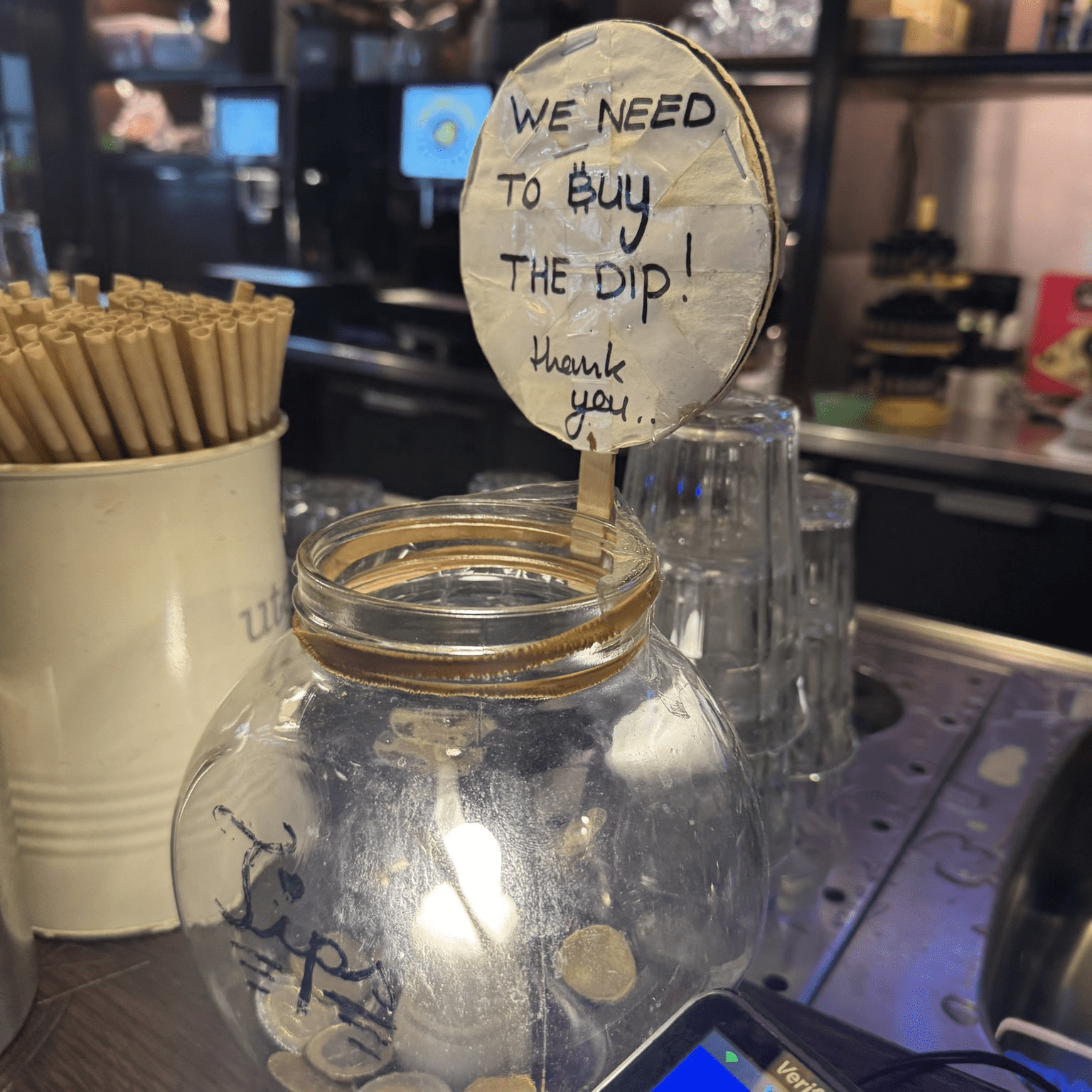
September has a reputation in Bitcoin markets.
Historically, it has been one of BTC's weakest months, including a six-year losing streak from 2017 through 2022. But September 2026 broke that pattern decisively.
Bitcoin finished September higher, making it one of the strongest September performances in its history and, depending on the historical price dataset used, the strongest September since 2012. Different datasets produce slightly different monthly returns because of their pricing methodology, but the direction is clear: Bitcoin turned one of its historically weakest months into a positive one.
And the month was anything but quiet.
Bitcoin had to absorb a U.S. Senate setback for the CLARITY Act, a Federal Reserve rate hike, rising Treasury yields and several sharp changes in market positioning.
Yet BTC recovered from the mid-month volatility and climbed back above $86,000 during the month. Binance Research noted that Bitcoin's recovery came despite renewed rate pressure, while spot ETF demand remained strong.
That creates a second story alongside the price chart:
When Bitcoin moved, execution mattered.
And that is where Binance's market depth becomes relevant.
September Was Supposed to Be Bitcoin's Weak Spot
The September effect is not just crypto folklore.
From 2017 through 2022, Bitcoin recorded six consecutive negative September returns. Across the broader historical record, September has generally produced weaker returns than other months.
2026 changed the pattern.
Bitcoin entered September around the high-$70,000s, dropped sharply around the middle of the month, then recovered toward the mid-$80,000s.
The most important part was not simply the final monthly percentage.
It was the number of major events Bitcoin had to absorb along the way.
Two Major Shocks Arrived Within 24 Hours
On September 15, the U.S. Senate failed to advance the CLARITY Act, a major piece of proposed crypto market-structure legislation.
The procedural vote ended 50–49, short of the 60 votes required to advance the bill. Bitcoin and other crypto assets sold off following the result.
The following day brought another major catalyst.
On September 16, the Federal Reserve raised its target federal funds range by 25 basis points to 3.75%–4.00%, in a unanimous 12–0 decision.
Bitcoin's September low came around the same period, with Binance Research putting the September 15 low at approximately $75,613.
But the move did not end there.
BTC recovered, eventually pushing above $86,000 before pulling back again as Treasury yields rose later in the month.
That sequence illustrates something important about modern crypto markets:
Volatility does not necessarily mean markets stop functioning. It often means execution becomes more important.
When Volatility Rises, Liquidity Matters
Imagine two markets.
In the first, there are relatively few orders near the current price. A large market order consumes several levels of the order book, pushing the execution price away from the starting price.
In the second, there are substantial buy and sell orders distributed around the market price.
The same order can potentially be executed with less price impact.
That is the basic reason traders care about market depth, bid-ask spreads and slippage.
A narrow spread reduces the immediate cost of crossing the market.
A deeper order book can absorb larger orders with less price impact.
And consistent liquidity can become particularly valuable when prices are moving quickly and many participants are trying to execute simultaneously.
This is where Binance's BTC market structure stands out.
Binance's BTC Market Has the Depth Behind the Volume
According to Binance Research, Binance led year-to-date spot BTC volume by roughly 2.5× the next-largest centralized exchange and by more than the next four exchanges combined.
More importantly, this was not described as a one-day spike.
Binance held the leading position in daily spot BTC volume continuously from April through August 2026.
Independent liquidity data points in the same direction.
Kaiko's Q2 2026 liquidity scores placed Binance highest among the major exchanges assessed. The metric considers order-book depth and related execution conditions—important factors when assessing how much trading activity a market can absorb.
That distinction matters.
Volume tells you where trading happens.
Liquidity tells you how efficiently that trading can happen.
The combination is what becomes especially relevant during fast markets.
The August Breakout Already Showed the Pattern
September did not come out of nowhere.
Bitcoin's major breakout began in August, when BTC moved from the mid-$60,000s to above $80,000. During that breakout, Binance accounted for 46% of spot volume across the exchanges tracked in the DeFiLlama data cited by Binance Research. Spot activity also grew faster than perpetual trading, suggesting that direct buying played an important role in the move.
That matters for the September story because liquidity infrastructure was already being tested during a major market move.
By the time September brought another sequence of macro and regulatory catalysts, Binance was operating from an established position in BTC spot liquidity.
The Market Did Not Move in a Straight Line
It is tempting to describe a strong month as one continuous rally.
September was not that.
Bitcoin first faced the CLARITY Act setback, then the Fed hike, then renewed pressure from rising oil prices and Treasury yields.
Binance Research reported that BTC recovered to above $86,000 after the Fed hike and CLARITY setback, but later pulled below $84,000 as tightening expectations returned.
Meanwhile, spot Bitcoin ETFs recorded $999 million of inflows on September 21, the largest single-day inflow of 2026 at that point. Binance Research said ETF flows subsequently moved back into positive territory for the year.
So September was not simply a story of speculative momentum. It was a month in which macro policy, regulation, ETF flows, derivatives positioning and spot demand all interacted in real time. For traders navigating those conditions, execution quality becomes part of the story.
Why Deep Order Books Matter More During Big Moves
Consider what happens when a major headline hits.
A central bank changes rates.
A regulatory vote fails.
A major ETF flow number arrives.
Thousands of traders reassess their positions simultaneously.
The market may move several percentage points in minutes.
In those conditions, a trader is not interacting with an abstract BTC price.
They are interacting with an order book.
The available liquidity at each price level determines how much price impact an order can create.
This is why deep markets matter.
A trader looking at a chart sees a candle.
A trader executing an order sees:
spread → depth → available liquidity → price impact → execution.
The difference can become particularly meaningful during volatility.
And this is precisely where Binance's combination of volume and market depth becomes relevant.
Bitcoin's September Story Is Bigger Than the Return
The headline is easy:
Bitcoin had an unusually strong September.
But the more interesting story is what happened underneath it.
BTC absorbed a regulatory setback.
It absorbed a 25-basis-point Fed hike.
It recovered from a September low around $75,600.
It climbed above $86,000.
ETF demand returned strongly.
And throughout the broader 2026 recovery, Binance maintained a leading position in BTC spot volume and liquidity metrics.
That does not mean every Bitcoin trade happened on Binance, nor does it mean liquidity eliminates trading risk.
It means something more specific:
When a market becomes volatile, the quality of the venue used to execute a trade matters.
The Bigger Shift: Crypto Trading Is Becoming More Execution-Driven
Bitcoin's market has matured considerably.
Earlier crypto narratives often focused almost entirely on direction:
Is BTC going up?
Is BTC going down?
But as participation and trading volumes have expanded, market structure has become increasingly important.
Professional and active traders care about the mechanics underneath the price:
How deep is the order book?
How wide is the spread?
How much slippage might a larger order experience?
How quickly can an order be executed?
Where is liquidity concentrated?
These questions become even more relevant when traditional markets react to macro events during hours when crypto continues trading 24/7.
September provided a good demonstration.
The Federal Reserve can announce a decision at a specific time.
A Senate vote can happen at a specific time.
But Bitcoin does not wait for the next trading session.
The market keeps moving.
When Bitcoin Moves, Liquidity Becomes Part of the Story
September 2026 may ultimately be remembered for breaking Bitcoin's seasonal pattern.
But there is another lesson worth taking from the month.
A strong market is not defined only by the asset's return.
It is also defined by the infrastructure through which participants enter and exit that market.
Bitcoin's September performance showed the first part.
Binance's continued leadership in spot BTC volume and liquidity shows the second.
The takeaway is not that liquidity makes trading easy.
It doesn't.
Volatility, slippage, execution risk and losses remain part of crypto markets.
The takeaway is simpler:
When Bitcoin moves fast, where you trade matters.
And September 2026 offered a particularly clear example of why deep order books, competitive spreads and substantial liquidity can matter when the market is being tested by real-world events.
Bitcoin broke its September pattern.
The market infrastructure behind it had to keep up.
When Bitcoin moved, traders needed liquidity—and Binance was there.
Disclaimer
This article is for educational and informational purposes only and does not constitute financial, investment, trading, or other professional advice. Digital asset prices are volatile and trading involves significant risk, including potential loss of capital. Market volume and liquidity metrics can vary by methodology, time period, and data provider. Always conduct your own research and assess your risk before trading.