

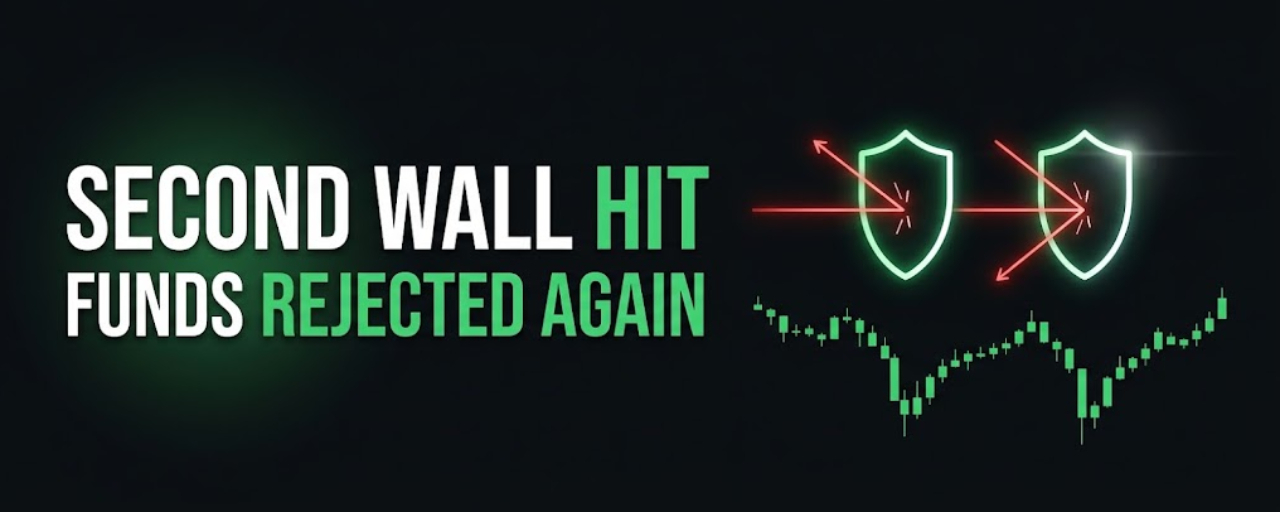

After THORChain faced scrutiny, the attacker tried a different route and got blocked again. Here's what changed, and what it means for the THORChain debate.
🧱 One rejection could be a fluke. Two, from two different protocols, starts to look like a pattern.
MistTrack reports that the Bitget attacker tried moving stolen funds through Chainflip, another cross-chain protocol, and the deposit was rejected. The broker returned the funds. The transfer never completed.
🔄 Here's why these matters alongside the THORChain story.
Remember the debate we covered earlier, whether a decentralized protocol can or should refuse known stolen funds? THORChain faced exactly that question after roughly 101.5 BTC and significant XRP from the Bitget hack moved through its network. Now, the attacker appears to have pivoted to a different protocol entirely and got blocked there too.
🧠 Here's what that pivot actually tells you.
If the attacker is trying multiple protocols rather than sticking with one, that suggests increasing difficulty finding a clean path to launder these funds. Security firms and protocols are actively watching flagged addresses in real time, and at least this attempt got caught before completing. That's meaningfully different from funds successfully moving through without friction.
MistTrack also noted something important, the funds weren't frozen, just rejected and returned. That's a subtle but real distinction. The protocol didn't claw back already-laundered funds, it simply declined to process a flagged deposit before the transaction went through. That's a lower bar than the "should protocols freeze funds after the fact" debate, but it's still a meaningful layer of defense.
✅ What this means for you
If you're following the THORChain story, this adds useful context, the broader ecosystem of cross-chain protocols isn't uniformly permissive. Some are actively rejecting known flagged transactions at the point of attempted entry, even if the debate about freezing already-moved funds remains unresolved.
If you're a Bitget user still waiting on your situation, this is incrementally good news, every successful block reduces how much of the stolen total the attacker can successfully launder and potentially cash out.
If you're trying to understand how crypto crime actually gets fought in practice, this is a good real-world example, it's rarely a single dramatic freeze, it's usually a series of smaller wins, a rejected deposit here, a flagged address there, that collectively make laundering harder over time.
🟢 Best case going forward
More protocols continue rejecting flagged transactions in real time, the attacker finds fewer and fewer viable paths to launder the stolen funds, and a larger portion of the total loss becomes effectively unusable to them.
🔴 Risk scenario
The attacker eventually finds a protocol or method without the same monitoring and successfully launders a meaningful portion of the remaining stolen funds despite these early blocks.
👀 Three things to watch
1️⃣ Further laundering attempts
Does the attacker try additional protocols, and do those also result in rejections?
2️⃣ Bitget's official incident report
Does the promised root-cause analysis get published with full technical detail on how the breach happened?
3️⃣ Total recovered or blocked funds
Does tracking data show a growing percentage of the stolen total being successfully stopped versus successfully laundered?
💡 The key takeaway
A single rejected transaction doesn't resolve a 387-million-dollar hack. But it is a genuinely encouraging data point, multiple protocols independently declining to process funds tied to a known breach suggests real monitoring infrastructure is working, even without a formal, coordinated freeze.
The question from the original THORChain debate, what does a decentralized protocol owe victims of theft, still doesn't have a clean answer. But this at least shows some parts of the ecosystem are choosing caution over neutrality when flagged funds show up at their door.
That is the part worth watching.
This post is for informational and educational purposes only and is not financial advice. Crypto markets are volatile. Always conduct your own research before making financial decisions.
#BinanceSquare #Bitget #CryptoSecurity #Chainflip #Crypto
