𝗪𝗵𝘆 𝗖𝗮𝗻 𝗮 𝗖𝗿𝗼𝘀𝘀-𝗖𝗵𝗮𝗶𝗻 𝗦𝘄𝗮𝗽 𝗧𝗮𝗸𝗲 𝗟𝗼𝗻𝗴𝗲𝗿?
A regular TON swap happens on one blockchain.
A cross-chain swap has to coordinate execution across two different networks.
For example:
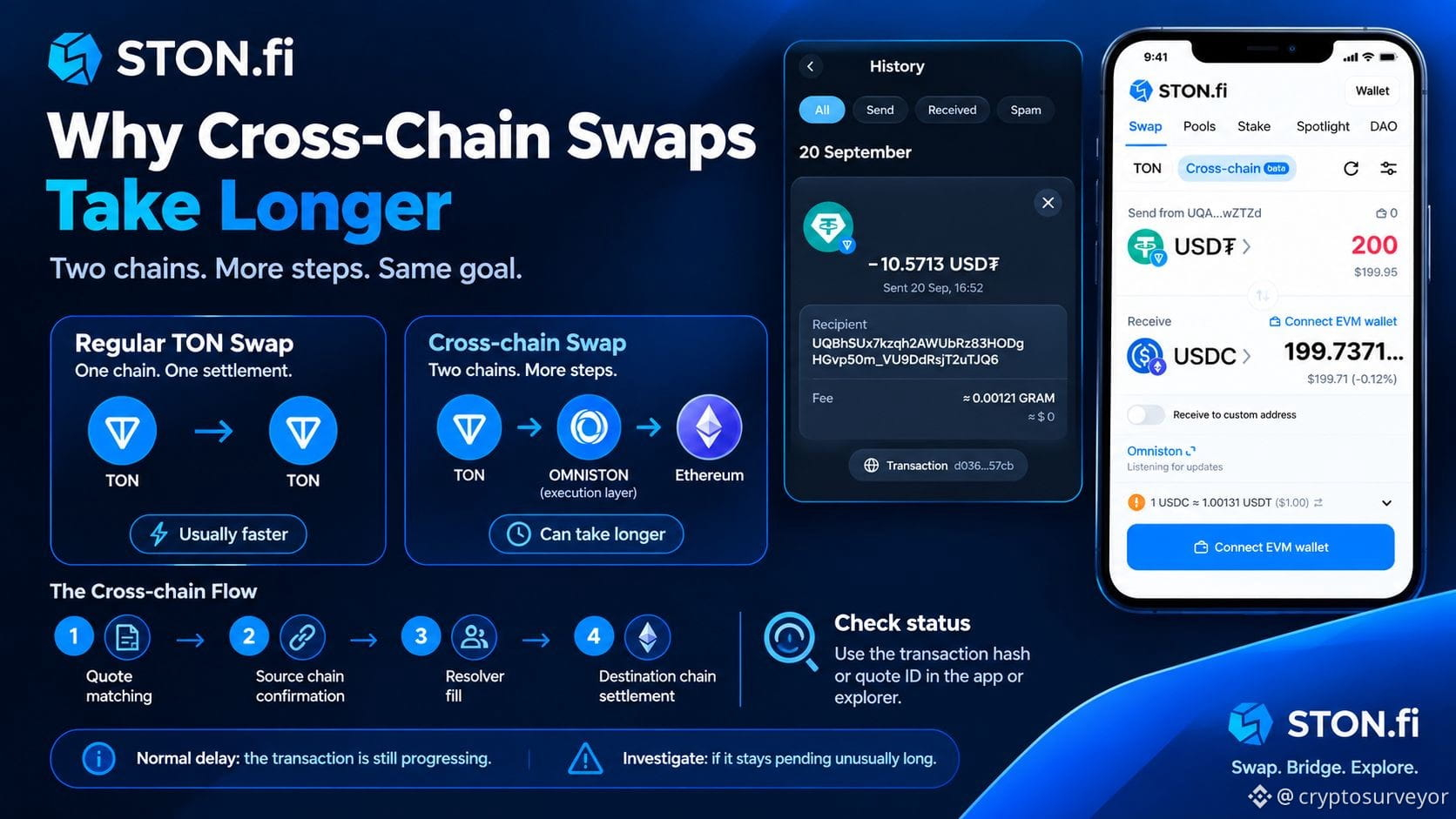
𝗥𝗲𝗴𝘂𝗹𝗮𝗿 𝗧𝗢𝗡 𝘀𝘄𝗮𝗽
TON → TON
One network → one settlement process.
𝗖𝗿𝗼𝘀𝘀-𝗰𝗵𝗮𝗶𝗻
TON → Ethereum/Base/etc.
Quote → source transaction → resolver fill → destination settlement.
With STON.fi and Omniston, the process involves an RFQ where resolvers compete to provide a quote. After a quote is selected, the source and destination sides are coordinated through linked HTLCs.
That means there can be several things to wait for:
→ The quote to be matched
→ The source-chain transaction to confirm
→ The resolver to fill the order
→ The destination-chain transaction to settle
Network conditions matter too.
TON may confirm quickly, while the destination EVM chain can take longer depending on its own block production and network conditions.
𝗦𝗼 𝘄𝗵𝗲𝗻 𝗶𝘀 𝗮 𝗱𝗲𝗹𝗮𝘆 𝗻𝗼𝗿𝗺𝗮𝗹?
If the transaction is still progressing through the expected stages, a short wait doesn't necessarily mean something is wrong.
If it stays pending unusually long, the useful next step is to check the transaction hash and trade status rather than submitting the swap again.
STON.fi's Omniston documentation provides trade tracking using the quote ID, wallet address and outgoing transaction hash.
This is also why cross-chain swaps shouldn't be judged by the same timing expectations as a normal TON swap.
You're not waiting for one chain alone.
You're waiting for two chains to coordinate one settlement.
And with Omniston's HTLC design, the intended outcome is atomic: either the quoted assets settle, or the timelock mechanism provides a refund path.
A regular TON swap happens on one blockchain.
A cross-chain swap has to coordinate execution across two different networks.
For example:
𝗥𝗲𝗴𝘂𝗹𝗮𝗿 𝗧𝗢𝗡 𝘀𝘄𝗮𝗽
TON → TON
One network → one settlement process.
𝗖𝗿𝗼𝘀𝘀-𝗰𝗵𝗮𝗶𝗻
TON → Ethereum/Base/etc.
Quote → source transaction → resolver fill → destination settlement.
With STON.fi and Omniston, the process involves an RFQ where resolvers compete to provide a quote. After a quote is selected, the source and destination sides are coordinated through linked HTLCs.
That means there can be several things to wait for:
→ The quote to be matched
→ The source-chain transaction to confirm
→ The resolver to fill the order
→ The destination-chain transaction to settle
Network conditions matter too.
TON may confirm quickly, while the destination EVM chain can take longer depending on its own block production and network conditions.
𝗦𝗼 𝘄𝗵𝗲𝗻 𝗶𝘀 𝗮 𝗱𝗲𝗹𝗮𝘆 𝗻𝗼𝗿𝗺𝗮𝗹?
If the transaction is still progressing through the expected stages, a short wait doesn't necessarily mean something is wrong.
If it stays pending unusually long, the useful next step is to check the transaction hash and trade status rather than submitting the swap again.
STON.fi's Omniston documentation provides trade tracking using the quote ID, wallet address and outgoing transaction hash.
This is also why cross-chain swaps shouldn't be judged by the same timing expectations as a normal TON swap.
You're not waiting for one chain alone.
You're waiting for two chains to coordinate one settlement.
And with Omniston's HTLC design, the intended outcome is atomic: either the quoted assets settle, or the timelock mechanism provides a refund path.