
Energy disruptions rarely remain confined to the energy sector.
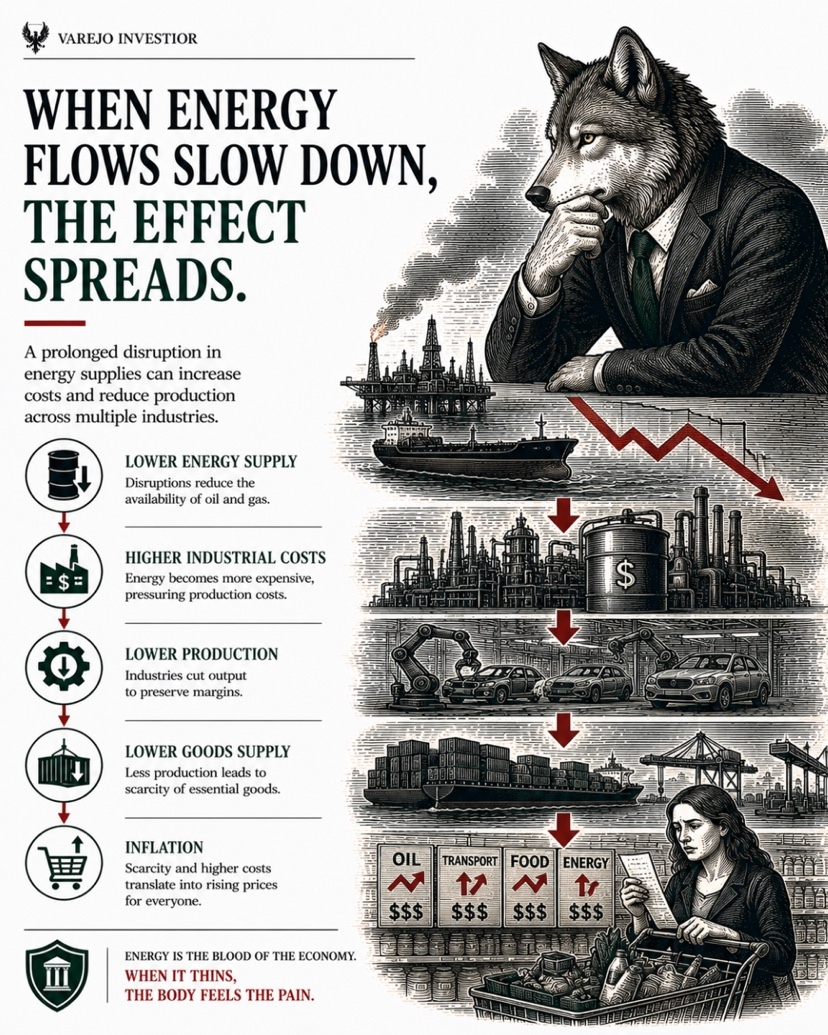
When oil and gas become harder to obtain or transport, the first pressure can appear in industrial costs. Factories, airlines, shipping companies, logistics operators and agricultural businesses all depend on energy directly or indirectly.
The economic chain can then become more complicated:
ENERGY SHORTAGE → HIGHER INPUT COSTS → LOWER MARGINS → LESS OUTPUT → TIGHTER SUPPLY → HIGHER PRICES
Companies facing rising expenses may reduce production, delay investments or pass part of the additional cost to customers. If this process spreads across several industries at the same time, the effect can reach the broader economy.
Transportation is especially important because fuel costs influence the movement of raw materials and finished products. Food prices can also be affected through farming, processing, storage and distribution.
For financial markets, this creates several variables to watch simultaneously. Energy prices can influence inflation expectations, corporate earnings, interest-rate expectations and consumer spending.
The key lesson is that energy is not simply another commodity traded on an exchange.
It is an input that connects factories, farms, ships, vehicles, businesses and households.
When that input becomes constrained, the economic impact can travel through the entire supply chain.
#Price-Prediction #Inflation #oil $OILK.ETF
$XOM.US