Cross chain swaps become much easier to understand when you stop thinking about the bridge first and start thinking about the asset you actually need.
Take a simple example:
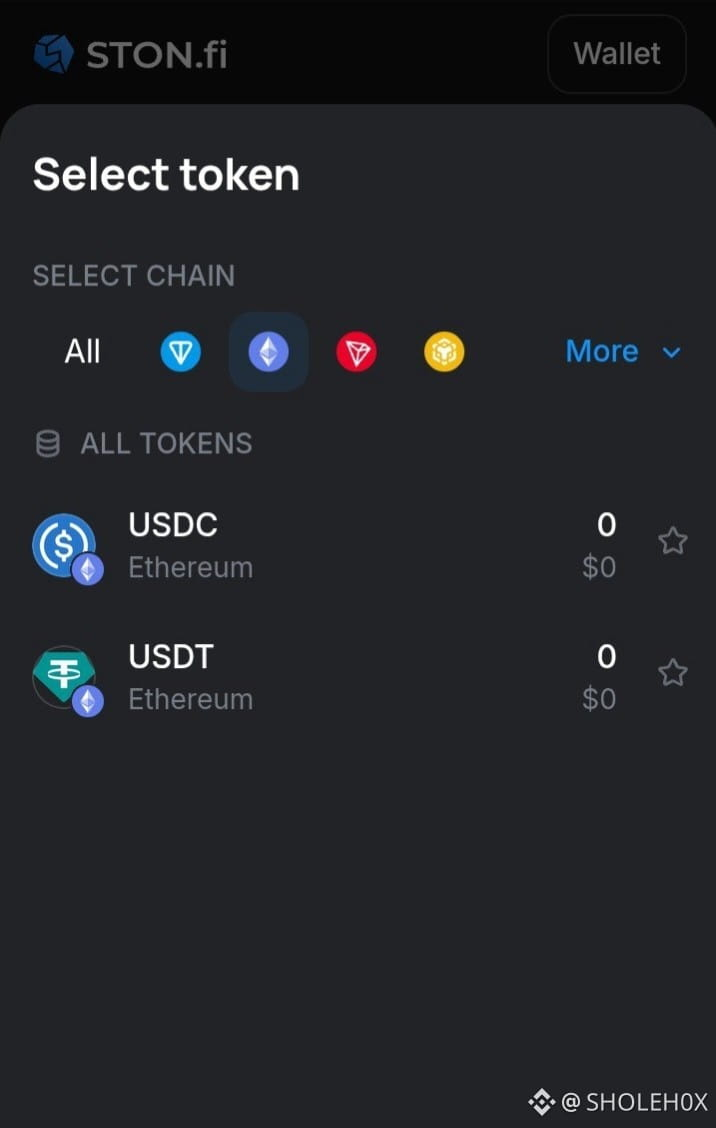
You have USDC on Ethereum, but your destination is TON and what you actually want to use there is USDT.
Those are two separate changes happening at once:
Ethereum → TON
USDC → USDT
The traditional approach can make this feel more complicated than it needs to be.
You might bridge USDC from Ethereum, receive a bridged representation on TON and then make another swap to get USDT.
So the journey becomes:
Ethereum USDC → bridge → bridged USDC → swap → TON USDT
It works, but there are multiple steps and assets involved.
This is where the cross-chain approach behind @ston_fi becomes interesting.
With Omniston, the request can be based around the asset you actually want at the destination.
Instead of thinking:
«“How do I get my USDC onto TON?”»
You can think:
«“I have USDC here. I need USDT there.”»
The infrastructure then handles the coordination required to execute that cross-chain swap.
Omniston uses resolvers to compete for orders, while linked HTLC-based settlement coordinates the source and destination sides of the transaction.
The technical machinery remains underneath.
From the user's perspective, the important part is much simpler:
What I send → what I receive.
That distinction can make a real difference to the experience.
If your end goal is USDT on TON, receiving an intermediate token first and then having to swap again adds another decision, another transaction and potentially additional costs.
A direct destination-asset approach can reduce that friction.
But there's still something I wouldn't overlook:
Always check the quote before signing.
If you're swapping something like 10 USDC on Ethereum for USDT on TON, don't just look at the final number.
Check the source network.
Check the destination network.
Check the exact token you're receiving.
Check the expected amount.
Check the fees and quoted value.
🌐 app.ston.fi
Take a simple example:
You have USDC on Ethereum, but your destination is TON and what you actually want to use there is USDT.
Those are two separate changes happening at once:
Ethereum → TON
USDC → USDT
The traditional approach can make this feel more complicated than it needs to be.
You might bridge USDC from Ethereum, receive a bridged representation on TON and then make another swap to get USDT.
So the journey becomes:
Ethereum USDC → bridge → bridged USDC → swap → TON USDT
It works, but there are multiple steps and assets involved.
This is where the cross-chain approach behind @ston_fi becomes interesting.
With Omniston, the request can be based around the asset you actually want at the destination.
Instead of thinking:
«“How do I get my USDC onto TON?”»
You can think:
«“I have USDC here. I need USDT there.”»
The infrastructure then handles the coordination required to execute that cross-chain swap.
Omniston uses resolvers to compete for orders, while linked HTLC-based settlement coordinates the source and destination sides of the transaction.
The technical machinery remains underneath.
From the user's perspective, the important part is much simpler:
What I send → what I receive.
That distinction can make a real difference to the experience.
If your end goal is USDT on TON, receiving an intermediate token first and then having to swap again adds another decision, another transaction and potentially additional costs.
A direct destination-asset approach can reduce that friction.
But there's still something I wouldn't overlook:
Always check the quote before signing.
If you're swapping something like 10 USDC on Ethereum for USDT on TON, don't just look at the final number.
Check the source network.
Check the destination network.
Check the exact token you're receiving.
Check the expected amount.
Check the fees and quoted value.
🌐 app.ston.fi