
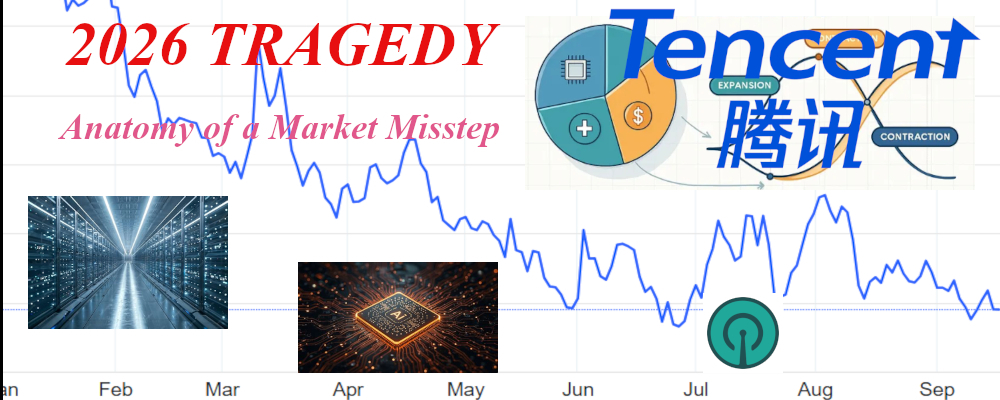

The year 2026 was poised to be a period of consolidation and steady growth for Tencent Holdings (HKG: 0700). However, the narrative took a sharp and unexpected turn in the second half of the year, leading to what market historians now label the "2026 Tragedy." What began with robust quarterly earnings and a multi-year high in share price quickly devolved into a crisis of confidence. This downturn was not triggered by a single catastrophic event, but rather by a perfect storm of data misinterpretations, a tectonic shift in capital allocation toward artificial intelligence hardware, and cooling domestic consumer sentiment. The result was a dramatic valuation reset that caught even the most seasoned analysts off guard.
The Spark: The Sensor Tower Misreading
In mid-2026, the catalyst for the initial sell-off arrived in the form of a quarterly report from the third-party tracking firm Sensor Tower. The data suggested a double-digit drop in iOS receipts for Tencent’s top-grossing mobile titles. Panicked retail and institutional investors immediately extrapolated this as a fundamental collapse in core gaming revenue, the crown jewel of Tencent's ecosystem.
However, this was a critical misreading of the underlying mechanics. The decline in iOS receipts reflected a strategic pivot by Tencent toward its own proprietary payment channels and the "WeChat Mini-Game" ecosystem, which bypasses traditional app store commissions. By the time analysts could issue detailed clarifications explaining that total cross-platform grossing remained stable, the damage was done. The initial wave of panic selling triggered algorithmic stop-losses, leading to a cascade of profit-taking that wiped billions off the company's market capitalization in a matter of days.
The Macro Shift: Rotation into AI Hardware
Simultaneously, a broader thematic shift was unfolding within Asian capital markets. The "software-as-a-service" and legacy internet conglomerate narrative, which had dominated for over a decade, found itself eclipsed by the "AI Hardware Supercycle."
Capital began a massive rotation away from platforms like Tencent and Alibaba and into:
High-growth AI hardware manufacturers.
Advanced semiconductor supply chain participants.
Emerging Hong Kong-based AI startups seeking fresh listings.
Investors increasingly viewed Tencent as a "cash cow" with limited upside compared to the explosive growth potential of the firms building the physical infrastructure of the AI era. This drain on liquidity left Tencent’s stock vulnerable, as the buyers of last resort were no longer looking for platform stability, but for hardware-driven volatility.
Institutional Retreat: Quiet Profit-Taking
As the mid-summer rally began to falter, major domestic and regional mutual funds executed a tactical retreat. Sensing the shift in market momentum, several high-profile fund managers utilized the tail end of the early-2026 surge to lock in multi-year gains.
This quiet reduction in exposure occurred behind the scenes, further draining the stock’s liquidity. When the Sensor Tower data hit the newsfeeds, the lack of institutional support meant there was no floor to the price drop. The "quiet exit" of the big players signaled to the broader market that the era of aggressive Tencent accumulation had come to a close.
Macroeconomic Headwinds: Consumer Sentiment & Monetization Bottlenecks
While technical data and market rotations provided the spark, the underlying dry timber was a persistent sluggishness in Chinese domestic consumer spending. Throughout 2026, the expected "revenge spending" in the digital sector failed to fully materialize.
Several monetization bottlenecks emerged:
Digital Advertising: SMBs (Small and Medium Businesses) scaled back budgets as conversion rates plateaued.
Mobile Gaming: A saturated market led to higher User Acquisition (UA) costs, squeezing margins on even the most successful titles.
Fintech: Transaction volumes on WeChat Pay saw a deceleration in growth as consumers prioritized high-yield savings over discretionary digital purchases.
These macroeconomic pressures meant that even when Tencent’s operations were efficient, the ceiling for growth was lower than historical models had predicted.
The 2026 sell-off of Tencent Holdings serves as a stark reminder of the fragility of market sentiment. It highlights how easily a narrative can shift when data misunderstandings, sector rotations, and macroeconomic headwinds align. For Tencent, the "Tragedy" was not one of fundamental failure, but of a mismatch between a massive company’s steady performance and an impatient market's desire for the next technological frontier.
Though, $TENCENT is primarily listed on Hong Kong Stock Exchange (HKSE) and only available on #Binance Perpetual contract, there are lessons Stock Traders can learn from the situation. In US, you can find tech conglomerate like Meta Platforms ($META ), Alphabet Inc. ($GOOGL ) and Microsoft ($MSFT ), though no single US company can match the scope of Tencent. We can learn that when you are navigating volatile tech landscapes:
Verify Third-Party Data Before Acting: Third-party estimates (like app store tracking) can be misleading when business models shift toward direct channels or proprietary payment ecosystems.
Respect Macro Sector Rotations: Market trends (like the AI hardware supercycle) can drain liquidity from fundamental powerhouses regardless of earnings quality.
Track Institutional Flows & Smart Money: Pay attention to quiet position trimming by major funds following prolonged rallies.
Distinguish Between Narrative Shifts and Fundamental Failures: Temporary sentiment drops driven by external noise present different trading risks than core operational declines.
#Tencent remains a cash-flow powerhouse with an unparalleled social moat, yet it must now navigate a landscape where it is no longer the default proxy for Chinese tech growth. The lesson of 2026 is clear: in the modern market, even a giant can be humbled when its story is no longer the one investors want to hear.