
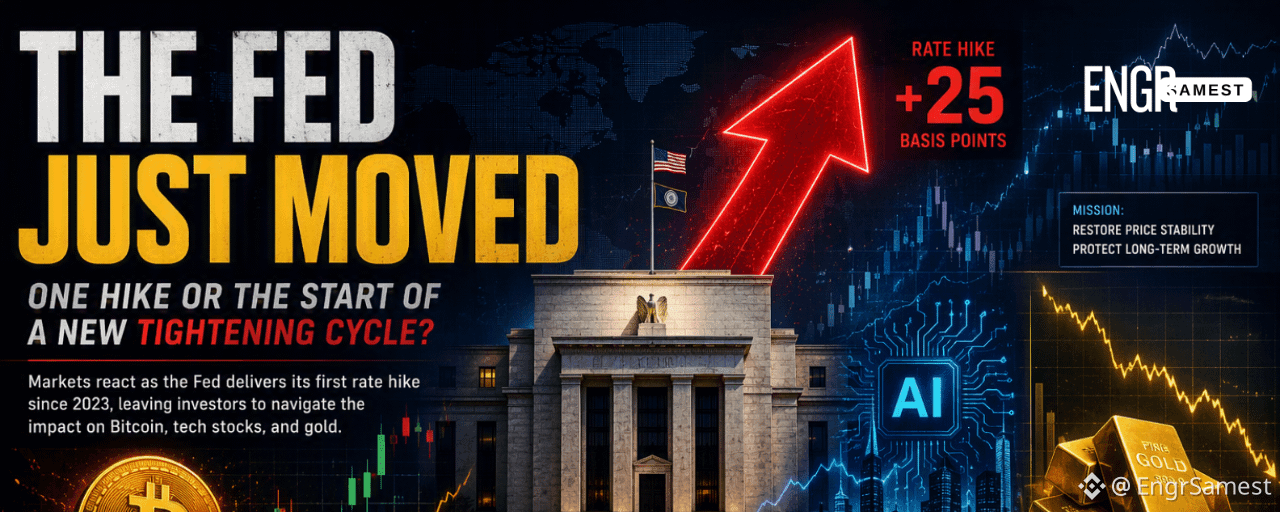

The Federal Reserve has officially pulled the trigger. #FedRateWatch
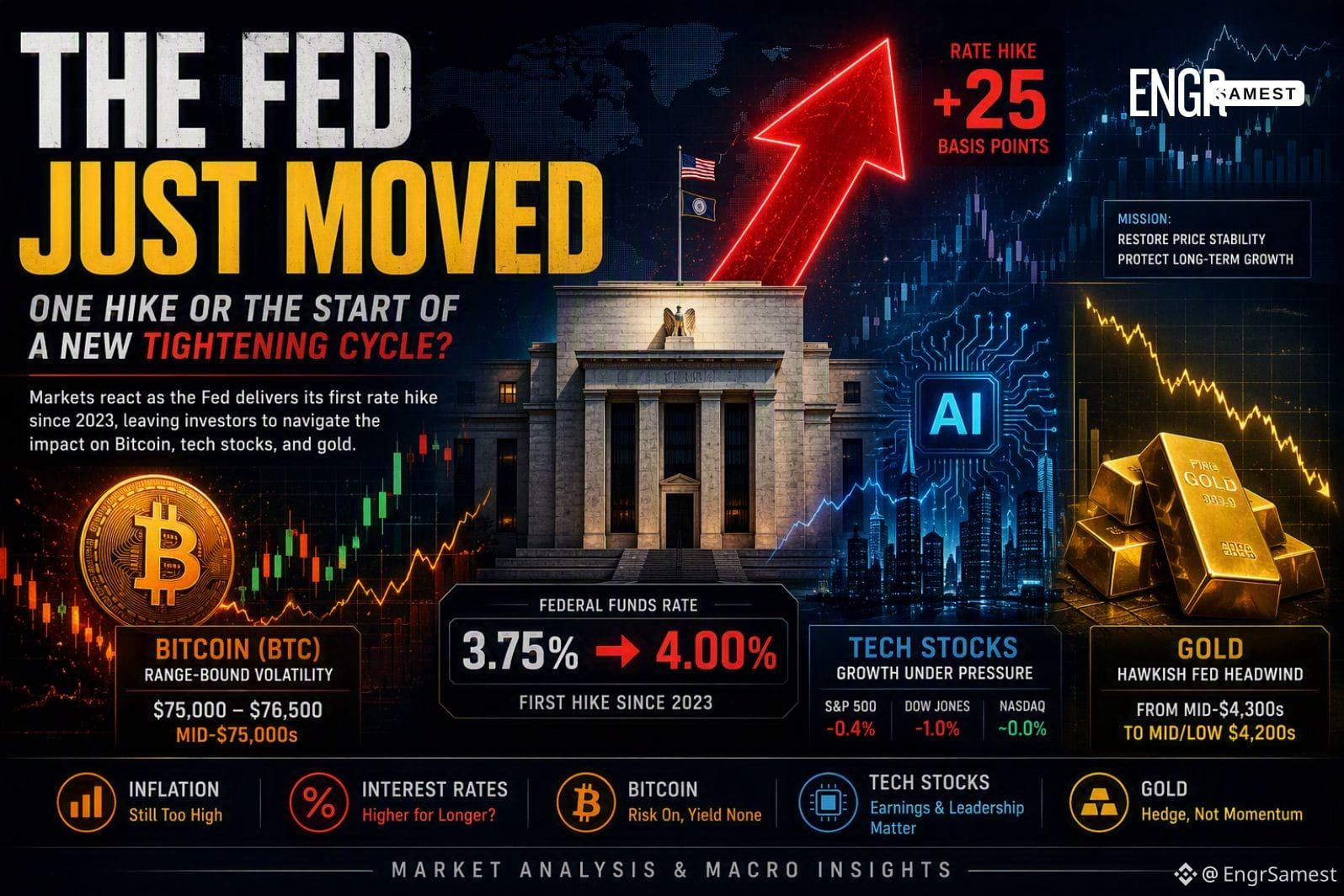
After August's core CPI came in at 0.3% month-over-month, ahead of the expected 0.2%, rate hike expectations surged toward 90%. On September 16, the FOMC unanimously voted 12-0 to raise the federal funds rate by 25 basis points, bringing the target range to 3.75%-4.00%. It marks the Fed's first rate increase since 2023.
This seems like great thing ahead.
However, the more important one now is whether this was a single adjustment or the beginning of a broader tightening cycle.
One Hike, or the Start of Something Bigger?
If investors were hoping for a dovish signal, they did not get one.
Fed Chair Kevin Warsh made it clear that inflation remains a concern, stating that it is "too high and has been for too long." He emphasized that recent inflation data has not shown meaningful improvement in the underlying trend and suggested that financial conditions had not become restrictive enough, prompting the Committee to remove "a dose of accommodation."
The updated dot plot reinforced that message.
Most policymakers still expect additional tightening this year. Sixteen of the 18 participants project at least one more rate increase, while four see room for two additional hikes. Only two members believe this was the final move of 2026.
This does not resemble the aggressive, rapid-fire tightening cycle seen in 2022. Instead, it appears to be a cautious, data-driven reacceleration after an extended pause. The Fed has moved once, and another hike remains on the table if inflation in key areas such as energy, housing, and services remains sticky.
The focus now shifts squarely to the October and December meetings.
Market Reaction: Bitcoin, Tech, and Gold
The rate hike itself was largely priced in.
What markets reacted to was the Fed's tone and the message embedded in the updated projections.
Bitcoin: Stuck Between Expectations and Reality
Bitcoin ($BTC) traded in a volatile but ultimately range-bound fashion following the announcement. Prices swung between roughly $75,000 and $76,500 before stabilizing around the mid-$75,000 level.
Much of the move had already been discounted by traders in the days leading up to the meeting. Historically, higher real yields and a stronger U.S. dollar create headwinds for non-yielding assets such as Bitcoin, making the short-term outlook moderately cautious.
Until markets become convinced that this tightening cycle will remain shallow, upside momentum may remain limited.
Technology Stocks: Holding Up Better Than Expected
Equities delivered a mixed performance.
The S&P 500 finished lower by approximately 0.4%, while the Dow Jones Industrial Average declined by more than 1%. The Nasdaq, however, managed to remain relatively resilient, closing roughly flat as select AI and semiconductor names attracted buyers after recent weakness.
Higher interest rates generally pressure growth stocks because they increase the discount rate applied to future earnings. However, investors are also weighing whether economic strength remains sufficient to support continued AI infrastructure spending and capital investment.
For now, the short-term outlook is cautious. Longer term, the story still hinges on corporate earnings and whether the market views this as merely "one more hike" rather than the start of a prolonged tightening campaign.
Gold: Feeling the Pressure
Gold was the clearest casualty of the Fed's hawkish stance.
After rallying into the decision, the metal reversed sharply as the U.S. dollar strengthened and policymakers signaled a continued commitment to controlling inflation. Spot prices retreated from the mid-$4,300 range toward the low-to-mid $4,200s.
The logic is straightforward: when interest rates rise, the opportunity cost of holding a non-yielding asset like gold increases.
That said, geopolitical uncertainty and energy-related risks continue to provide underlying support. For now, the pullback looks more like a hawkish-Fed repricing than a fundamental breakdown in the longer-term bullish thesis.
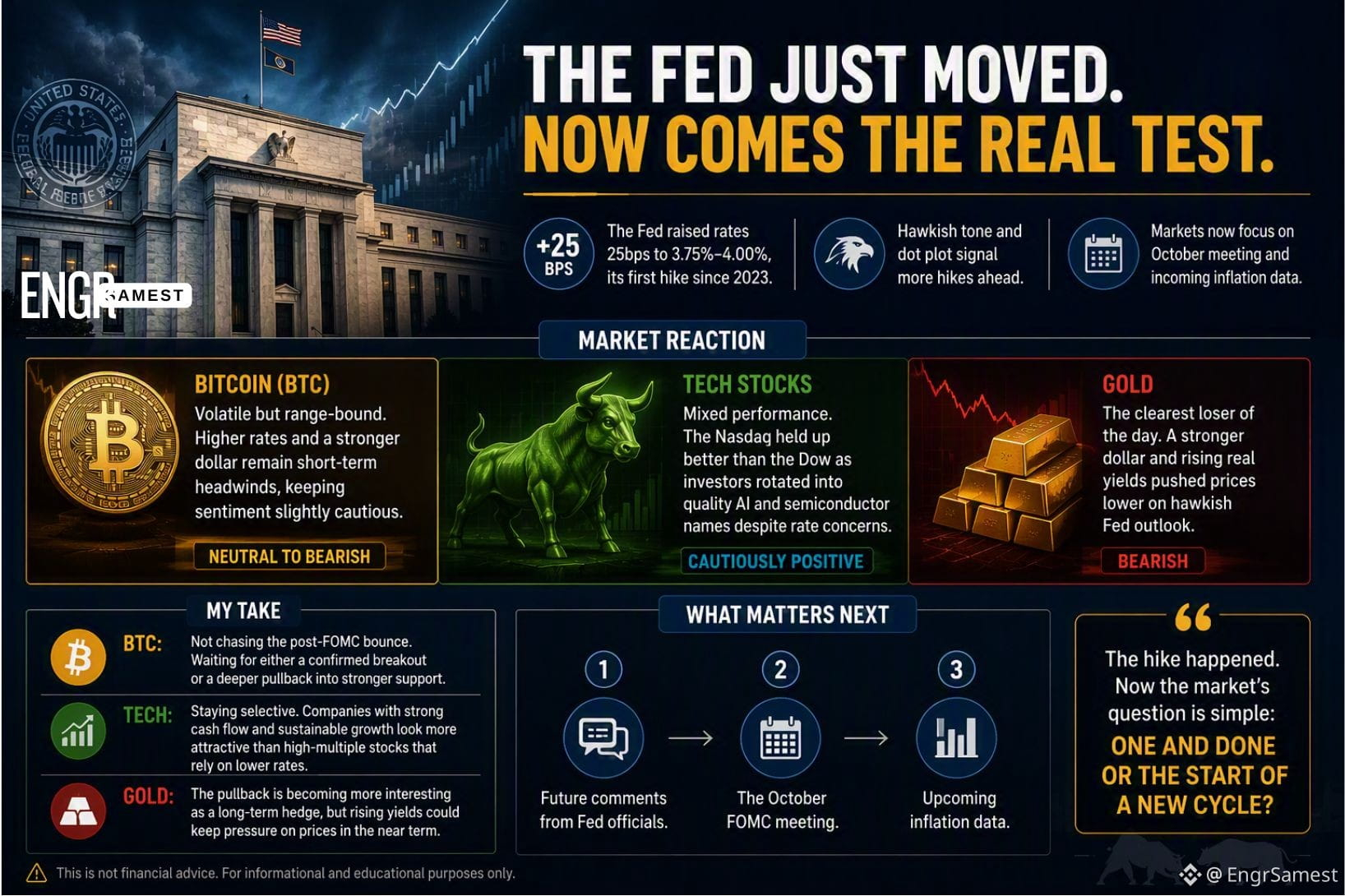
My Current Market View
Not financial advice. Just my interpretation of the current setup.
Bitcoin
I'm not rushing to chase the post-FOMC volatility.
I'd rather see a decisive breakout above the current range or a deeper retracement into stronger on-chain support before adding exposure. Existing spot positions remain intact, but I'm avoiding leverage ahead of upcoming inflation and economic data releases.
Technology Stocks
I'm focused on selectivity rather than broad exposure.
Companies with strong cash flow, durable earnings, and the ability to fund growth without relying on cheap capital look increasingly attractive compared to highly valued growth stories that depend on falling rates. The key question is whether the Nasdaq's recent resilience persists or fades with the next move higher in Treasury yields.
Gold
The post-hike decline is beginning to look more like a potential accumulation zone than a momentum trade.
If real yields continue rising and the dollar remains strong, gold could remain under pressure in the near term. However, as a long-term hedge against inflation and geopolitical risk, the broader investment case remains intact.
Why This Matters Beyond the Markets
Rate decisions are more than just trading catalysts.
Higher borrowing costs affect homeowners looking to refinance, businesses financing expansion, and consumers carrying variable-rate debt. At the same time, a Federal Reserve willing to tighten policy while the labor market remains firm is attempting to preserve purchasing power and prevent inflation from becoming entrenched.
That balance between controlling inflation and maintaining economic growth is now the market's central narrative.
What Comes Next?
Three catalysts stand out:
Additional commentary from Chair Warsh and other Fed officials.
The October FOMC meeting.
Upcoming inflation data, particularly whether core price pressures continue to cool or remain stubbornly elevated.
The Fed has already made its move.
Now the market must answer the bigger question: was this a final adjustment, or the first step in a new tightening cycle?