


In the world of decentralized finance (DeFi) and perpetual swaps (Perpetual Swaps / Perps), the publicity of the blockchain has created the illusion of complete transparency. Anyone can track the wallet of a hypothetical “trader” who systematically loses hundreds of thousands of dollars on high-leverage positions. The first thing that comes to mind for observers is an inexperienced gambler or a gambling addict who has lost control of their risks.
However, behind the consistent “unexpected luck” there is often a cold calculation. Systemic losses on decentralized platforms (such as Hyperliquid or dYdX) are often not the result of poor analysis, but a well-established mechanism for capital transfer and legalization of income.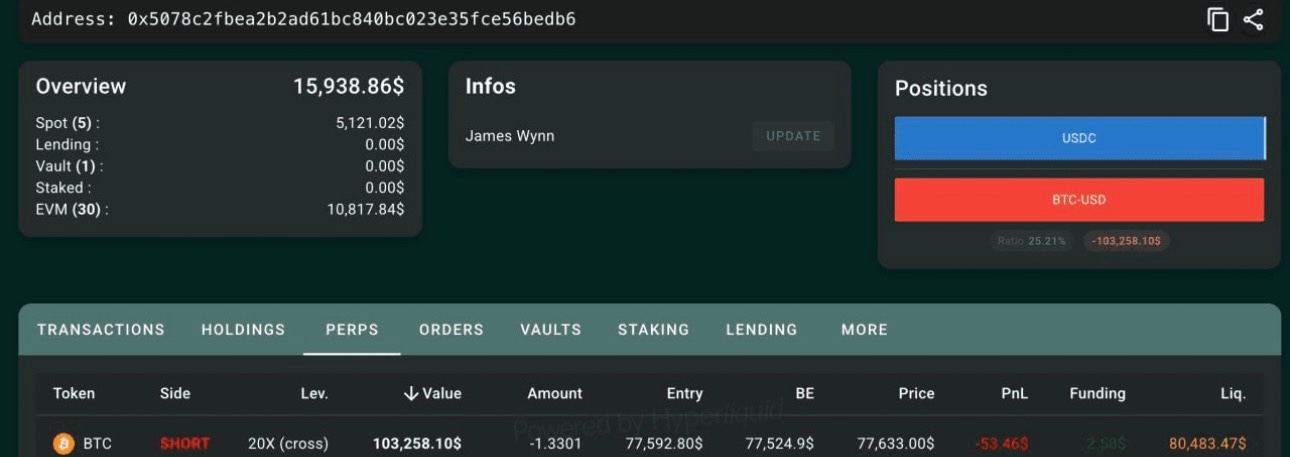
Anatomy of the scheme: Loss-Making Trade and Win-Loss Wash Trading
The essence of intentional liquidity drain is to conduct two mirror transactions, where one party deliberately records a loss, and the other receives a net profit.
The basic algorithm of operation:
➡️ Control of two accounts: The conspirators (or one person) own two independent wallets. Wallet A contains funds of dubious origin ("dirty" or untaxed capital), and wallet B is a clean account that is being prepared for withdrawal into fiat.
➡️ Opening mirror positions: On an exchange with low liquidity or in narrow order glasses, opposite deals on the same asset (for example, BTC/USD) are opened simultaneously. Wallet A opens a Short with a 20X leverage, and wallet B opens a Long with a similar leverage.
➡️ Artificial liquidation trigger: Due to price manipulation or natural market movement, the position on wallet A is deliberately driven into the red or liquidated. At the same moment, wallet B closes the position with maximum profit.
As a result, capital successfully flows from wallet A to wallet B.
Main motives: Why deliberately lose money?
From the point of view of classical trading, the loss of funds seems absurd. However, in the sphere of gray and black capital, this is a standard fee for security and legalization.
1️⃣ Legalization of "dirty" capital (Money Laundering)
Funds received as a result of hacker attacks, phishing or gray business are difficult to withdraw to a bank card due to strict KYC/AML procedures. After carrying out the scheme on wallet B, a legally "clean" history is formed: the trader can declare to tax authorities or financial monitoring that the funds received are profits from successful trading in high-risk crypto assets.
2️⃣ Tax evasion and optimization
In some jurisdictions, losses from crypto trading can be credited to reduce the overall tax base. A systemic loss on one wallet allows you to offset profits on other legal entities or reduce the total amount of tax liability.
3️⃣ Hidden transfer between entities
The transfer of large amounts directly between wallets (Wallet-to-Wallet) is instantly highlighted by blockchain analytical services (Chainalysis, TRM Labs) and links addresses to each other. A transfer via a market order on the exchange breaks the direct connection between the sender and the recipient.
The fine line: When is a loss just a mistake or a hedge?
Not every losing series of transactions indicates a crime. There are completely legitimate strategies on the market that look like intentional loss of money from the outside.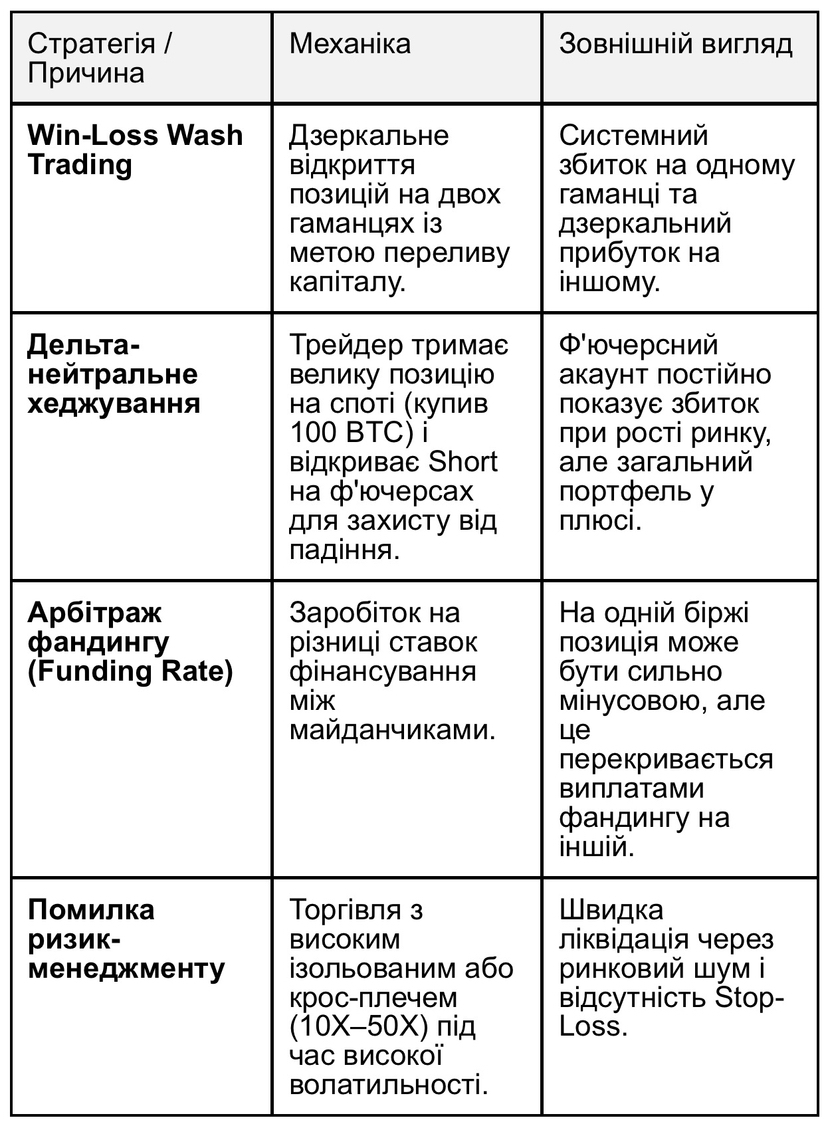
How do analysts expose such schemes?
The blockchain stores every transaction, and for cybersecurity specialists, detecting Win-Loss Wash Trading is a matter of pattern analysis.
Key markers of fraudulent overflow:
➡️ Synchronicity: Opening and closing trades on two independent wallets occurs with an accuracy of a few seconds or blocks.
➡️ Unusual volumes on low-liquidity pairs: The scheme is often carried out on instruments with small volumes so that the conspirators' orders are guaranteed to be executed against each other.
➡️ Absurd entry points: Systematically opening positions against an obvious strong trend without using protective orders.
A constant loss in crypto trading is not always an indicator of inexperience. In a decentralized environment, a negative balance on a screenshot may only be the final stage of a sophisticated financial transaction.