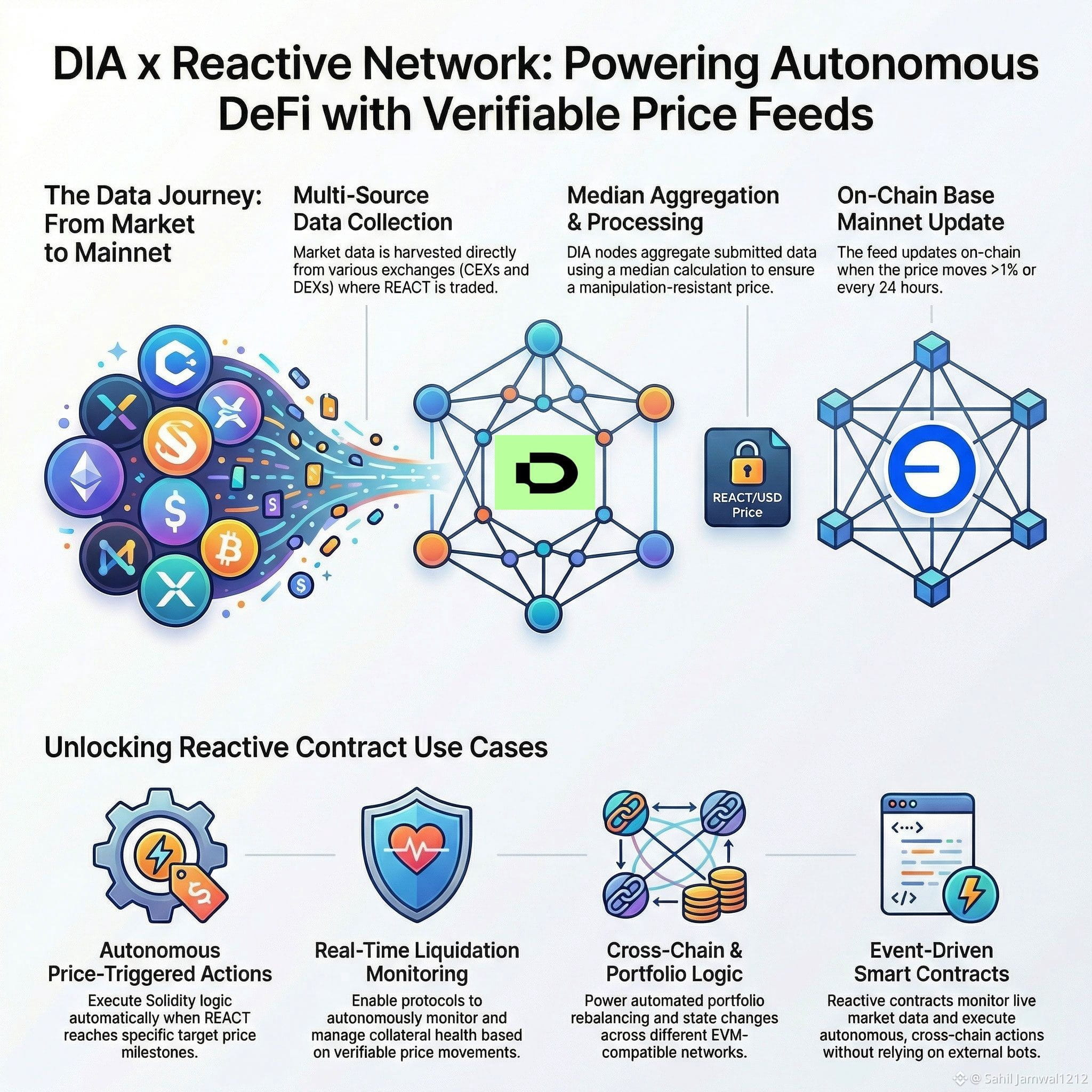
On July 25, 2026, DIA recorded its lowest price in the project's history $0.09784 per token. Two days later, a leverage-driven short squeeze pushed it roughly 23% higher to around $0.18, generating nearly $1M in liquidations on the short side.
The price action generated coverage. The network activity didn't. That gap is what I want to look at.
What the network was doing during the same period:
During the period surrounding the all-time low, DIA's Lasernet mainnet continued operating with the following metrics:
4.4M+ DIA tokens locked in staking — unchanged 10+ independent Feeder operators continued submitting on-chain data 60+ integrated blockchain networks continued receiving verified price updates No oracle-related incidents or protocol failures reported among DIA's 250+ integrations
Why this separation matters
Token price and protocol health are related long-term but they decouple dramatically in bear markets and especially during low-liquidity events like short squeezes. The July move was described by analysts as leverage-driven rather than fundamental — meaning the price recovery reflected a technical squeeze, not a change in the underlying network's activity or adoption.
The more useful question for infrastructure projects is: does the network continue to function when price incentives are weakest? In DIA's case, the data from July suggests yes — feeders kept submitting, stakers kept staking, and dependent protocols kept clearing without incident.
That doesn't tell you where the price goes. But it does tell you something about the project's infrastructure maturity after roughly 7 years of development.
For reference — network stats as of August 2026:
Chains integrated: 60+ Independent Feeders: 10+ dApps powered: 250+ Assets supported: 20,000+ Staked tokens: 4.4M+
Not financial advice. The short squeeze and ATL context is based on publicly reported data. Always conduct your own research before making investment decisions. DYOR. $DIA
The price action generated coverage. The network activity didn't. That gap is what I want to look at.
What the network was doing during the same period:
During the period surrounding the all-time low, DIA's Lasernet mainnet continued operating with the following metrics:
4.4M+ DIA tokens locked in staking — unchanged 10+ independent Feeder operators continued submitting on-chain data 60+ integrated blockchain networks continued receiving verified price updates No oracle-related incidents or protocol failures reported among DIA's 250+ integrations
Why this separation matters
Token price and protocol health are related long-term but they decouple dramatically in bear markets and especially during low-liquidity events like short squeezes. The July move was described by analysts as leverage-driven rather than fundamental — meaning the price recovery reflected a technical squeeze, not a change in the underlying network's activity or adoption.
The more useful question for infrastructure projects is: does the network continue to function when price incentives are weakest? In DIA's case, the data from July suggests yes — feeders kept submitting, stakers kept staking, and dependent protocols kept clearing without incident.
That doesn't tell you where the price goes. But it does tell you something about the project's infrastructure maturity after roughly 7 years of development.
For reference — network stats as of August 2026:
Chains integrated: 60+ Independent Feeders: 10+ dApps powered: 250+ Assets supported: 20,000+ Staked tokens: 4.4M+
Not financial advice. The short squeeze and ATL context is based on publicly reported data. Always conduct your own research before making investment decisions. DYOR. $DIA