



Edit dengan aplikasi Docs
Buat penyesuaian, tinggalkan komentar, dan bagikan ke orang lain untuk mengedit pada saat yang sama.
TIDAK, TERIMA KASIH GUNAKAN APLIKASINYA
Decentrawood Membawa Web3 AI ke Dunia Nyata dengan Peluncuran Agen AI Kesehatan dan DAO
Decentrawood Membawa Web3 AI ke Dunia Nyata dengan Agen AI Kesehatan dan Peluncuran DAO
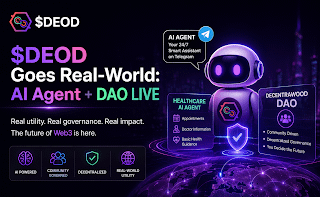
Decentrawood telah meluncurkan Agen Tugas AI Kesehatan dan tata kelola DAO terdesentralisasi, menandai langkah besar untuk menghubungkan agen AI, kegunaan dunia nyata, infrastruktur blockchain, dan kepemilikan komunitas dalam ekosistem DEOD.
Inti Cepat
Decentrawood telah meluncurkan dua tambahan besar ke ekosistemnya:
Agen Tugas AI Kesehatan: Memungkinkan rumah sakit dan klinik membuat asisten AI khusus mereka sendiri yang aktif 24/7, sesuai rumah sakit, di Telegram tanpa coding.
DAO Decentrawood: Memperkenalkan tata kelola yang digerakkan komunitas, di mana peserta dapat memberikan suara atas usulan, kebijakan, peningkatan ekosistem, dan keputusan lainnya.
Peluncuran-peluncuran tersebut membawa Decentrawood melampaui pembuatan agen AI, menuju pertanyaan Web3 yang lebih besar:
Apakah infrastruktur AI bertenaga blockchain dapat memecahkan masalah praktis sehari-hari?
Decentrawood kini mewujudkan gagasan itu.
Decentrawood Meluncurkan Agen AI Kesehatan di Telegram
Salah satu tantangan terbesar dalam adopsi AI adalah mengubah teknologi yang kuat menjadi sesuatu yang benar-benar bisa digunakan oleh bisnis biasa.
Agen Tugas AI Kesehatan yang baru diluncurkan oleh Decentrawood mengambil pendekatan yang lugas.
Ini memungkinkan rumah sakit atau klinik membuat asisten khusus berbasis AI mereka sendiri di Telegram.
Alih-alih mengunduh aplikasi khusus lain, pasien dapat berinteraksi dengan agen rumah sakit melalui antarmuka pesan yang sudah familiar.
Agen bekerja sebagai asisten informasi digital 24/7, membantu pasien mengakses informasi yang relevan tentang rumah sakit atau klinik tertentu itu.
Perbedaan pentingnya adalah ini tidak dirancang sebagai chatbot kesehatan generik.
Setiap rumah sakit dapat menyediakan informasi miliknya sendiri dan membuat agen AI yang disesuaikan dengan layanan, dokter, jadwal, dan prosesnya.
Apa Sebenarnya yang Bisa Dilakukan Agen AI Kesehatan?
Konsep ini dirancang agar mudah dipahami oleh pasien.
1. Bantu Janji Temu
Pasien dapat meminta agen untuk informasi terkait:
Proses pendaftaran janji temu
Waktu konsultasi
Cara mengatur konsultasi
Panduan janji temu yang relevan
Alih-alih mencari di banyak halaman atau menunggu informasi dasar, pasien dapat langsung bertanya ke asisten AI Telegram milik rumah sakit.
2. Temukan Dokter yang Tepat
Pasien dapat mengajukan pertanyaan tentang dokter yang bekerja di rumah sakit atau klinik tertentu itu.
Agen dapat memberikan informasi seperti:
Spesialisasi dokter
Waktu konsultasi
Layanan yang tersedia
Informasi dokter yang relevan
Karena agen AI dibangun berdasarkan informasi yang disediakan oleh rumah sakit masing-masing, responsnya dapat tetap spesifik untuk organisasi tersebut.
3. Berikan Panduan Kesehatan Dasar
Agen AI Kesehatan juga dapat memberikan panduan umum untuk keluhan kesehatan dasar.
Ini dapat membantu pengguna memahami informasi kesehatan umum dan kapan mereka mungkin perlu berbicara dengan profesional kesehatan yang berkualifikasi.
Pentingnya, agennya tidak menggantikan dokter dan tidak dimaksudkan untuk memberikan diagnosis medis.
Perannya adalah meningkatkan akses ke informasi dan panduan, bukan menggantikan perawatan medis profesional.
Satu Rumah Sakit. Satu Agen AI Khusus.
Di sinilah pendekatan Decentrawood menjadi sangat menarik.
Sebuah rumah sakit tidak harus bergantung pada chatbot AI generik yang sama yang digunakan semua orang.
Sebaliknya:
Rumah Sakit A bisa memiliki agen AI miliknya sendiri.
Rumah Sakit B bisa memiliki agen AI yang berbeda.
Klinik lokal dapat membuatnya untuk dokter dan layanannya sendiri.
Setiap organisasi dapat memberikan informasi yang relevan dan membangun asisten di sekitar operasi mereka sendiri.
Bagi pasien, artinya respons bisa lebih relevan dengan rumah sakit yang benar-benar ingin mereka kunjungi.
Bagi rumah sakit, ini menciptakan cara untuk menawarkan lapisan informasi digital 24/7 tanpa membangun sistem AI yang benar-benar baru dari nol.
Tidak Perlu Tim Coding atau Pengembangan AI
Teknologi di balik agen AI bisa jadi rumit.
Tidak perlu memakai satu hal pun dengan cara yang sulit.
Fitur besar dari pendekatan Decentrawood adalah rumah sakit tidak perlu keahlian coding untuk membuat agen AI mereka.
Seorang resepsionis, administrator, atau karyawan non-teknis lain yang berwenang dapat memberikan informasi relevan rumah sakit dan mengelola agennya.
Hal ini menghapus salah satu hambatan terbesar yang mencegah organisasi yang lebih kecil untuk bereksperimen dengan AI: kompleksitas teknis.
Alih-alih mempekerjakan developer khusus untuk membangun asisten AI kustom, sebuah rumah sakit dapat menggunakan infrastruktur Decentrawood untuk membuat dan mengelolanya.
Hal ini dapat membuat asisten AI lebih mudah diakses oleh organisasi yang mungkin tidak memiliki tim khusus AI atau pengembangan perangkat lunak.
Dari "Buat Agen AI" menjadi "Pakai Agen AI untuk Bekerja"
Peluncuran ini menandai evolusi penting untuk DEOD AI.
DEOD AI sudah menyediakan infrastruktur untuk membuat dan mengelola agen AI, termasuk:
Pembuat Agen AI Tanpa Kode
Verifikasi Know Your Agent (KYA)
Identitas berbasis blockchain
Sistem Skor Kepercayaan
Komunikasi AI-ke-AI
Sistem multi-agen
Penerapan skala perusahaan (enterprise)
Marketplace Agen
Sistem pengetahuan berbasis RAG
Agen Tugas AI Kesehatan menunjukkan bagaimana infrastruktur tersebut dapat bergerak menuju kasus penggunaan dunia nyata yang spesifik.
Alih-alih membahas agen AI hanya sebagai konsep masa depan, Decentrawood menunjukkan seperti apa agen khusus itu dalam praktik.
Buat agennya → Berikan pengetahuan yang relevan → Terapkan → Biarkan pengguna berinteraksi dengannya melalui Telegram.
Kesederhanaan itu menjadi inti dari proposisi produknya.
Mengapa Ini Penting di Luar Bidang Kesehatan
Kesehatan adalah kasus penggunaan yang paling dekat, tetapi gagasan yang lebih luas adalah tentang agen AI berbasis tugas.
Agen AI menjadi lebih berguna ketika memahami organisasi tertentu, memiliki tujuan yang jelas, dan membantu pengguna menyelesaikan atau memahami tugas tertentu.
Bagi Decentrawood, kesehatan memberikan contoh yang jelas.
Agen khusus untuk rumah sakit tidak perlu tahu semuanya.
Ia perlu mengetahui informasi yang penting bagi rumah sakit itu dan para pasiennya.
Ini mengubah percakapan dari:
"Apa yang bisa dihasilkan AI?"
kepada:
"Tugas bermanfaat apa yang bisa dilakukan agen AI ini?"
Perbedaan itu bisa menjadi semakin penting seiring agen AI berkembang di seluruh Web3 dan industri tradisional.
DAO Decentrawood Juga Sudah Live
Peluncuran besar kedua memperluas bagian ekosistem yang sepenuhnya berbeda: tata kelola.
DAO Decentrawood kini sudah live, menghadirkan kerangka terdesentralisasi agar komunitas dapat berpartisipasi dalam keputusan yang memengaruhi platform.
Organisasi otonom terdesentralisasi, atau DAO, menggunakan mekanisme tata kelola berbasis blockchain untuk mengoordinasikan usulan dan keputusan komunitas, bukan menaruh setiap keputusan di bawah satu otoritas pusat.
Bagi Decentrawood, ini selaras dengan pendekatan besarnya "People in Control".
Pengguna yang berpartisipasi dalam, membuat, dan berkontribusi pada ekosistem dapat memiliki peran yang lebih besar dalam menentukan bagaimana bagian-bagian dari ekosistem tersebut berkembang.
Apa yang Bisa Dikelola DAO Decentrawood?
DAO menyediakan antarmuka tata kelola agar komunitas dapat mengajukan ide dan ikut serta dalam proses pemungutan suara.
Tata kelola dapat mencakup area termasuk:
Peningkatan ekosistem
Pembaruan kebijakan
Lelang Meta Land
Pendaftaran whitelist kontrak NFT
Item yang diizinkan atau ditolak di dalam ekosistem
Usulan komunitas
Keputusan lain yang dianggap relevan oleh komunitas
Ini menggeser partisipasi komunitas agar tidak hanya sebatas memegang atau menggunakan token.
Tujuannya adalah memberi peserta mekanisme untuk berkontribusi pada keputusan tentang ekosistem itu sendiri.
Utilitas AI + Tata Kelola Terdesentralisasi
Meluncurkan Agen AI Kesehatan dan DAO secara bersamaan menyoroti dua arah berbeda dalam pengembangan Decentrawood.
Agen AI Kesehatan berfokus ke luar.
Ini menunjukkan bagaimana infrastruktur AI Decentrawood berpotensi digunakan untuk tugas-tugas praktis yang spesifik terhadap organisasi.
DAO berfokus ke dalam.
Ini memberi komunitas kerangka untuk berpartisipasi dalam keputusan tentang bagaimana ekosistem Decentrawood berkembang.
Bersama-sama, keduanya menciptakan model yang lebih luas:
Agen AI menyediakan utilitas.
Blockchain menyediakan infrastruktur dan verifikasi.
Tata kelola DAO memberi komunitas suara.
DEOD menghubungkan partisipasi di seluruh ekosistem.
DEOD Menghubungkan Ekosistem Multi-Produk yang Berkembang
Decentrawood tidak memposisikan dirinya di sekitar satu produk AI saja.
Ekosistem mencakup beberapa area, termasuk:
AI berbasis agen (agentic AI)
Game berbasis blockchain
Staking
Pengalaman Web3
Kepemilikan digital
Tools untuk kreator
Aktivitas marketplace
Tata kelola komunitas
DEOD melayani sebagai token ekosistem yang menghubungkan lapisan-lapisan berbeda ini.
Manfaat yang saat ini dan terus berkembang mencakup partisipasi dalam AI, imbal hasil staking, reward gaming, transaksi marketplace, tata kelola, dan insentif komunitas.
Itulah yang membuat peluncuran Agen AI Kesehatan dan DAO menjadi bagian dari strategi yang lebih besar, bukan rilis produk yang terisolasi.
Mengapa Agen Kesehatan Bisa Menjadi Uji Penting untuk Web3 AI
Proyek kripto dan AI sering membahas kemungkinan besar di masa depan.
Namun, adopsi nyata bergantung pada apakah teknologi menjadi cukup sederhana dan berguna sehingga dapat digunakan oleh orang di luar kripto.
Agen AI Kesehatan memberikan uji yang praktis untuk tesis tersebut bagi Decentrawood.
Pengguna tidak perlu memahami arsitektur blockchain.
Seorang karyawan rumah sakit tidak perlu menjadi pengembang AI.
Dan seorang pasien tidak perlu memahami bagaimana agen AI bekerja di balik layar.
Bagi pasien, pengalamannya bisa sesederhana membuka Telegram dan bertanya:
"Kapan dokter saya tersedia?"
"Dokter mana yang menangani spesialisasi ini?"
"Bagaimana cara saya membuat janji?"
Di situlah infrastruktur yang kompleks menjadi teknologi yang berguna.
Fase Berikutnya Decentrawood adalah tentang Eksekusi
Decentrawood telah berkembang dari ekosistem Web3 awalnya menjadi gaming, staking, agen AI, infrastruktur marketplace, dan tata kelola terdesentralisasi.
DEOD AI sudah mencatat:
6.900+ pengguna terdaftar
70+ agen AI dibuat
52+ agen AI terverifikasi terdaftar
Kini, Agen Tugas AI Kesehatan menghadirkan aplikasi dunia nyata yang lebih jelas untuk infrastruktur tersebut, sementara DAO menambahkan lapisan pengambilan keputusan terdesentralisasi untuk ekosistem Decentrawood yang lebih luas.
Karena itu, ukuran kemajuan berikutnya akan lebih sedikit tentang pengumuman dan lebih banyak tentang penggunaan:
Apakah organisasi membuat agen yang bermanfaat?
Apakah orang-orang berinteraksi dengan mereka?
Apakah komunitas berpartisipasi dalam tata kelola (governance)?
Itu adalah sinyal yang akan menentukan seberapa berarti fase berikutnya ini.
Dari Infrastruktur Kripto ke Utilitas AI Dunia Nyata
Kombinasi AI dan blockchain telah menarik perhatian besar, tetapi relevansi jangka panjangnya akan bergantung pada aplikasi praktis.
Peluncuran terbaru Decentrawood berusaha mendekati tujuan tersebut.
Sebuah rumah sakit dapat membuat asisten AI miliknya sendiri.
Pasien dapat mengakses informasi khusus rumah sakit melalui Telegram.
Staf non-teknis dapat mengelola agen tanpa perlu coding.
Pada saat yang sama, komunitas Decentrawood mendapatkan kerangka tata kelola untuk ikut berpartisipasi dalam pengembangan ekosistem.
Bagi Decentrawood, ini menandai pergeseran dari sekadar membangun infrastruktur Web3 dan AI menjadi mengerjakan infrastruktur tersebut.
Dan untuk DEOD, kisah yang lebih besar kini bukan lagi sekadar peluncuran produk lain.
Pertanyaannya adalah apakah ekosistem Web3 dapat membuat AI yang terdesentralisasi cukup berguna hingga menjadi bagian dari kehidupan digital sehari-hari.