
Hal yang terus saya pikirkan ketika melihat @Dusk bukan hanya bagaimana sebuah transaksi berpindah dari satu alamat ke alamat lain.
Itulah yang terjadi di balik perpindahan tersebut.
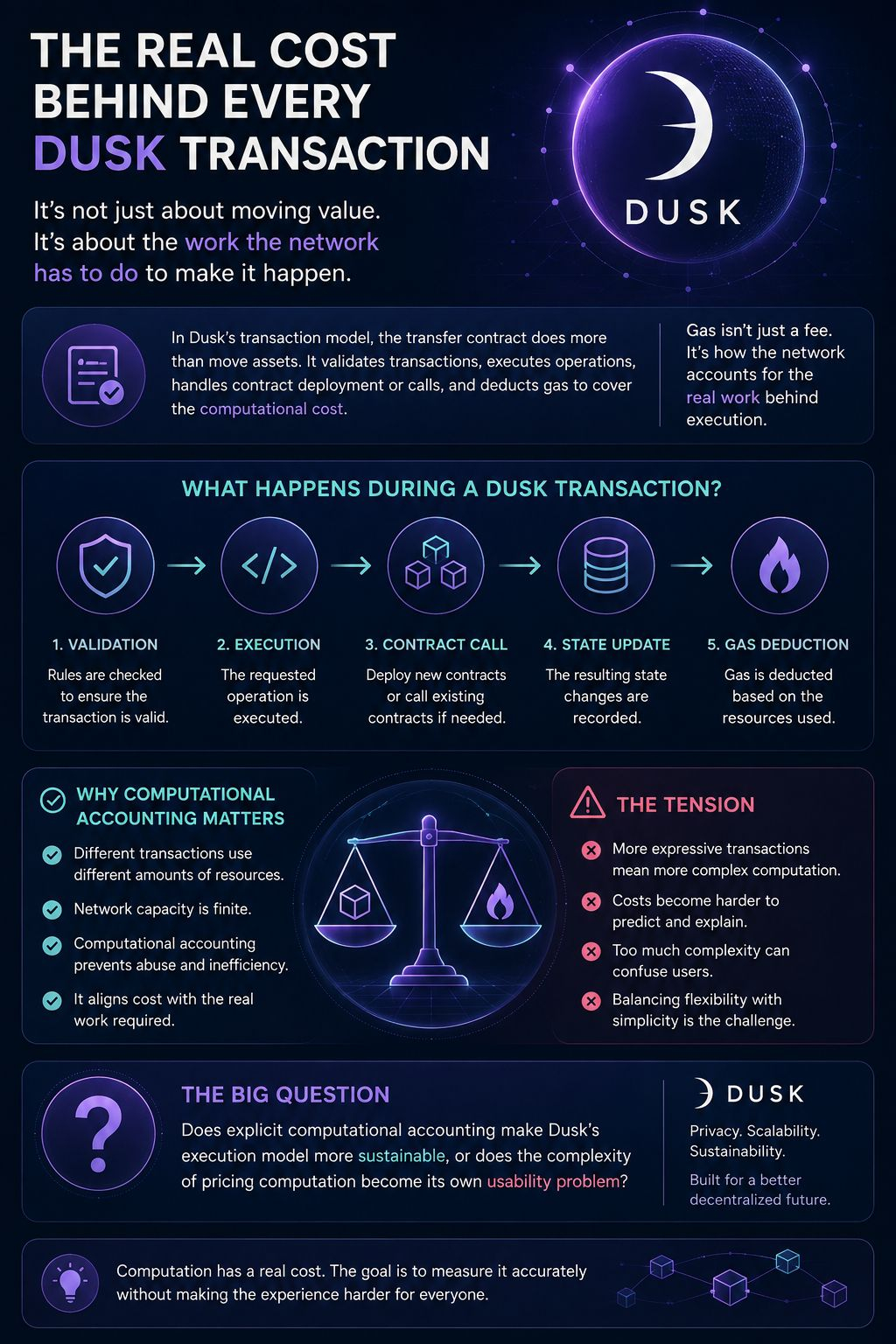
Sebuah transaksi tidak pernah hanya pesan yang mengatakan “kirim aset ini dari A ke B.” Jaringan harus memvalidasi apa yang diminta, memeriksa apakah aturan yang relevan terpenuhi, menjalankan logika yang diperlukan, berpotensi melakukan penyebaran atau interaksi dengan kontrak, memperbarui status yang dihasilkan, dan memastikan sumber daya komputasi yang digunakan selama proses itu diperhitungkan.
Di sinilah peran kontrak transfer menjadi menarik.
Kontrak transfer bertanggung jawab untuk memvalidasi transaksi sesuai aturan yang berlaku, menangani penyebaran kontrak atau pemanggilan kontrak ketika diperlukan, serta memotong gas untuk menutup pekerjaan komputasional yang terlibat dalam eksekusi.
Jadi gas bukan sekadar angka tambahan yang melekat pada sebuah transaksi.
Itu mewakili sesuatu yang benar-benar harus dilakukan jaringan.
Setiap pemanggilan kontrak memerlukan komputasi. Setiap transisi status memerlukan pemrosesan. Setiap lapisan tambahan logika transaksi berpotensi memperkenalkan biaya sumber daya lain yang harus ditangani validator dan jaringan.
Dari sudut pandang itu, akuntansi komputasional terasa masuk akal.
Jika eksekusi mengonsumsi sumber daya, eksekusi harus memiliki biaya yang dapat diukur.
Jika tidak, jaringan pada dasarnya akan membiarkan pengguna meminta komputasi yang semakin kompleks tanpa melakukan akuntansi langsung terhadap sumber daya yang dibutuhkan untuk melaksanakannya.
Itu menciptakan masalah yang jelas.
Sebuah blockchain memiliki kapasitas komputasi yang terbatas.
Jika transaksi diberi harga hanya berdasarkan nilai yang dipindahkan, bukan berdasarkan pekerjaan yang diperlukan untuk memprosesnya, secara teori dua transaksi bisa memiliki jejak komputasi yang benar-benar berbeda sementara terlihat mirip dari sudut pandang pengguna.
Seseorang mungkin hanya memindahkan aset.
Yang lain mungkin memicu beberapa interaksi kontrak, memodifikasi beberapa bagian status, dan memerlukan proses yang jauh lebih banyak.
Memperlakukan keduanya sebagai setara akan menyembunyikan biaya sebenarnya dari eksekusi.
Tapi di sinilah kompromi yang menarik itu mulai muncul.
Semakin ekspresif sistem transaksi menjadi, semakin sulit untuk membuat biaya komputasi dapat diprediksi.
Pengguna umumnya menginginkan transaksi terasa sederhana.
Mereka ingin tahu apa yang mereka tanda tangani, berapa biayanya, dan apa yang akan terjadi setelahnya.
Sementara itu, pengembang ingin fleksibilitas yang cukup untuk membangun aplikasi canggih tanpa harus mereduksi setiap interaksi menjadi operasi paling sederhana yang mungkin.
Jaringan harus berada di antara dua ekspektasi tersebut.
Terlalu sedikit akuntansi komputasional dapat mendorong penggunaan sumber daya jaringan yang tidak efisien atau bahkan disalahgunakan.
Terlalu banyak kompleksitas dalam model penetapan harga dapat membuat transaksi lebih sulit dipahami oleh pengguna biasa.
Dan itu menciptakan pertanyaan yang lebih besar untuk desain lapisan eksekusi.
Di mana seharusnya kompleksitas itu berada?
Apakah pengguna diharapkan memahami biaya komputasional dari transaksi yang semakin canggih?
Haruskah pengembang menyembunyikan sebagian besar kompleksitas itu?
Ataukah protokol itu sendiri harus terus berevolusi model akuntansinya agar penggunaan sumber daya tetap dapat diukur tanpa membuat pengalaman pengguna menjadi tidak perlu rumit?
Saya pikir ini adalah salah satu hal paling menarik untuk diperhatikan dari Dusk.
Karena eksekusi yang berkelanjutan tidak hanya soal membuat transaksi lebih cepat atau lebih murah.
Ini juga tentang membangun sistem di mana pekerjaan komputasional yang dibutuhkan oleh transaksi dapat diukur, diberi harga, dan dikelola ketika jaringan menjadi semakin ekspresif.
Tantangannya adalah menemukan keseimbangan.
Jika komputasi memiliki biaya yang nyata, mengabaikan biaya itu tidak berkelanjutan.
Namun jika menghitung biaya itu menjadi begitu rumit sehingga pengguna tidak lagi dapat memahami apa yang mereka bayarkan, sistem akuntansi bisa menjadi masalah kegunaan tersendiri.
Jadi pertanyaan yang terus kembali kepada saya adalah:
Apakah akuntansi komputasional yang eksplisit membuat model eksekusi Dusk lebih berkelanjutan, atau apakah kompleksitas penetapan harga komputasi yang terus meningkat akhirnya menjadi tantangan UX tersendiri?