Ada perbedaan antara hanya melihat angka dan benar-benar mencoba memahami apa yang angka-angka itu sedang memberi tahu kita. Riset terbaru Binance tentang Gen Z menarik untuk alasan yang persis sama. Di permukaan, kita melihat frekuensi perdagangan yang lebih rendah, akumulasi yang lebih kuat, penggunaan leverage yang terbatas, serta partisipasi ETF yang terus tumbuh. Namun, ketika kita menghubungkan temuan-temuan ini, muncul pertanyaan yang jauh lebih besar: apakah kita sedang melihat Gen Z mengembangkan hubungan yang secara mendasar berbeda dengan berinvestasi? Saya tidak yakin jawabannya sesederhana “Gen Z menjadi lebih konservatif.” Ada beberapa lapisan dari apa yang sedang terjadi di sini.
Dari Trader ke Alokator
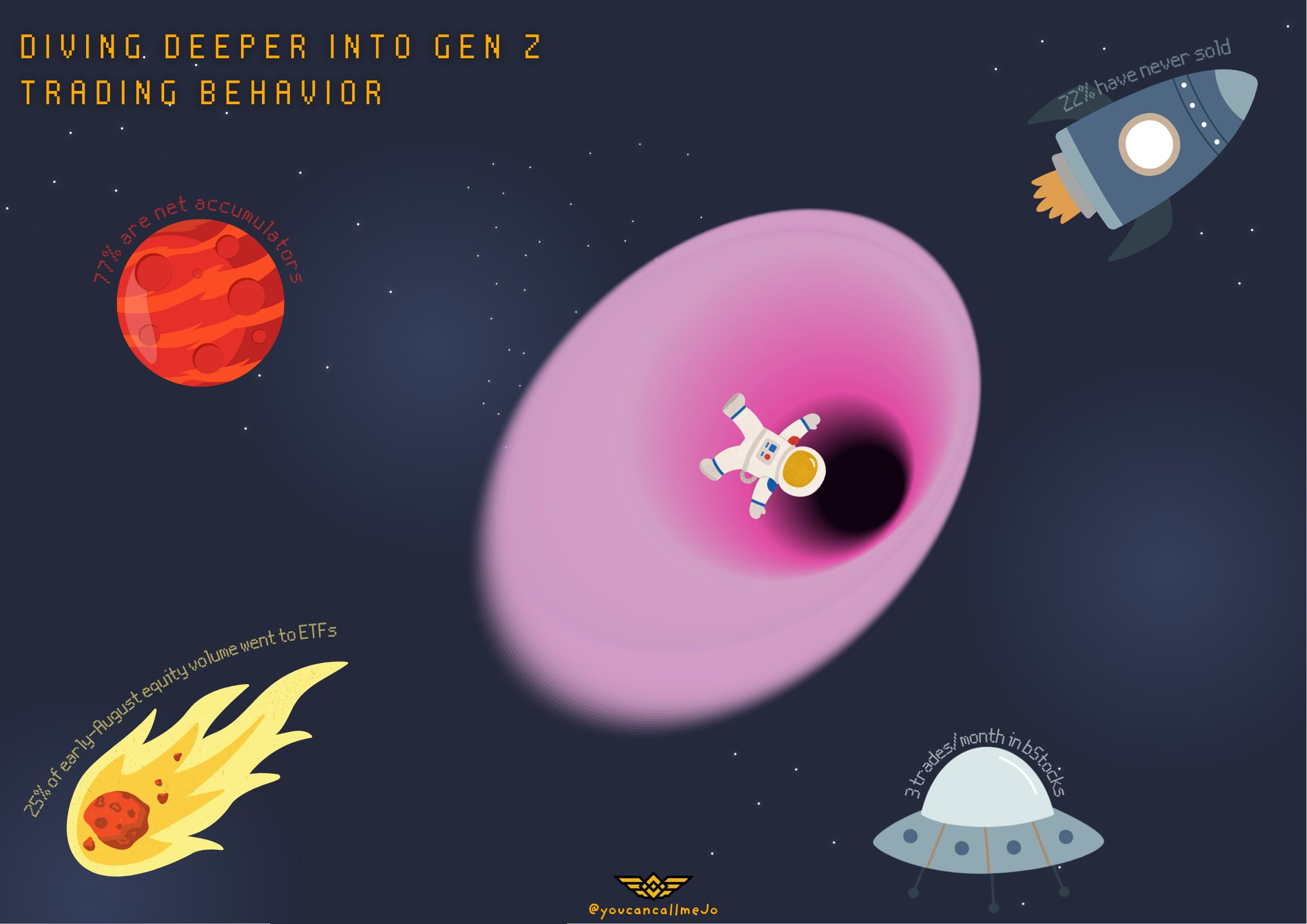
Pola pertama yang ingin saya perhatikan adalah perbedaan antara “trading” dan “mengalokasikan”. Binance Research menemukan bahwa 22% akun ekuitas langsung Gen Z tidak pernah melakukan order jual, sementara 77% adalah akumulator bersih. Di bStocks, 76% adalah akumulator bersih. Pada saat yang sama, Gen Z memiliki frekuensi trading terendah di antara kelompok usia kerja yang diteliti.
Kombinasi itu penting. Perdagangan mengajukan pertanyaan seperti, “Di mana saya bisa menghasilkan uang dari pergerakan harga ini?” Alokasi mengajukan pertanyaan yang berbeda: “Di mana saya ingin modal saya tetap berada?” Seseorang yang membeli Bitcoin, ETF, atau saham setiap bulan dan menahannya berperilaku sangat berbeda dibandingkan seseorang yang terus-menerus membuka dan menutup posisi berdasarkan pergerakan harga jangka pendek.
Tentu saja, kita tidak boleh langsung memberi label bahwa setiap akumulator Gen Z adalah investor jangka panjang. Seseorang bisa membeli lebih banyak daripada yang dijual hanya karena akun mereka masih baru, karena mereka menunggu target harga, atau karena mereka belum memutuskan untuk keluar. Tapi jika perputaran yang lebih rendah dan akumulasi yang terus-menerus berlanjut saat investor ini mendapatkan lebih banyak pendapatan dan modal, itu bisa menandakan adanya transisi bertahap dari menjadi trader di pasar menjadi alokator modal.
Paradoks Investor Media Sosial
Di sinilah semuanya menjadi benar-benar menarik. Gen Z kemungkinan besar merupakan generasi pertama yang tumbuh dengan informasi keuangan yang muncul langsung di feed sosial mereka. Narasi kripto, pilihan saham, komentar pasar, influencer finansial, dan video “Saya membuat 10.000$ dari transaksi ini” ada di mana-mana. Riset dari CFA Institute dan FINRA sebelumnya menemukan bahwa media sosial adalah salah satu sumber utama yang digunakan investor Gen Z untuk belajar tentang investasi, sementara riset CFA Institute yang lebih baru menunjukkan bahwa investor muda terus mengharapkan panduan keuangan yang sangat digital dan dipersonalisasi.
Namun, data Binance tidak menunjukkan adanya generasi yang terus-menerus melakukan perdagangan atas segala yang ditemuinya secara online. Itulah paradoks yang paling menarik menurut saya. Terpapar kebisingan finansial tidak selalu berarti bertindak pada setiap bagiannya. Masih ada FOMO, overconfidence, dan perilaku ikut-ikutan di kalangan investor yang lebih muda, dan riset CFA Institute telah mendokumentasikan risiko-risiko ini. Tapi paparan dan perilaku adalah dua hal yang berbeda. Seseorang bisa menonton sepuluh video pasar setiap hari dan tetap hanya melakukan beberapa transaksi per bulan.
Perbedaan ini penting karena media sosial cenderung memperkuat contoh-contoh yang paling ekstrem. Orang yang melakukan satu transaksi dan dengan tenang menahannya selama enam bulan tidak menghasilkan konten sebesar orang yang memposting dua puluh tangkapan layar transaksi dalam satu sore.
Apa yang Terjadi Saat Gen Z Menjadi Lebih Tua dan Lebih Kaya?
Sekarang mari kita beralih dari angka-angka hari ini ke pertanyaan yang benar-benar ingin saya telusuri: apa yang terjadi jika perilaku-perilaku ini bertahan saat mereka bertransisi menuju pendapatan yang lebih tinggi dan kekayaan yang lebih besar?
Gen Z masih relatif berada di awal perjalanan hidup finansial mereka. Banyak yang mulai memasuki dunia kerja, membangun tabungan, membayar sewa, membeli rumah pertama, atau menghadapi biaya kuliah dan konsumsi. Saldo investasi mereka saat ini tidak selalu mencerminkan apa yang nantinya akan mereka kendalikan.
Namun bayangkan generasi yang sama sepuluh atau dua puluh tahun dari sekarang, dengan gaji yang jauh lebih besar, rekening pensiun, bisnis, kekayaan yang diwariskan, dan investasi yang terkumpul. Jika preferensi untuk perputaran yang lebih rendah, akumulasi, dan produk yang terdiversifikasi tetap ada, dampaknya bisa jauh lebih besar.
Inilah salah satu alasan mengapa perilaku saat ini layak untuk diperhatikan, meskipun sampelnya masih relatif muda. Pertanyaan yang penting bukan semata-mata “Gen Z sedang membeli apa hari ini?” Pertanyaannya adalah “Kebiasaan finansial apa yang mereka kembangkan hari ini yang bisa mengikuti mereka selama puluhan tahun?” Dan itu bisa memengaruhi seluruh industri investasi.
Crypto vs. TradFi Mungkin Menjadi Kurang Penting
Hal lain yang menurut saya menarik adalah bahwa Gen Z mungkin tidak memikirkan investasi melalui kategori tradisional yang biasa dipelajari oleh generasi yang lebih tua. Bagi seseorang yang masuk ke dunia keuangan saat ini, membeli Bitcoin, membeli ETF, membeli saham, memegang stablecoin, mengeksplorasi produk yang ditokenisasi, atau menggunakan platform investasi berbasis aplikasi seluler—semuanya bisa terjadi dalam lingkungan digital yang sama. Batas antara “investor kripto” dan “investor saham” karena itu bisa menjadi kurang berarti. Alih-alih berkata, “Saya adalah investor kripto,” seseorang mungkin hanya berpikir, “Saya punya 1.000$ yang tersedia. Bagaimana saya ingin mengalokasikannya?” Itu adalah pergeseran konsep yang besar. Ini juga menjelaskan mengapa platform yang menghadirkan berbagai produk keuangan dalam satu ekosistem digital bisa menjadi semakin penting. Masa depan investor mungkin lebih sedikit peduli kategori keuangan apa yang dimiliki suatu aset, dan lebih peduli peran aset itu dalam portofolionya secara keseluruhan.
Risiko Terbesar Mungkin Bukan Leverage
Ada sisi lain dari cerita ini yang sebaiknya tidak kita abaikan. Leverage yang lebih kecil dan perdagangan yang lebih sedikit terdengar positif, tetapi perputaran yang rendah tidak otomatis berarti investasi yang baik.
Anda bisa kehilangan uang tanpa pernah menggunakan leverage. Anda bisa memegang aset selama lima tahun dan tetap membuat keputusan yang buruk. Anda bisa membangun “portofolio jangka panjang” yang sebenarnya sangat terkonsentrasi hampir sepenuhnya pada satu perusahaan, satu sektor, satu narasi, atau satu jenis aset.
Misalnya, seorang investor mungkin dengan bangga berkata, “Saya tidak pernah menjual,” sambil menahan 90% portofolionya pada satu saham teknologi. Secara teknis itu adalah investasi jangka panjang, tetapi diversifikasi dan manajemen risiko masih hilang. Jadi, jika Gen Z benar-benar bergerak ke pola pikir seorang alokator, tantangan berikutnya bukan sekadar mengajari mereka untuk berdagang lebih sedikit. Tantangannya adalah mengajari mereka cara mengalokasikan dengan lebih baik. Itu berarti memahami diversifikasi, valuasi, volatilitas, toleransi risiko, likuiditas, horizon waktu, serta perbedaan antara keyakinan dan konsentrasi.
Calon Investor Masa Depan Mungkin Menginginkan Teknologi dan Panduan
Di sinilah riset yang lebih luas menjadi sangat relevan. Riset CFA Institute tahun 2026 menemukan bahwa investor muda berpenghasilan tinggi tidak menolak nasihat keuangan profesional; mereka justru menginginkan nasihat yang disampaikan melalui pengalaman yang lebih digital, dipersonalisasi, dan kolaboratif. Lebih dari 90% investor muda berpenghasilan tinggi yang disurvei melaporkan menggunakan beberapa bentuk nasihat keuangan berbayar, sementara Gen Z menunjukkan penggunaan solusi robo-advisory yang sangat kuat.
Dari situ, saya menyimpulkan masa depan kemungkinan bukan soal nasihat manusia versus teknologi. Itu adalah penilaian manusia + teknologi. Gen Z bisa meneliti sebuah aset lewat ponsel, membandingkan data, menonton seorang analis menjelaskannya, bertanya pada AI, memeriksa bursa, dan tetap memutuskan bahwa mereka menginginkan panduan profesional sebelum mengucurkan modal serius. Platform yang memahami hal ini tidak akan sekadar memberi pengguna tombol yang lebih banyak untuk ditekan. Mereka akan memberi pengguna alat yang lebih baik untuk memahami apa arti sebenarnya dari tombol-tombol itu.
Jadi, Semua Ini Memberi Tahu Kita Apa?
Jika saya gabungkan temuan Binance Research, saya tidak melihat generasi yang hanya menjadi lebih konservatif. Saya juga tidak melihat generasi yang meninggalkan risiko. Yang saya lihat adalah generasi yang bereksperimen dengan berinvestasi sambil secara bertahap mengembangkan perilaku finansial mereka sendiri.
Masih ada FOMO. Masih ada spekulasi. Masih ada antusiasme terhadap kripto. Masih ada investor yang mengejar tren. Tapi di samping itu, yang kita lihat adalah perputaran yang lebih rendah, akumulasi yang lebih kuat, partisipasi leverage yang terbatas, dan minat yang meningkat pada ETF tanpa leverage.
Dan mungkin dampak jangka panjang terbesar tidak akan berasal dari apa yang diperdagangkan Gen Z saat ini. Dampaknya akan muncul dari apa yang terjadi ketika investor muda saat ini menjadi profesional berpendapatan tinggi di masa depan, pemilik bisnis, investor, dan pemegang kekayaan. Jika perilaku ini bertahan, industri mungkin pada akhirnya harus berhenti merancang produk berdasarkan asumsi bahwa investor yang lebih muda ingin berdagang lebih banyak. Mungkin mereka ingin memahami lebih banyak, mempersonalisasi lebih banyak, melakukan diversifikasi lebih banyak, dan mengalokasikan dengan lebih efektif. Dan itu bisa menjadi perubahan terbesar dari semuanya.
Gen Z mungkin tidak mengubah cara mereka berinvestasi karena mereka berdagang dengan berbeda. Mungkin mereka mengubah investasi karena mereka sedang mendefinisikan ulang apa artinya menjadi seorang investor.
#GenZInvesting #FutureOfInvesting #InvestmentTrends #wealthbuilding #InvestorBehavior