#termmax @TermMax
Saya terus kembali ke detail TermMax Vault karena angka realnya membuat kontradiksi itu lebih sulit diabaikan.
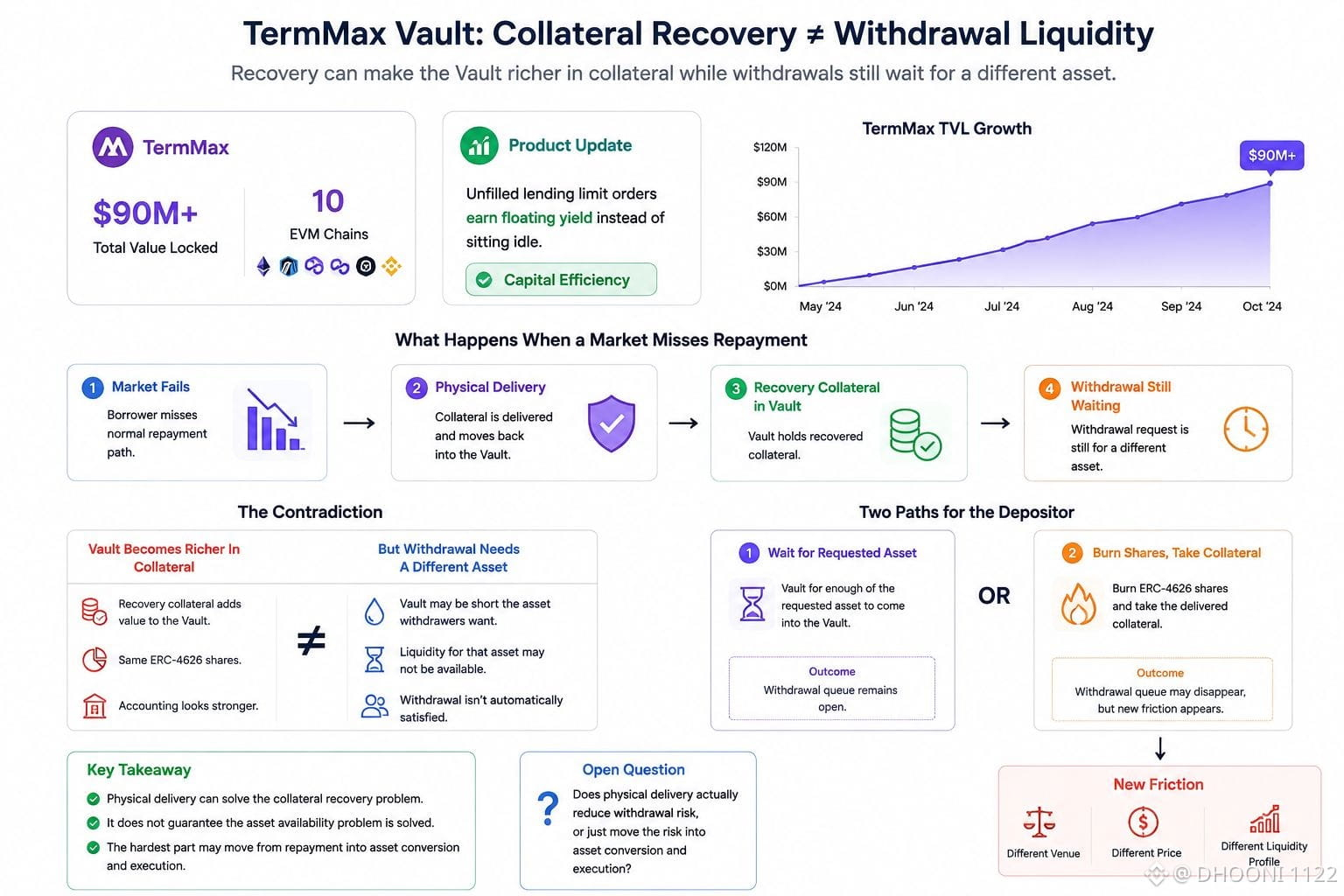
TermMax kini berada di atas $90M TVL di 10 rantai EVM, sementara pembaruan produk terbarunya mengatakan order limit pinjaman yang belum terisi dapat menghasilkan floating yield, alih-alih dibiarkan menganggur.
Kedengarannya seperti efisiensi modal.
Tapi kemudian saya melihat physical delivery.
Ketika sebuah Market melewatkan jalur pembayaran kembali yang normal, jaminan pemulihan dapat bergerak kembali ke Vault. Pada awalnya, itu tampak seperti sistem berhasil memulihkan posisi.
Kontradiksinya adalah jaminan pemulihan itu tidak selalu merupakan aset yang ditunggu untuk permintaan penarikan.
Jadi Vault bisa menjadi lebih kaya dalam bentuk jaminan, sementara tetap kekurangan aset yang benar-benar ingin ditarik seseorang.
Saham ERC-4626 yang sama. Vault yang sama. Likuiditas yang berbeda.
Penyetor bisa menunggu aset yang diminta, atau membakar saham dan mengambil jaminan yang dikirim. Namun kemudian gesekan itu bisa saja berpindah menjadi penjualan jaminan tersebut: venue lain, harga lain, profil likuiditas lain.
Dan di sinilah menurut saya desainnya menjadi lebih menarik.
TermMax semakin baik dalam menjaga agar modal tetap produktif saat order menunggu, tetapi modal produktif bukanlah hal yang sama dengan likuiditas yang langsung bisa ditarik.
Jadi sekarang saya kurang tertarik pada apakah physical delivery “memulihkan” jaminan.
Saya ingin tahu apakah ini benar-benar mengurangi risiko penarikan, atau hanya memindahkan bagian tersulit dari pembayaran kembali menjadi konversi aset dan eksekusi.
Itu terasa seperti uji yang lebih penting untuk Vault.
#TermMax
Saya terus kembali ke detail TermMax Vault karena angka realnya membuat kontradiksi itu lebih sulit diabaikan.
TermMax kini berada di atas $90M TVL di 10 rantai EVM, sementara pembaruan produk terbarunya mengatakan order limit pinjaman yang belum terisi dapat menghasilkan floating yield, alih-alih dibiarkan menganggur.
Kedengarannya seperti efisiensi modal.
Tapi kemudian saya melihat physical delivery.
Ketika sebuah Market melewatkan jalur pembayaran kembali yang normal, jaminan pemulihan dapat bergerak kembali ke Vault. Pada awalnya, itu tampak seperti sistem berhasil memulihkan posisi.
Kontradiksinya adalah jaminan pemulihan itu tidak selalu merupakan aset yang ditunggu untuk permintaan penarikan.
Jadi Vault bisa menjadi lebih kaya dalam bentuk jaminan, sementara tetap kekurangan aset yang benar-benar ingin ditarik seseorang.
Saham ERC-4626 yang sama. Vault yang sama. Likuiditas yang berbeda.
Penyetor bisa menunggu aset yang diminta, atau membakar saham dan mengambil jaminan yang dikirim. Namun kemudian gesekan itu bisa saja berpindah menjadi penjualan jaminan tersebut: venue lain, harga lain, profil likuiditas lain.
Dan di sinilah menurut saya desainnya menjadi lebih menarik.
TermMax semakin baik dalam menjaga agar modal tetap produktif saat order menunggu, tetapi modal produktif bukanlah hal yang sama dengan likuiditas yang langsung bisa ditarik.
Jadi sekarang saya kurang tertarik pada apakah physical delivery “memulihkan” jaminan.
Saya ingin tahu apakah ini benar-benar mengurangi risiko penarikan, atau hanya memindahkan bagian tersulit dari pembayaran kembali menjadi konversi aset dan eksekusi.
Itu terasa seperti uji yang lebih penting untuk Vault.
#TermMax