Saya terus kembali ke satu baris dalam whitepaper Dusk: "mayoritas uang yang jujur." Bukan mayoritas orang yang jujur. Bukan validator yang jujur. Uang. Ini frasa kecil, tapi mengatakan banyak hal begitu Anda benar-benar duduk dan memikirkannya.
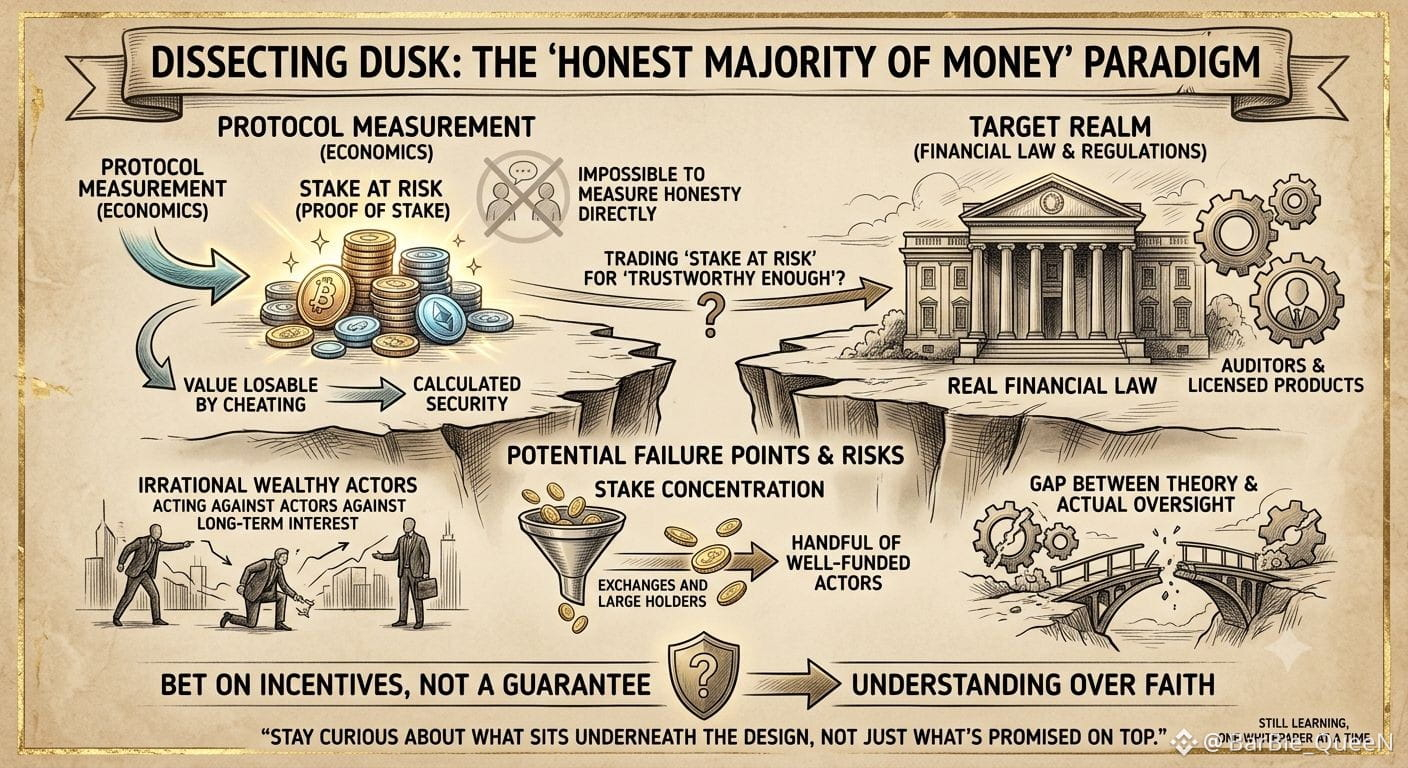
Sebuah protokol tidak bisa melihat ke dalam kepala siapa pun untuk memeriksa apakah mereka bisa dipercaya. Protokol juga tidak punya cara untuk mengukur kejujuran secara langsung. Jadi protokol mengukur satu hal yang bisa—berapa banyak nilai yang akan hilang seseorang jika berbuat curang—dan memperlakukan itu sebagai keamanan.
Pergantian tersebut jauh lebih penting di sini dibanding kebanyakan proyek, karena Dusk tidak hanya membangun rantai lain—Dusk menargetkan aset yang teregulasi dan produk berlisensi, jenis infrastruktur yang pada akhirnya bertemu auditor dan hukum keuangan nyata, bukan sekadar komunitas pengguna awal. Memperlakukan "taruhan yang dipertaruhkan" sebagai bukti "cukup tepercaya untuk dunia itu" adalah klaim yang lebih besar daripada yang terdengar.
Ada baiknya juga untuk mempertanyakannya secara jujur. Banyak orang kaya dan institusi telah bertindak melawan kepentingan jangka panjang mereka sendiri, meskipun mereka punya banyak hal untuk kehilangan. Taruhan juga bisa terkonsentrasi dari waktu ke waktu, melalui bursa atau pemegang besar, sampai "mayoritas uang" perlahan berubah menjadi segelintir aktor yang sangat didanai. Dan jika asumsi ekonomi itu suatu saat diperlakukan sebagai pengganti akuntabilitas hukum yang nyata—bukan sebagai dukungan untuknya—kesenjangan antara teori dan pengawasan aktual adalah tempat segala sesuatu bisa salah.
Semua ini tidak membuat modelnya salah—hanya taruhan pada insentif, bukan jaminan, dan layak dipahami, bukan dipercayai begitu saja. Semakin banyak saya meneliti sistem-sistem ini, semakin saya merasa keterampilan sebenarnya adalah tetap ingin tahu tentang apa yang mendasari desain, bukan hanya apa yang dijanjikan di bagian atas.
Terus belajar, satu whitepaper pada satu waktu.
@Dusk #dusk $DUSK
Sebuah protokol tidak bisa melihat ke dalam kepala siapa pun untuk memeriksa apakah mereka bisa dipercaya. Protokol juga tidak punya cara untuk mengukur kejujuran secara langsung. Jadi protokol mengukur satu hal yang bisa—berapa banyak nilai yang akan hilang seseorang jika berbuat curang—dan memperlakukan itu sebagai keamanan.
Pergantian tersebut jauh lebih penting di sini dibanding kebanyakan proyek, karena Dusk tidak hanya membangun rantai lain—Dusk menargetkan aset yang teregulasi dan produk berlisensi, jenis infrastruktur yang pada akhirnya bertemu auditor dan hukum keuangan nyata, bukan sekadar komunitas pengguna awal. Memperlakukan "taruhan yang dipertaruhkan" sebagai bukti "cukup tepercaya untuk dunia itu" adalah klaim yang lebih besar daripada yang terdengar.
Ada baiknya juga untuk mempertanyakannya secara jujur. Banyak orang kaya dan institusi telah bertindak melawan kepentingan jangka panjang mereka sendiri, meskipun mereka punya banyak hal untuk kehilangan. Taruhan juga bisa terkonsentrasi dari waktu ke waktu, melalui bursa atau pemegang besar, sampai "mayoritas uang" perlahan berubah menjadi segelintir aktor yang sangat didanai. Dan jika asumsi ekonomi itu suatu saat diperlakukan sebagai pengganti akuntabilitas hukum yang nyata—bukan sebagai dukungan untuknya—kesenjangan antara teori dan pengawasan aktual adalah tempat segala sesuatu bisa salah.
Semua ini tidak membuat modelnya salah—hanya taruhan pada insentif, bukan jaminan, dan layak dipahami, bukan dipercayai begitu saja. Semakin banyak saya meneliti sistem-sistem ini, semakin saya merasa keterampilan sebenarnya adalah tetap ingin tahu tentang apa yang mendasari desain, bukan hanya apa yang dijanjikan di bagian atas.
Terus belajar, satu whitepaper pada satu waktu.
@Dusk #dusk $DUSK