#termmax @TermMax
I've been thinking about something that matters more in DeFi than people probably give it credit for:
knowing what you're actually getting into.
A lot of DeFi products are incredibly flexible.
You can move between pools, strategies, chains and different yield opportunities in seconds.
But that flexibility can also make things harder to understand.
✔Your rate changes.
✔Your exposure changes.
Your strategy can depend on several moving parts.
And sometimes you don't fully realize how complicated a position has become until the market moves against you.
That's one reason I've been paying more attention to TermMax.
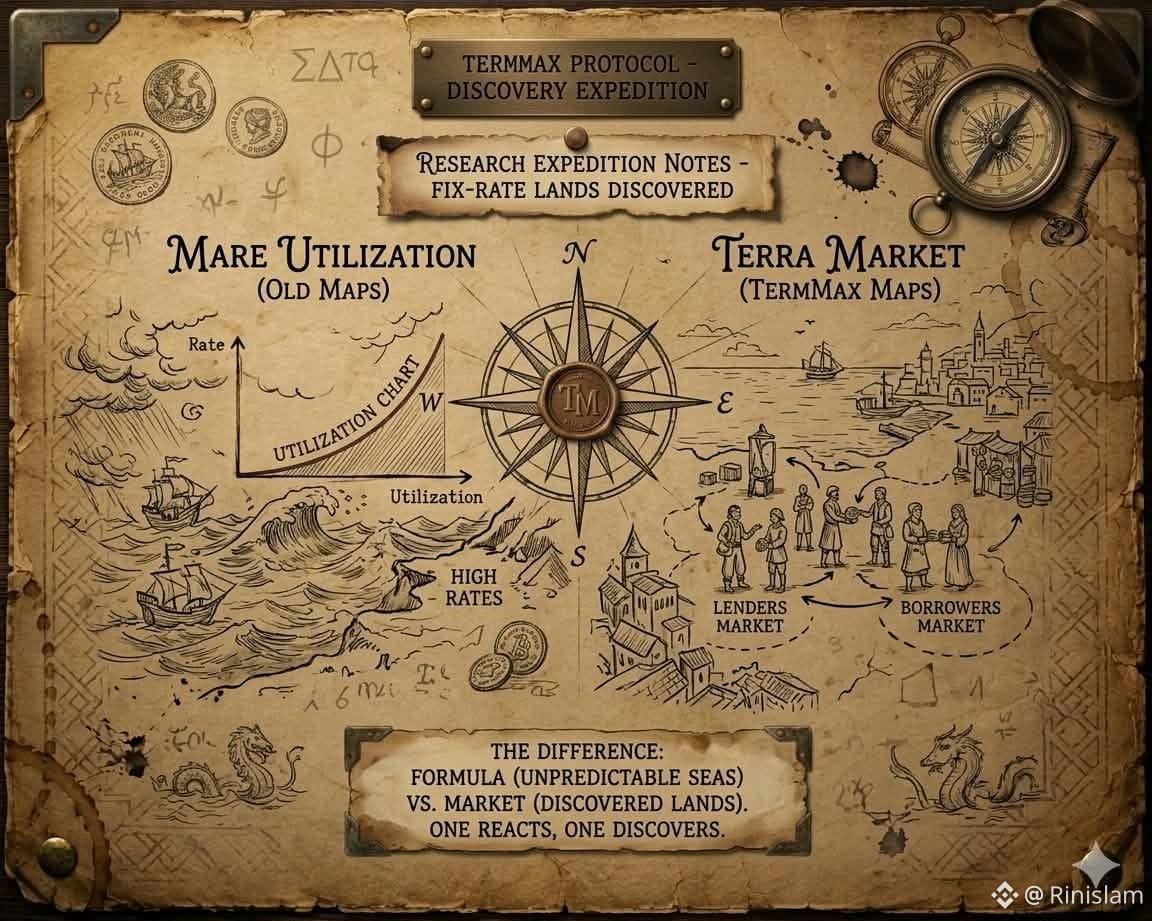
The idea behind fixed-rate, fixed-term markets is actually pretty simple:
✔you know the rate.
✔you know the maturity.
✔you know the terms.
And TermMax builds its lending markets around defined maturities and on-chain order books, rather than leaving everything to a constantly moving variable rate.
☞I think that's an underrated direction for DeFi.
Because as the industry matures, I don't think everyone entering the space will be looking for the most complicated strategy with the highest advertised APY.
Some capital will simply want clarity.
✔How much am I earning?
✔How much am I paying?
✔When does the position mature?
✔What exactly am I exposed to?
That's also where the vault approach becomes interesting to me.
Instead of every user having to manually manage multiple term markets, curated vaults can allocate capital across different markets and strategies.
I like the direction.
But I'm not ready to call it the future yet.
Because making DeFi easier to reason about is one thing.
Proving that the system actually works when liquidity gets stressed is another.
That's the test I'm watching.
Can TermMax keep the simplicity when the market stops being simple? 👀
I've been thinking about something that matters more in DeFi than people probably give it credit for:
knowing what you're actually getting into.
A lot of DeFi products are incredibly flexible.
You can move between pools, strategies, chains and different yield opportunities in seconds.
But that flexibility can also make things harder to understand.
✔Your rate changes.
✔Your exposure changes.
Your strategy can depend on several moving parts.
And sometimes you don't fully realize how complicated a position has become until the market moves against you.
That's one reason I've been paying more attention to TermMax.
The idea behind fixed-rate, fixed-term markets is actually pretty simple:
✔you know the rate.
✔you know the maturity.
✔you know the terms.
And TermMax builds its lending markets around defined maturities and on-chain order books, rather than leaving everything to a constantly moving variable rate.
☞I think that's an underrated direction for DeFi.
Because as the industry matures, I don't think everyone entering the space will be looking for the most complicated strategy with the highest advertised APY.
Some capital will simply want clarity.
✔How much am I earning?
✔How much am I paying?
✔When does the position mature?
✔What exactly am I exposed to?
That's also where the vault approach becomes interesting to me.
Instead of every user having to manually manage multiple term markets, curated vaults can allocate capital across different markets and strategies.
I like the direction.
But I'm not ready to call it the future yet.
Because making DeFi easier to reason about is one thing.
Proving that the system actually works when liquidity gets stressed is another.
That's the test I'm watching.
Can TermMax keep the simplicity when the market stops being simple? 👀