Pulled up Dusk's fee mechanics mid-scroll and had to reread it twice… the gas model is simple on paper (gas_used × gas_price, unused gas never charged) but the reward split underneath is where it gets interesting. #dusk $DUSK @Dusk
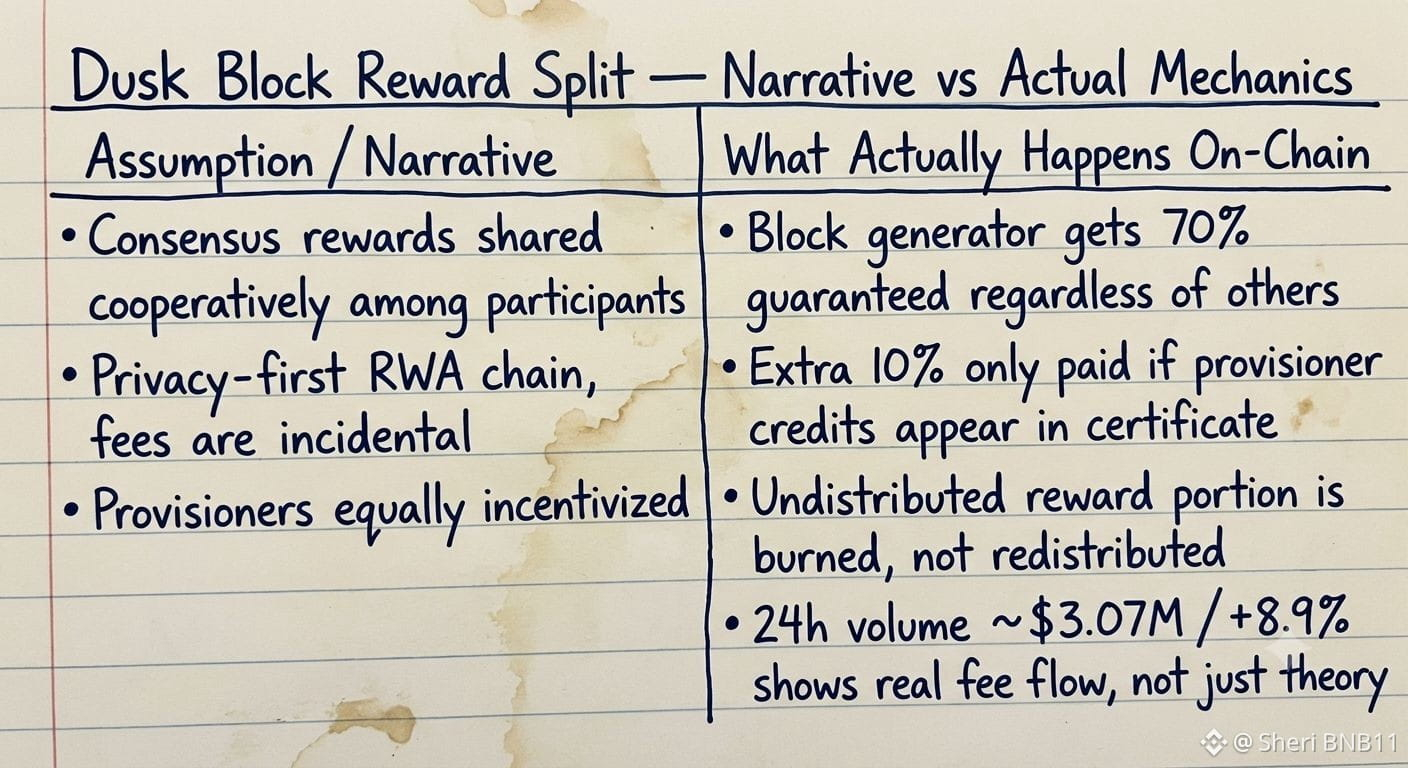
Block generators take 70% of the reward outright, plus "up to" an extra 10% — but that extra slice only shows up if enough provisioner credits actually land in the certificate. Any undistributed chunk just gets burned. So the base cut is guaranteed no matter what, and the collaborative part of consensus is basically optional upside. Checked this against the live tokenomics doc while DUSK's 24h volume was sitting around $3.07M, up close to 9% day over day — nothing explosive, but enough churn to make the fee flow feel real instead of theoretical.
Made me pause on the "auditable privacy for institutions" pitch. In practice the incentive design reads more like: whoever proposes the block gets paid first and mostly regardless, everyone else's reward depends on participation actually clearing a bar. Not bad, just… not the cooperative picture the marketing implies.
I went in expecting the ZK layer to be the interesting part. Turned out the boring economic plumbing was what stuck with me.
Wonder how that credit threshold behaves once real institutional volume starts hitting the chain — does it tighten or does it just quietly stay generous to generators?
Block generators take 70% of the reward outright, plus "up to" an extra 10% — but that extra slice only shows up if enough provisioner credits actually land in the certificate. Any undistributed chunk just gets burned. So the base cut is guaranteed no matter what, and the collaborative part of consensus is basically optional upside. Checked this against the live tokenomics doc while DUSK's 24h volume was sitting around $3.07M, up close to 9% day over day — nothing explosive, but enough churn to make the fee flow feel real instead of theoretical.
Made me pause on the "auditable privacy for institutions" pitch. In practice the incentive design reads more like: whoever proposes the block gets paid first and mostly regardless, everyone else's reward depends on participation actually clearing a bar. Not bad, just… not the cooperative picture the marketing implies.
I went in expecting the ZK layer to be the interesting part. Turned out the boring economic plumbing was what stuck with me.
Wonder how that credit threshold behaves once real institutional volume starts hitting the chain — does it tighten or does it just quietly stay generous to generators?