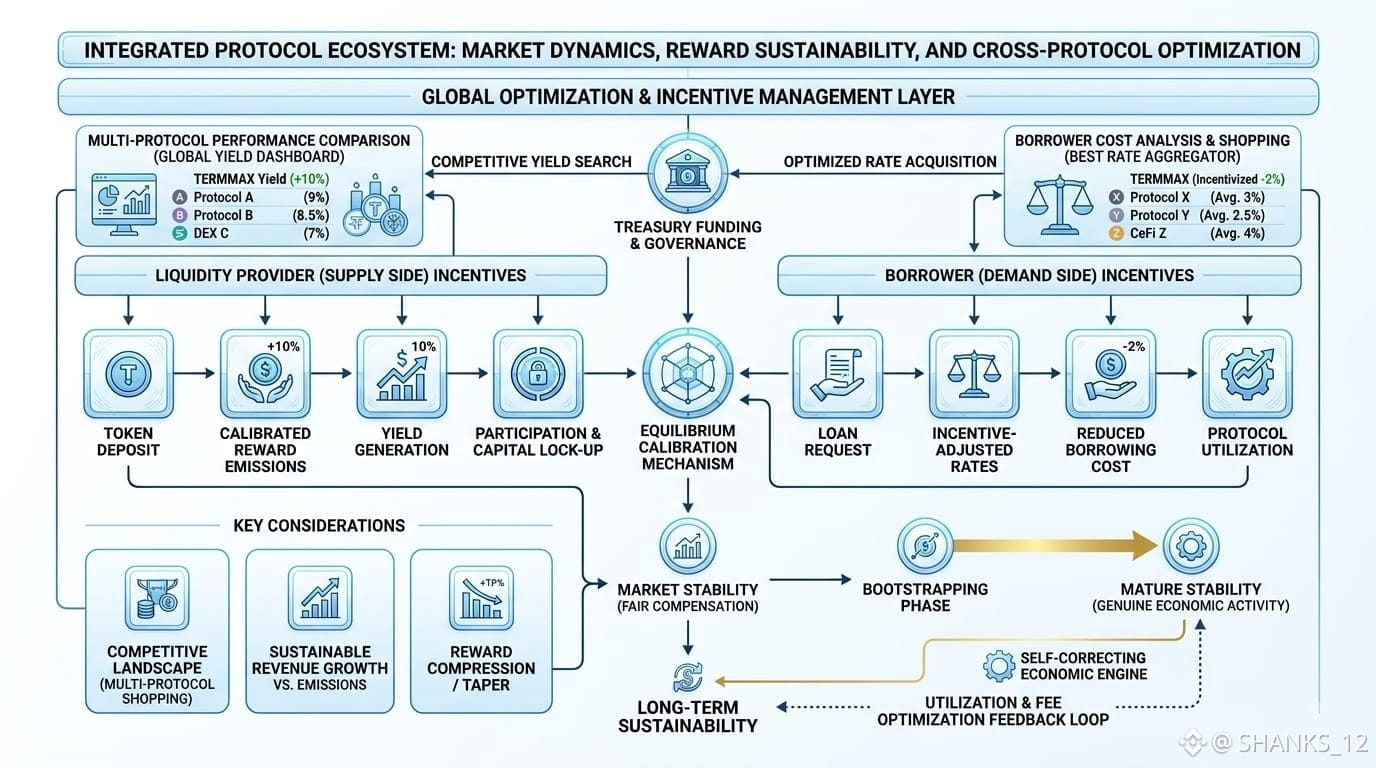
Saya tadi pagi sedang menyelidiki model distribusi reward TermMax, khususnya bagaimana mereka mengkalibrasi insentif untuk menarik penyedia likuiditas versus peminjam, dan saya menyadari saya belum bisa memastikan di mana letak ekuilibrium yang sebenarnya. Protokol ini tampaknya dirancang untuk melakukan koreksi diri, tetapi saya benar-benar tidak yakin apakah pengaturannya cukup ketat untuk mencegah salah satu pihak secara sistematis kekurangan insentif.
Yang menarik menurut saya adalah bahwa kebanyakan protokol hanya memutar sebuah kenop untuk mendorong modal ke fungsi yang pada saat itu kurang dananya. TermMax terlihat menggali lebih dalam, berusaha menciptakan kondisi agar sisi penawaran dan permintaan merasa sama-sama mendapatkan kompensasi yang cukup tanpa satu pihak mensubsidi pihak lainnya. Itu membuat saya berpikir tentang perancangan insentif sebagai sebuah keahlian nyata, bukan sekadar memutar kenop pada laju emisi. Pertanyaan yang muncul adalah apakah keseimbangan ini tetap bertahan ketika persaingan nyata muncul dan pengguna menyadari mereka bisa berbelanja antar beberapa protokol untuk mendapatkan syarat yang lebih baik.
Saya belum sepenuhnya yakin bagaimana model pendanaan treasury mempertahankan insentif-insentif ini dalam jangka panjang, terutama jika pendapatan dari biaya protokol tidak tumbuh secepat kebutuhan jadwal reward. Mungkin ada semacam titik jatuh, sebuah momen ketika pendanaan awal tidak lagi layak, dan sistem harus membuktikan bahwa ia bisa mendanai dirinya sendiri lewat aktivitas ekonomi yang benar-benar nyata, bukan lewat inflasi. Dari sudut pandang luar, kadang saya bertanya-tanya apakah transisi itu cukup sering dibahas, atau apakah semua orang menganggap semuanya akan beres karena mekanisme awal terlihat menjanjikan.
Strukturnya tampak dirancang dengan cermat untuk fase pertumbuhan ini, tidak diragukan lagi. Tapi ujian yang lebih berat mungkin terjadi ketika reward insentif mulai terkompresi dan pengguna harus memutuskan apakah utilitas inti benar-benar membenarkan partisipasi mereka tanpa “manis-manis” promosi. Apakah fondasinya benar-benar tetap kokoh saat itu?
Arsitekturnya tampak elegan sekarang, tetapi apakah reward bisa menurun secara berkelanjutan tetap menjadi teka-teki utamanya... bagaimanapun, waktu akan menjawab 👍
#termmax @TermMax
$EDEN $CLO
#VIXFallsTo2026Low #DollarHits3MonthLow #DollarFallsTo10WeekLow
Yang menarik menurut saya adalah bahwa kebanyakan protokol hanya memutar sebuah kenop untuk mendorong modal ke fungsi yang pada saat itu kurang dananya. TermMax terlihat menggali lebih dalam, berusaha menciptakan kondisi agar sisi penawaran dan permintaan merasa sama-sama mendapatkan kompensasi yang cukup tanpa satu pihak mensubsidi pihak lainnya. Itu membuat saya berpikir tentang perancangan insentif sebagai sebuah keahlian nyata, bukan sekadar memutar kenop pada laju emisi. Pertanyaan yang muncul adalah apakah keseimbangan ini tetap bertahan ketika persaingan nyata muncul dan pengguna menyadari mereka bisa berbelanja antar beberapa protokol untuk mendapatkan syarat yang lebih baik.
Saya belum sepenuhnya yakin bagaimana model pendanaan treasury mempertahankan insentif-insentif ini dalam jangka panjang, terutama jika pendapatan dari biaya protokol tidak tumbuh secepat kebutuhan jadwal reward. Mungkin ada semacam titik jatuh, sebuah momen ketika pendanaan awal tidak lagi layak, dan sistem harus membuktikan bahwa ia bisa mendanai dirinya sendiri lewat aktivitas ekonomi yang benar-benar nyata, bukan lewat inflasi. Dari sudut pandang luar, kadang saya bertanya-tanya apakah transisi itu cukup sering dibahas, atau apakah semua orang menganggap semuanya akan beres karena mekanisme awal terlihat menjanjikan.
Strukturnya tampak dirancang dengan cermat untuk fase pertumbuhan ini, tidak diragukan lagi. Tapi ujian yang lebih berat mungkin terjadi ketika reward insentif mulai terkompresi dan pengguna harus memutuskan apakah utilitas inti benar-benar membenarkan partisipasi mereka tanpa “manis-manis” promosi. Apakah fondasinya benar-benar tetap kokoh saat itu?
Arsitekturnya tampak elegan sekarang, tetapi apakah reward bisa menurun secara berkelanjutan tetap menjadi teka-teki utamanya... bagaimanapun, waktu akan menjawab 👍
#termmax @TermMax
$EDEN $CLO
#VIXFallsTo2026Low #DollarHits3MonthLow #DollarFallsTo10WeekLow