TermMax operates as a fixed-rate lending protocol using tokenized debt positions.
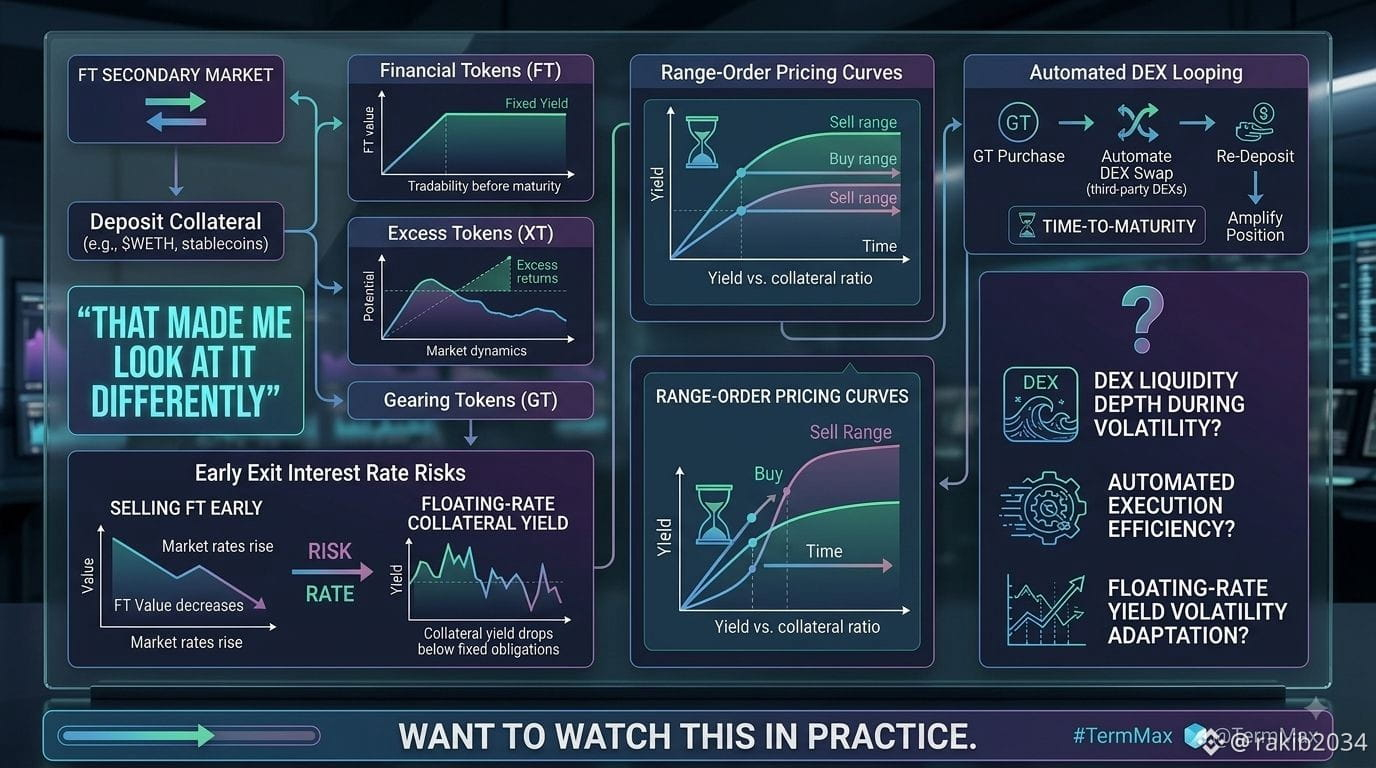
The protocol mints Financial Tokens (FT), Excess Tokens (XT), and Gearing Tokens (GT), executing trades along range-order pricing curves while FT remains tradable before maturity. Users deposit collateral to borrow at fixed rates for internal FT or GT acquisition and external yield strategies, while GT automates asset looping via smart contracts routing swaps through third-party decentralized exchanges. During liquidations, physical delivery distributes proportional collateral shares directly to FT holders.
That made me look at it differently.
Selling FT prior to maturity exposes holders to interest rate risk if market rates rise, while floating-rate collateral yields can drop below fixed borrowing obligations.
How third-party DEX liquidity depth holds up during automated GT execution and physical delivery under severe market volatility remains to be seen.
Want to watch this in practice.
#termmax @TermMax
The protocol mints Financial Tokens (FT), Excess Tokens (XT), and Gearing Tokens (GT), executing trades along range-order pricing curves while FT remains tradable before maturity. Users deposit collateral to borrow at fixed rates for internal FT or GT acquisition and external yield strategies, while GT automates asset looping via smart contracts routing swaps through third-party decentralized exchanges. During liquidations, physical delivery distributes proportional collateral shares directly to FT holders.
That made me look at it differently.
Selling FT prior to maturity exposes holders to interest rate risk if market rates rise, while floating-rate collateral yields can drop below fixed borrowing obligations.
How third-party DEX liquidity depth holds up during automated GT execution and physical delivery under severe market volatility remains to be seen.
Want to watch this in practice.
#termmax @TermMax