
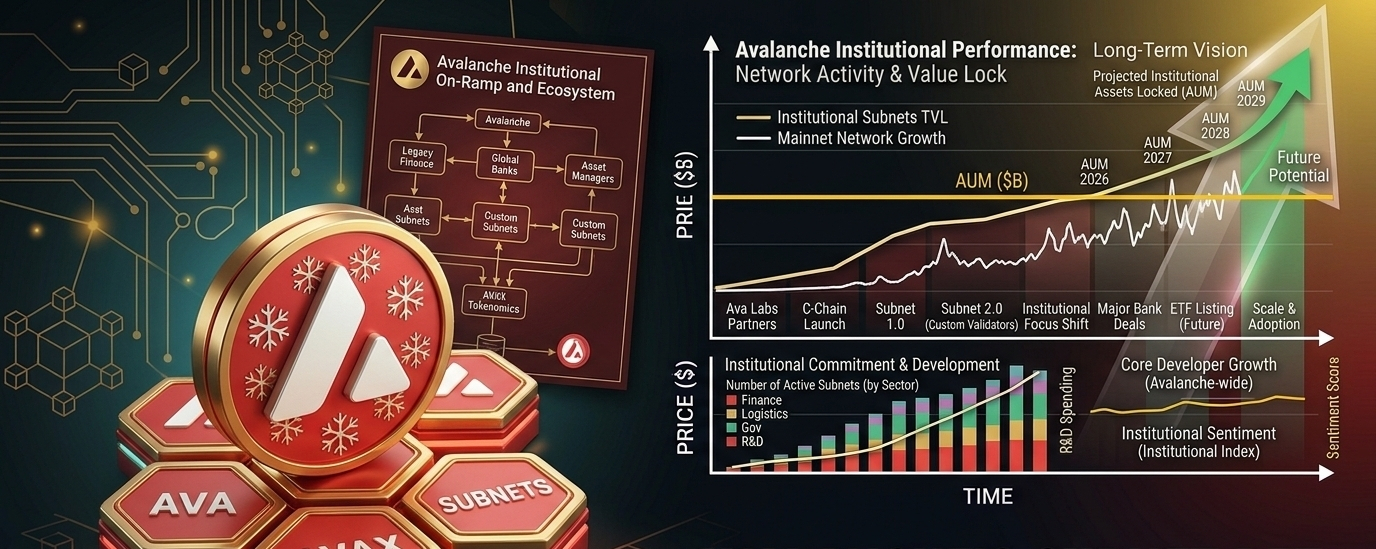
# Avalanche's Subnet Bet: Building for Institutions, Not Just Retail
Avalanche has taken a different path than most Layer 1s chasing retail attention. Rather than optimizing purely for DeFi TVL or NFT volume, much of its recent development has centered on subnets — customizable, application-specific blockchains that let enterprises and institutions run their own compliant, permissioned environments while still settling back to the main Avalanche network.
That architecture has made Avalanche a recurring name in institutional pilot programs, from tokenized funds to enterprise settlement layers, where organizations want blockchain infrastructure without inheriting the full openness (and regulatory ambiguity) of a public permissionless chain. It's a less flashy strategy than chasing meme-coin volume, but it targets a genuinely different customer: banks, asset managers, and governments experimenting with tokenization rather than retail traders.
The trade-off is visibility. Subnet activity doesn't always show up in the same on-chain metrics — TVL, DEX volume — that dominate crypto Twitter narratives, which can make AVAX's progress harder to see from the outside even when real adoption is happening.
For retail holders, the AVAX token itself captures value through network fees and staking, meaning its price is ultimately a bet on whether the subnet strategy converts institutional pilots into recurring, fee-generating usage. That conversion — from pilot to production — is the metric worth tracking more than any single price chart.
