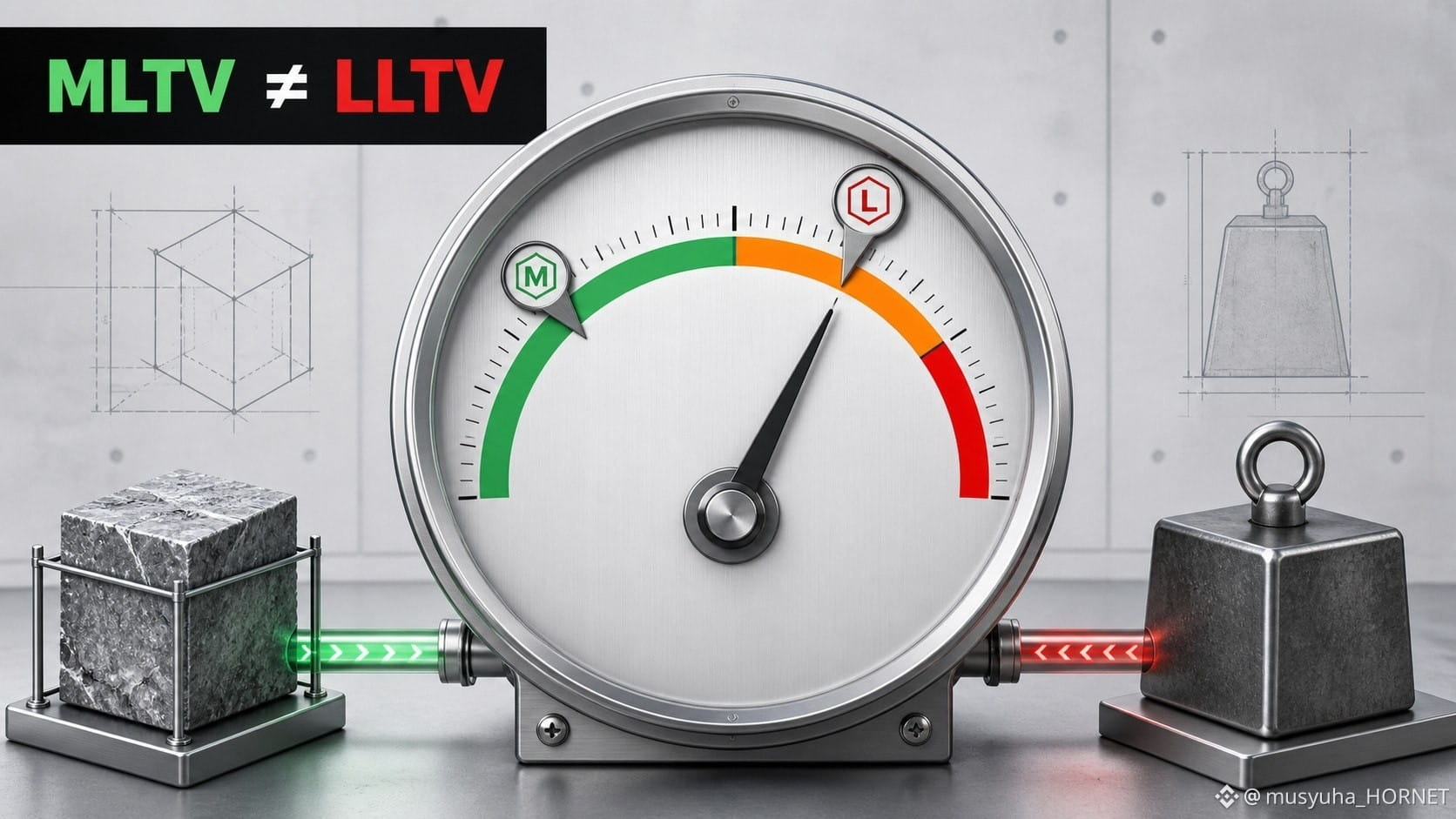
Two LTV numbers can describe one TermMax Market, but they do different jobs.
MLTV is the Maximum Loan-to-Value used to limit how much debt can be created against collateral. LLTV is the Liquidation LTV at which liquidation is triggered. The gap between them is a buffer, not unused borrowing power.
Hypothetical example:
• collateral value: 1,000 USDC;
• MLTV: 70%;
• LLTV: 80%;
• maximum initial debt: 700 USDC.
If the position starts at the maximum, a fall in collateral value from 1,000 to 875 moves the LTV from 70% to 80%:
700 / 875 = 80%.
Nothing about the fixed borrowing rate prevents that movement. The debt cost can be predictable while the collateral ratio remains variable.
My checklist would separate rate risk from liquidation risk: current LTV, LLTV, collateral volatility, oracle design and time remaining to maturity.
The fixed rate answers “what is the debt cost?” It does not answer “how safe is the collateral buffer?”
Sources checked: TermMax Docs — Market; Risks.
@TermMax #TermMax
MLTV is the Maximum Loan-to-Value used to limit how much debt can be created against collateral. LLTV is the Liquidation LTV at which liquidation is triggered. The gap between them is a buffer, not unused borrowing power.
Hypothetical example:
• collateral value: 1,000 USDC;
• MLTV: 70%;
• LLTV: 80%;
• maximum initial debt: 700 USDC.
If the position starts at the maximum, a fall in collateral value from 1,000 to 875 moves the LTV from 70% to 80%:
700 / 875 = 80%.
Nothing about the fixed borrowing rate prevents that movement. The debt cost can be predictable while the collateral ratio remains variable.
My checklist would separate rate risk from liquidation risk: current LTV, LLTV, collateral volatility, oracle design and time remaining to maturity.
The fixed rate answers “what is the debt cost?” It does not answer “how safe is the collateral buffer?”
Sources checked: TermMax Docs — Market; Risks.
@TermMax #TermMax