#dusk @Dusk $DUSK
Dulu saya mengira pemulihan node pada dasarnya hanya dengan me-restart node dan menunggu node itu tersinkron lagi.
Setelah melihat lebih dekat bagaimana @Dusk melakukan pemulihan status, saya menyadari ada pertanyaan yang lebih penting: node yang dipulihkan itu sebenarnya memulihkan apa?
Bagian yang menarik adalah bahwa status tersebut dapat dikemas dan diverifikasi sebelum digunakan untuk pemulihan. Itu mengubah cara saya memikirkan waktu henti (downtime) node.
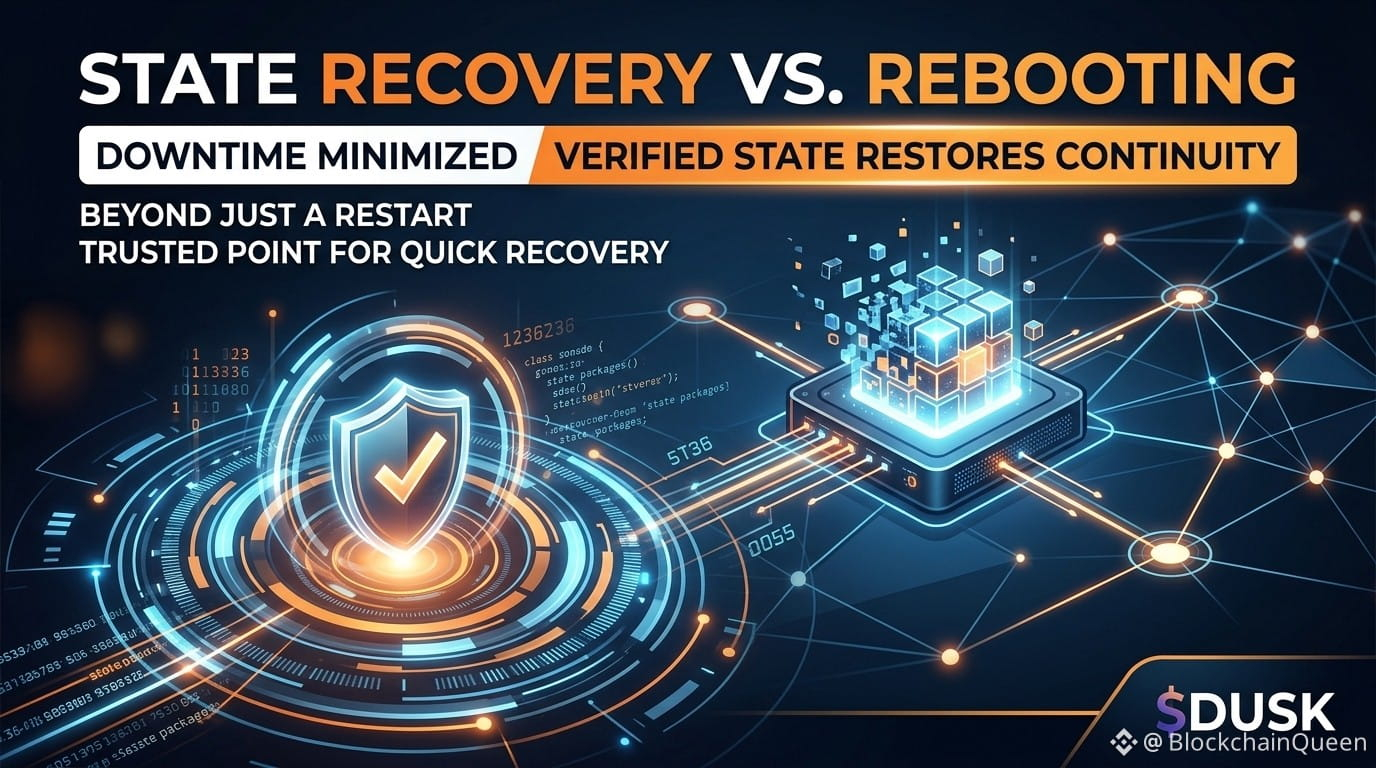
Restart membuat node berjalan lagi. Status yang terverifikasi memberi node titik yang dapat dipercaya untuk kembali.
Perbedaan ini penting karena membangun semuanya dari nol dapat berarti mengulang banyak pekerjaan hanya untuk mencapai suatu keadaan yang sebenarnya sudah dibentuk oleh jaringan. Jika pemulihan dapat bergantung pada status yang terverifikasi, prosesnya menjadi lebih tentang memulihkan kesinambungan, bukan sekadar memulai dari awal.
Saya rasa ini menjadi semakin relevan saat jaringan Dusk terus bertumbuh. Semakin banyak node berarti pemulihan tidak bisa hanya dianggap sebagai hal yang “nanti”. Operator membutuhkan cara yang praktis untuk kembali online tanpa melemahkan proses verifikasi yang membuat jaringan bisa diandalkan sejak awal.
Yang menurut saya menarik dari $DUSK adalah keputusan infrastruktur yang kurang terlihat ini bisa berdampak besar pada bagaimana sebuah jaringan berperilaku di dunia nyata.
Apakah Anda akan lebih mempercayai sebuah node jika ia bisa pulih dari status yang terverifikasi, alih-alih membangun semuanya dari nol?
#dusk
Dulu saya mengira pemulihan node pada dasarnya hanya dengan me-restart node dan menunggu node itu tersinkron lagi.
Setelah melihat lebih dekat bagaimana @Dusk melakukan pemulihan status, saya menyadari ada pertanyaan yang lebih penting: node yang dipulihkan itu sebenarnya memulihkan apa?
Bagian yang menarik adalah bahwa status tersebut dapat dikemas dan diverifikasi sebelum digunakan untuk pemulihan. Itu mengubah cara saya memikirkan waktu henti (downtime) node.
Restart membuat node berjalan lagi. Status yang terverifikasi memberi node titik yang dapat dipercaya untuk kembali.
Perbedaan ini penting karena membangun semuanya dari nol dapat berarti mengulang banyak pekerjaan hanya untuk mencapai suatu keadaan yang sebenarnya sudah dibentuk oleh jaringan. Jika pemulihan dapat bergantung pada status yang terverifikasi, prosesnya menjadi lebih tentang memulihkan kesinambungan, bukan sekadar memulai dari awal.
Saya rasa ini menjadi semakin relevan saat jaringan Dusk terus bertumbuh. Semakin banyak node berarti pemulihan tidak bisa hanya dianggap sebagai hal yang “nanti”. Operator membutuhkan cara yang praktis untuk kembali online tanpa melemahkan proses verifikasi yang membuat jaringan bisa diandalkan sejak awal.
Yang menurut saya menarik dari $DUSK adalah keputusan infrastruktur yang kurang terlihat ini bisa berdampak besar pada bagaimana sebuah jaringan berperilaku di dunia nyata.
Apakah Anda akan lebih mempercayai sebuah node jika ia bisa pulih dari status yang terverifikasi, alih-alih membangun semuanya dari nol?
#dusk