
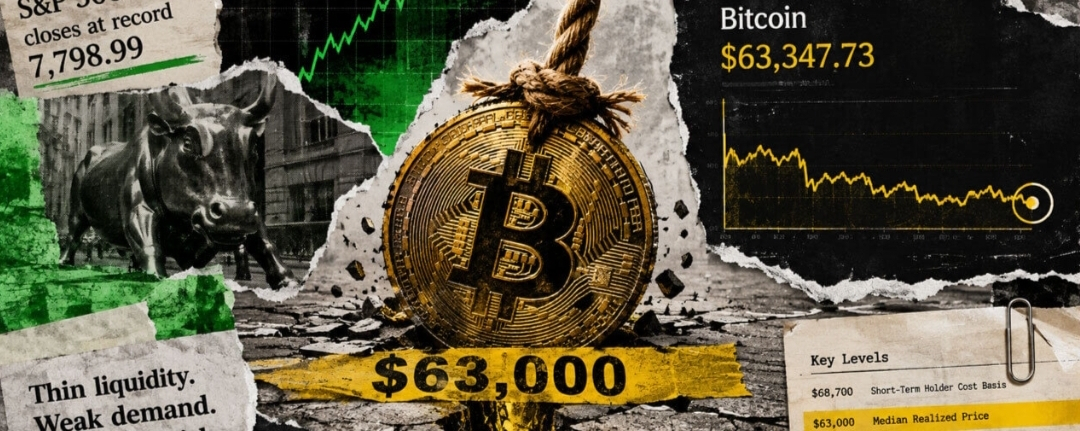

Everyone is watching Bitcoin’s price.
But I’m watching something else where the money is going....
Bitcoin can survive periods of heavy selling. What becomes more concerning is when liquidity starts drying up and fewer buyers are willing to step in.
Because without fresh money, even a small wave of selling can feel much bigger.
Liquidity is basically the fuel that keeps markets moving smoothly. When there are plenty of active buyers and sellers, large trades can happen without creating extreme price moves.
When liquidity becomes thin, the situation changes.
A large sell order can push Bitcoin down faster. A sudden wave of buying can also send BTC sharply higher. This is one reason low-liquidity markets can become extremely volatile.
And here’s where traders often get caught.
They see Bitcoin holding support and assume everything is fine. But price stability alone does not always mean demand is strong.
BTC can move sideways while trading activity weakens and investors wait on the sidelines. If fresh capital does not arrive, that support can become more vulnerable.
That is why I’m paying attention to more than candles.
Spot trading activity, stablecoin liquidity, institutional flows and derivatives positioning can provide useful clues about whether real money is entering the market or traders are simply using more leverage.
Leverage can create excitement. It cannot replace real demand forever.
A market driven mainly by leveraged positions can rise quickly, but it can also reverse violently when those positions begin getting liquidated.
Healthy spot demand creates a much stronger foundation.
Stablecoins are another part of the puzzle. They act as ready-to-use capital across much of the crypto ecosystem. If stablecoin supply and exchange liquidity expand, there may be more capital available to buy crypto.
If that liquidity starts shrinking, rallies can become harder to sustain.
This is why the next Bitcoin move may depend less on hype and more on capital.
Institutional demand matters too. ETF flows and other large investment channels can influence how much fresh exposure is entering or leaving Bitcoin.
But no single indicator tells the whole story.
I want to see several signals improving together: stronger spot demand, healthier volume, expanding liquidity and buyers defending important levels.
If those conditions appear, Bitcoin could have the fuel needed for a stronger recovery.
If liquidity continues disappearing, even good news may struggle to create a lasting rally.
That’s the part of the market I think deserves more attention.
Everyone fears the next big seller.
I’m more interested in a simpler question:
When that seller arrives, will there be enough buyers waiting on the other side?