#dusk $DUSK @Dusk
Saya belakangan memandang Dusk dengan cara yang berbeda.
Kebanyakan percakapan soal privasi bermuara pada hal yang sama: siapa yang melihat apa. Tapi dengan XSC, saya pikir pertanyaan yang lebih tajam adalah seberapa sering Anda perlu membuktikan bahwa Anda masih diizinkan untuk berpartisipasi?
Itu membalik seluruh model.
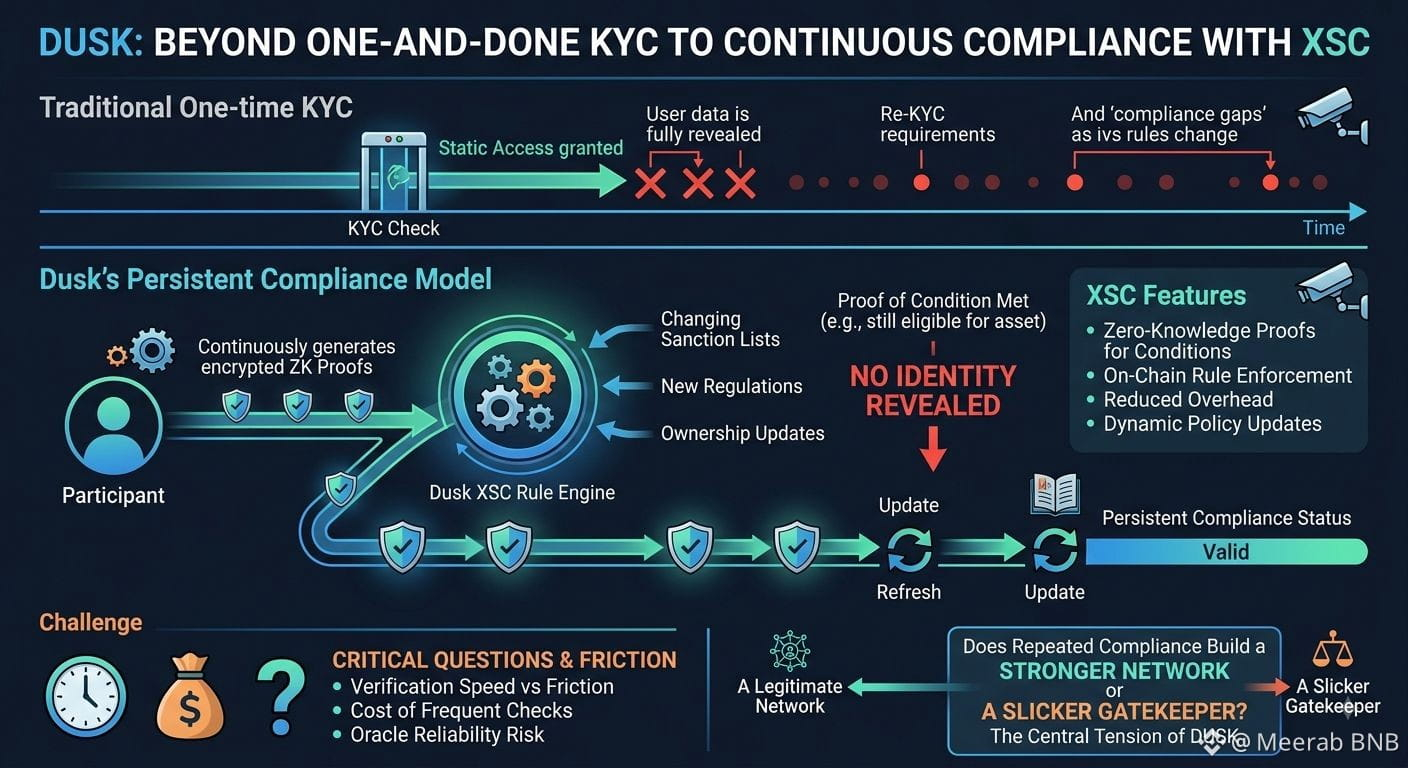
KYC tradisional menganggap kepatuhan seperti pintu sekali jalan. Tapi regulasi tidak statis—sanksi bergeser, perbatasan digambar ulang, kepemilikan berubah. Dusk tidak mengabaikan itu. Alih-alih menyiarkan identitas Anda ke mana-mana, Anda hanya menunjukkan bahwa suatu kondisi masih terpenuhi, tanpa membocorkan semuanya yang ada di bawahnya.
Di situlah, menurut saya, letak kegunaan yang sesungguhnya. Privasi membuatnya bisa dipakai. Namun kepatuhan yang berkelanjutan membuatnya relevan—terutama untuk aset yang teregulasi.
Tapi bagian yang tidak nyaman: jika verifikasi menjadi mahal, lambat, atau bergantung pada oracle yang rapuh, privasi berubah menjadi gesekan. Investor yang sah bisa saja tersisih hanya karena sebuah sistem tertinggal dari perubahan kebijakan.
Jadi saya tidak membeli slogan "privasi adalah produknya." Lebih tepatnya seperti mesinnya. Kepatuhan berkelanjutan adalah kemudinya. Dusk tampaknya ingin aset yang teregulasi bisa bergerak seperti aset digital—tanpa melepas aturan yang mendefinisikannya.
Pertanyaan besarnya: apakah kepatuhan yang berulang membangun jaringan yang lebih kuat—atau hanya gerbang yang lebih rapi sebagai penjaga?
Saya tidak punya jawabannya. Tapi itulah pertanyaan yang layak untuk direnungkan.
@Dusk
Saya belakangan memandang Dusk dengan cara yang berbeda.
Kebanyakan percakapan soal privasi bermuara pada hal yang sama: siapa yang melihat apa. Tapi dengan XSC, saya pikir pertanyaan yang lebih tajam adalah seberapa sering Anda perlu membuktikan bahwa Anda masih diizinkan untuk berpartisipasi?
Itu membalik seluruh model.
KYC tradisional menganggap kepatuhan seperti pintu sekali jalan. Tapi regulasi tidak statis—sanksi bergeser, perbatasan digambar ulang, kepemilikan berubah. Dusk tidak mengabaikan itu. Alih-alih menyiarkan identitas Anda ke mana-mana, Anda hanya menunjukkan bahwa suatu kondisi masih terpenuhi, tanpa membocorkan semuanya yang ada di bawahnya.
Di situlah, menurut saya, letak kegunaan yang sesungguhnya. Privasi membuatnya bisa dipakai. Namun kepatuhan yang berkelanjutan membuatnya relevan—terutama untuk aset yang teregulasi.
Tapi bagian yang tidak nyaman: jika verifikasi menjadi mahal, lambat, atau bergantung pada oracle yang rapuh, privasi berubah menjadi gesekan. Investor yang sah bisa saja tersisih hanya karena sebuah sistem tertinggal dari perubahan kebijakan.
Jadi saya tidak membeli slogan "privasi adalah produknya." Lebih tepatnya seperti mesinnya. Kepatuhan berkelanjutan adalah kemudinya. Dusk tampaknya ingin aset yang teregulasi bisa bergerak seperti aset digital—tanpa melepas aturan yang mendefinisikannya.
Pertanyaan besarnya: apakah kepatuhan yang berulang membangun jaringan yang lebih kuat—atau hanya gerbang yang lebih rapi sebagai penjaga?
Saya tidak punya jawabannya. Tapi itulah pertanyaan yang layak untuk direnungkan.
@Dusk