Saya pernah punya 230 dolar yang macet di sebuah aplikasi kripto karena KYC gagal pada foto ID saya. Itu baru berhasil pada percobaan ketiga, dan setiap kali saya harus mengirim ulang wajah, nomor dokumen, dan alamat saya. Transaksinya kecil, tetapi salinan identitas saya tidak.
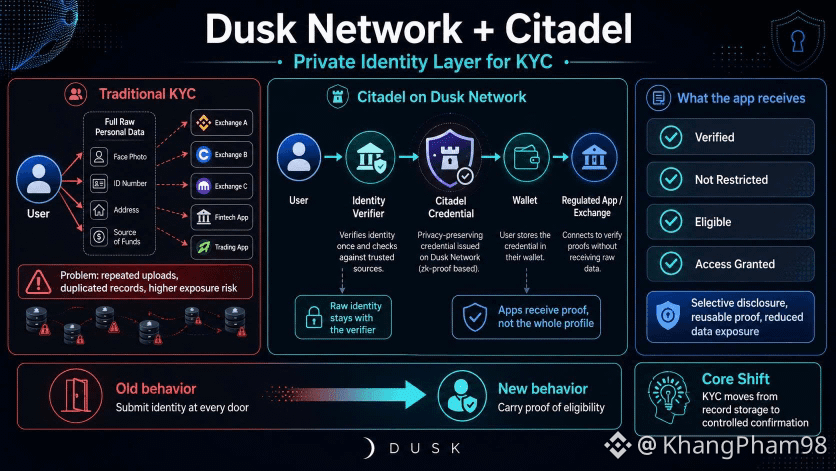
Dusk Network menghadirkan Citadel ke lapisan kebocoran yang sunyi itu. Citadel tidak membuat pengguna menjadi tak terlihat oleh hukum; Citadel mengubah cara layanan memeriksa kelayakan. Terverifikasi, bukan dalam grup terbatas, diizinkan untuk mengakses—sinyal-sinyal ini bisa dibuktikan tanpa harus membuka seluruh profil.
KYC lama sering mencampur dua hal: mengonfirmasi kelayakan dan mengumpulkan data. Citadel memisahkannya—verifier menangani identitas mentah, sementara aplikasi menerima bukti kriptografis. Karena itu, Dusk Network menggeser KYC dari model penyimpanan catatan menuju model konfirmasi yang terkontrol.
Inti praktisnya ada pada perilaku. Pengguna tidak membenci kepatuhan; mereka membenci setiap aplikasi yang meminta salinan baru dari kehidupan pribadi mereka. Jika 5 platform menyimpan foto wajah dan dokumen, risikonya menjadi 5 tempat penyimpanan data yang dioperasikan dengan buruk.
Dusk Network tetap menghadapi bagian yang sulit. Citadel bergantung pada verifier, cara wallet menampilkan izin berbagi, dan tingkat integrasinya. Lapisan privasi kehilangan kekuatan jika antarmuka membuat pengguna harus mengklik setuju seperti mesin.
Saya melihat Citadel sebagai perubahan perilaku: dari menyerahkan identitas agar bisa lewat pintu, menjadi membawa bukti kelayakan untuk menembusnya. Dusk Network tidak perlu menceritakan kisah kebebasan yang berlebihan. Pertanyaan terbuka adalah apakah pengguna akan menuntut hak untuk membuktikan lebih sedikit, atau terus menerima gaya KYC yang menyerahkan seluruh diri mereka untuk transaksi bernilai hanya beberapa ratus dolar.
@Dusk #dusk $DUSK
Dusk Network menghadirkan Citadel ke lapisan kebocoran yang sunyi itu. Citadel tidak membuat pengguna menjadi tak terlihat oleh hukum; Citadel mengubah cara layanan memeriksa kelayakan. Terverifikasi, bukan dalam grup terbatas, diizinkan untuk mengakses—sinyal-sinyal ini bisa dibuktikan tanpa harus membuka seluruh profil.
KYC lama sering mencampur dua hal: mengonfirmasi kelayakan dan mengumpulkan data. Citadel memisahkannya—verifier menangani identitas mentah, sementara aplikasi menerima bukti kriptografis. Karena itu, Dusk Network menggeser KYC dari model penyimpanan catatan menuju model konfirmasi yang terkontrol.
Inti praktisnya ada pada perilaku. Pengguna tidak membenci kepatuhan; mereka membenci setiap aplikasi yang meminta salinan baru dari kehidupan pribadi mereka. Jika 5 platform menyimpan foto wajah dan dokumen, risikonya menjadi 5 tempat penyimpanan data yang dioperasikan dengan buruk.
Dusk Network tetap menghadapi bagian yang sulit. Citadel bergantung pada verifier, cara wallet menampilkan izin berbagi, dan tingkat integrasinya. Lapisan privasi kehilangan kekuatan jika antarmuka membuat pengguna harus mengklik setuju seperti mesin.
Saya melihat Citadel sebagai perubahan perilaku: dari menyerahkan identitas agar bisa lewat pintu, menjadi membawa bukti kelayakan untuk menembusnya. Dusk Network tidak perlu menceritakan kisah kebebasan yang berlebihan. Pertanyaan terbuka adalah apakah pengguna akan menuntut hak untuk membuktikan lebih sedikit, atau terus menerima gaya KYC yang menyerahkan seluruh diri mereka untuk transaksi bernilai hanya beberapa ratus dolar.
@Dusk #dusk $DUSK