Saya terus kembali ke satu hal tentang @Duskdoesnt yang terasa mudah terlewat: hal itu tidak memaksa setiap transaksi masuk ke dalam satu model.
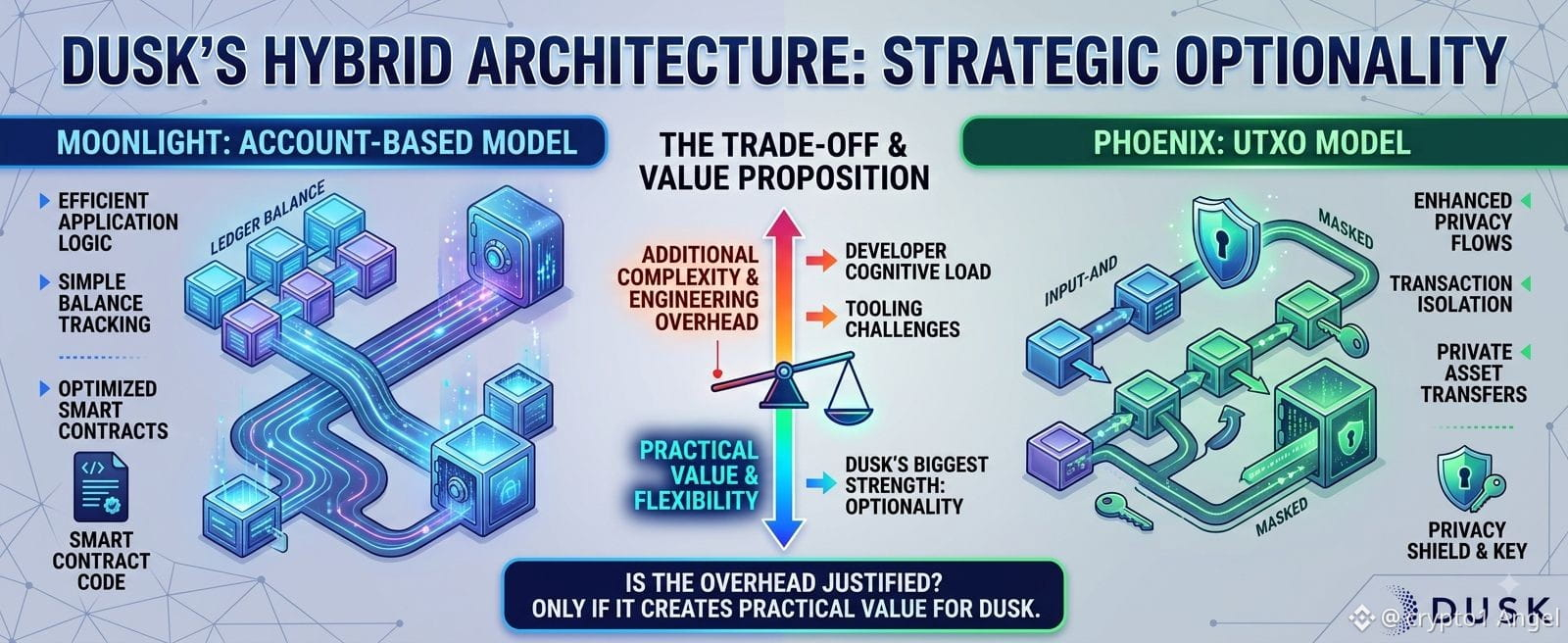
Saya melihat Moonlight menggunakan struktur berbasis akun, sementara Phoenix mengambil pendekatan UTXO. Awalnya saya meragukan keputusannya. Kenapa memperkenalkan dua cara berbeda untuk merepresentasikan transaksi, padahal satu model saja bisa membuat arsitekturnya lebih mudah dipahami?
Tapi semakin dalam saya melihat, semakin terlihat itu menjadi keputusan yang strategis.
Saya pikir state berbasis akun membuat saldo dan logika aplikasi lebih mudah ditangani, sementara desain UTXO milik Phoenix memberi ruang untuk alur transaksi yang lebih berorientasi pada privasi.
Itu memberi Dusk fleksibilitas di tempat yang memang penting.
Namun, saya tetap tidak berpikir kompromi itu boleh diabaikan.
Setiap model tambahan menciptakan lapisan lain yang perlu dipahami oleh pengembang, pengguna, tooling, dan infrastruktur. Kapabilitas yang lebih besar juga bisa berarti kompleksitas yang lebih besar.
Bagi saya, pertanyaan sesungguhnya bukan apakah Dusk bisa mendukung keduanya.
Melainkan apakah dua model ini menciptakan nilai praktis yang cukup untuk membenarkan tambahan beban kognitif dan rekayasa.
Jika iya, ini bukanlah kompleksitas yang tidak perlu.
Ini adalah optionalitas arsitektural.
Dan itu bisa menjadi salah satu kekuatan terbesar Dusk.
#dusk $DUSK @Dusk
Saya melihat Moonlight menggunakan struktur berbasis akun, sementara Phoenix mengambil pendekatan UTXO. Awalnya saya meragukan keputusannya. Kenapa memperkenalkan dua cara berbeda untuk merepresentasikan transaksi, padahal satu model saja bisa membuat arsitekturnya lebih mudah dipahami?
Tapi semakin dalam saya melihat, semakin terlihat itu menjadi keputusan yang strategis.
Saya pikir state berbasis akun membuat saldo dan logika aplikasi lebih mudah ditangani, sementara desain UTXO milik Phoenix memberi ruang untuk alur transaksi yang lebih berorientasi pada privasi.
Itu memberi Dusk fleksibilitas di tempat yang memang penting.
Namun, saya tetap tidak berpikir kompromi itu boleh diabaikan.
Setiap model tambahan menciptakan lapisan lain yang perlu dipahami oleh pengembang, pengguna, tooling, dan infrastruktur. Kapabilitas yang lebih besar juga bisa berarti kompleksitas yang lebih besar.
Bagi saya, pertanyaan sesungguhnya bukan apakah Dusk bisa mendukung keduanya.
Melainkan apakah dua model ini menciptakan nilai praktis yang cukup untuk membenarkan tambahan beban kognitif dan rekayasa.
Jika iya, ini bukanlah kompleksitas yang tidak perlu.
Ini adalah optionalitas arsitektural.
Dan itu bisa menjadi salah satu kekuatan terbesar Dusk.
#dusk $DUSK @Dusk