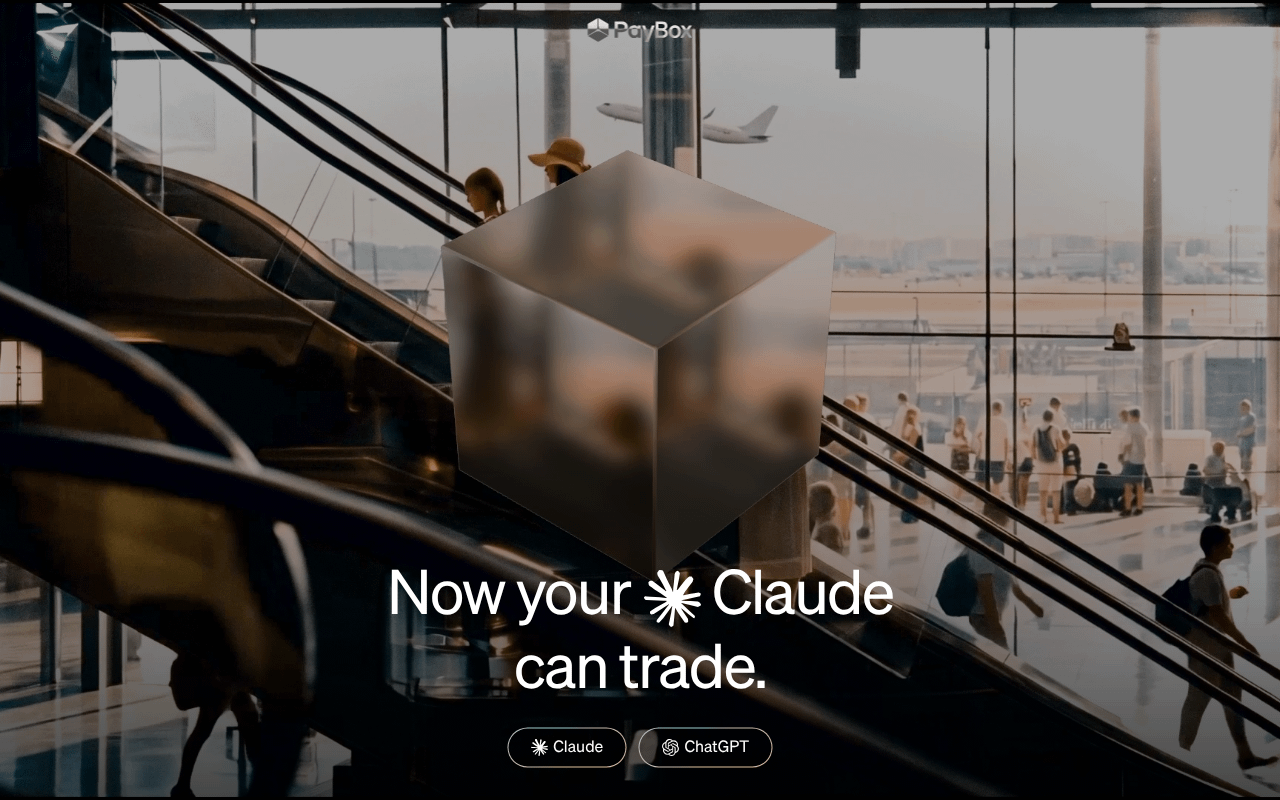

Kita sudah sampai pada titik ketika AI bisa mencari penerbangan, membandingkan harga, menemukan sebuah produk, meneliti sesuatu untuk kita, dan bahkan menangani tugas yang semakin kompleks.
Tapi selalu ada penghalang terakhir.
AI sebenarnya tidak bisa membayar.
Itulah yang membuat PayBox milik MoonPay menarik.
PayBox adalah brankas pembayaran non-penahanan yang terhubung langsung dengan ChatGPT dan Claude. Alih-alih meninggalkan percakapan, membuka situs web lain, mengisi detail pembayaran, dan menyelesaikan transaksi sendiri, Anda bisa memberi agen tugas dalam bahasa yang sederhana.
Sebagai contoh:
"Beli USDC senilai $100."
Atau:
"Pesan penerbangan jam 9 pagi."
AI dapat menyiapkan transaksinya, sementara PayBox menyediakan lapisan izin dan pembayaran di bawahnya. Pengguna dapat menyetujui transaksi dengan passkey, atau mengonfigurasi aturan yang memungkinkan transaksi tertentu terjadi secara otomatis dalam batas yang ditentukan.
Dan di sinilah ini menjadi lebih menarik daripada sekadar menambahkan tombol pembayaran ke chatbot AI.
Lapisan izin itu penting
Memberi AI akses ke uang terdengar mengerikan jika model tersebut hanya menerima akses tanpa batas ke wallet atau kartu Anda.
PayBox dirancang dengan gagasan yang berlawanan.
Kredensial dan metode pembayaran beroperasi berdasarkan izin yang ditetapkan pengguna. Sistem dapat menerapkan batas pengeluaran dan kontrol lain, sementara pengguna tetap mengendalikan apa yang agen diizinkan untuk lakukan. MoonPay juga menggambarkan PayBox sebagai non-custodial, artinya MoonPay tidak sekadar mengambil penitipan dana Anda lalu memberikannya kepada AI.
Itu menciptakan perbedaan penting:
Anda tidak memberikan AI akun bank Anda.
Anda memberikan kemampuan yang terkontrol kepada sebuah agen untuk bertransaksi.
Dan perbedaan itu akan sangat penting saat agen menjadi lebih otonom.
Lalu ada x402
PayBox hanyalah satu bagian dari pergeseran yang lebih besar yang sedang dikerjakan MoonPay.
Tumpukan agen MoonPay mendukung x402, sebuah protokol pembayaran yang dirancang untuk pembayaran mesin-ke-mesin melalui HTTP. Agen AI dapat menemukan API yang berbayar, melakukan pembayaran yang diperlukan, dan melanjutkan permintaan tanpa alur checkout tradisional.
Implementasi MoonPay saat ini mendukung pembayaran biaya API x402 di $USDC pada Solana($SOL ) atau Base.
Ini menciptakan model yang sangat berbeda tentang bagaimana perangkat lunak dapat berinteraksi:
AI menemukan sebuah layanan → AI memutuskan perlu layanan tersebut → AI membayar → AI melanjutkan tugas.
Manusia tidak harus menyetujui secara manual setiap pembayaran API kecil.
Di sanalah gagasan agentic commerce mulai menjadi jauh lebih menarik.
Dari asisten menjadi agen-agen ekonomi
Tumpukan MoonAgents MoonPay yang lebih luas melampaui pembayaran. Tools-nya dapat memberi akses agen AI ke hal-hal seperti wallet, swap, transfer, trading, riset pasar, DCA, dan operasi kripto lainnya. MoonPay mengatakan lapisan agennya saat ini menyediakan puluhan tools khusus kripto melalui ekosistem agen tersebut.
Jadi, perkembangannya mulai terlihat seperti ini:
AI yang menjawab pertanyaan
↓
AI yang melakukan tugas
↓
AI yang bisa mengakses tools
↓
AI yang dapat bertransaksi
Dan langkah terakhir itu mengubah persamaan.
Uang menjadi alat lain yang dapat digunakan oleh agen AI.
Sebuah agen secara teoritis dapat membayar API, membeli layanan, menukar aset, memindahkan dana, atau menyelesaikan pembelian sebagai bagian dari tugas yang lebih besar.
Pertanyaan menariknya tidak lagi sekadar:
"Apa yang bisa dilakukan AI?"
Yaitu:
"Seberapa nyaman kita mengizinkan AI melakukan apa dengan uang kita?"
Itu bagian yang saya pantau.
Karena setelah AI bisa berpikir dan bertransaksi, kita tidak hanya membicarakan fitur chatbot lain.
Kami mulai membangun perangkat lunak yang dapat berpartisipasi dalam ekonomi atas nama kami.
Dan itu bisa menjadi pergeseran yang jauh lebih besar daripada AI yang hanya makin baik dalam menjawab pertanyaan.
#MoonPay #PayBox #Aİ #AgenticAI #AgenticCommerce