

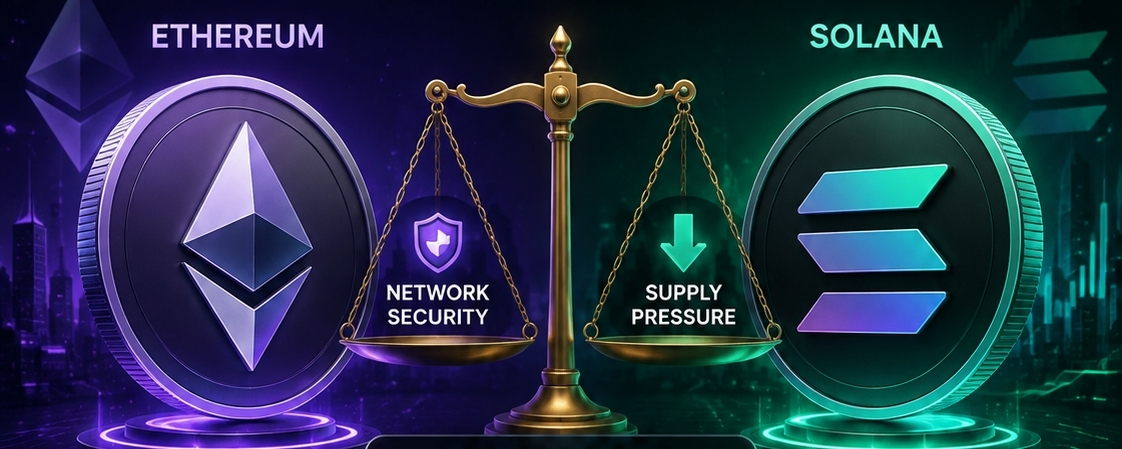



Ethereum dan Solana sekali lagi menghadapi pertanyaan penting: seberapa banyak penerbitan token baru yang cukup untuk menjaga keamanan jaringan mereka tanpa menciptakan tekanan pasokan jangka panjang yang berlebihan?


Menurut Galaxy Research, kedua ekosistem sedang meninjau kembali aspek-aspek dari model penerbitan token mereka. Tantangan utamanya adalah menemukan keseimbangan yang tepat antara memberi penghargaan kepada validator dan mempertahankan struktur pasokan yang sehat.
⚖️ Keamanan vs. Tekanan Pasokan
Penerbitan token memainkan peran penting dalam jaringan proof-of-stake. Token baru dapat digunakan untuk memberi penghargaan kepada peserta yang membantu mengamankan blockchain dan menjaga jaringan agar beroperasi dengan lancar.
Namun ada sisi lain dari persamaan ini.
Jika penerbitan tetap terlalu tinggi terlalu lama, pasokan yang terus bertambah dapat menciptakan tekanan tambahan pada ekonomi token. Itu membuat tingkat inflasi menjadi bagian penting dari rancangan jangka panjang.
Galaxy Research menyoroti ketegangan ini karena kedua jaringan sedang mempertimbangkan bagaimana anggaran token mereka harus berkembang.
🔥 Mengapa Ini Penting
Perubahan apa pun pada penerbitan atau inflasi dapat menimbulkan konsekuensi di luar imbalan bagi validator.
Penerbitan yang lebih rendah dapat mengurangi pertumbuhan pasokan jangka panjang, sementara penerbitan yang lebih tinggi dapat memberikan insentif yang lebih kuat untuk keamanan jaringan. Bagian tersulit adalah menemukan tingkat yang mendukung keamanan tanpa secara tidak perlu meningkatkan tekanan dilusi.
Bagi investor, perkembangan ini penting untuk dipantau karena tokenomics dapat sangat memengaruhi struktur pasar jangka panjang suatu aset.
👀 Gambaran Lebih Besar
Perdebatan ini bukan sekadar tentang menciptakan lebih sedikit token.
Ini tentang merancang sistem ekonomi yang dapat mengamankan jaringan, memberi penghargaan kepada para peserta, dan tetap berkelanjutan saat adopsi terus berkembang.
Saat Ethereum dan Solana terus berkembang, perubahan pada model penerbitan mereka bisa menjadi bagian yang semakin penting dari narasi pasar kripto yang lebih luas.
Pertanyaan kuncinya sederhana: Berapa banyak penerbitan yang cukup untuk mengamankan jaringan tanpa memberikan tekanan yang tidak perlu pada pasokan jangka panjang