

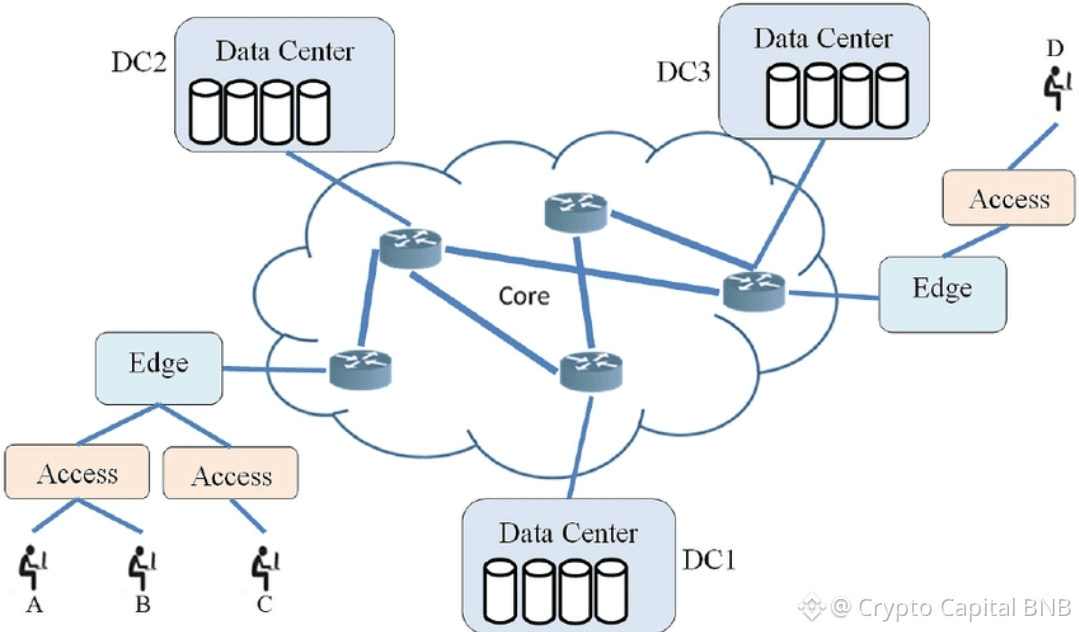
 Web3 app. It was a small thing. A profile image. Nothing fancy. It loaded… slowly. Then failed. Then worked on the third try. Out of curiosity, I popped open the network tab and followed the breadcrumbs.
Guess where the file actually lived.
Yep. A familiar Web2 cloud provider. Same logos we’ve all seen for a decade.
That moment stuck with me, because it wasn’t an exception. From what I’ve seen over the last couple of years, most Web3 apps still quietly lean on centralized storage, even if the front end screams decentralization. Wallets are on-chain. Tokens are on-chain. But the data? The stuff users actually care about? Often parked somewhere very old-school.And honestly, that’s the uncomfortable truth Web3 doesn’t love talking about.
The quiet dependency nobody advertises
Here’s the thing. Blockchains are great at what they’re designed to do: verify transactions, maintain consensus, and keep ledgers immutable. They’re terrible at storing large files. Images, videos, game assets, social posts, AI datasets — all of that gets expensive and clunky fast.
So teams compromise.
They keep “critical logic” on-chain and offload everything else to centralized storage. AWS buckets. Google Cloud. Sometimes a private server someone forgot to mention in the docs. The user experience is smoother, cheaper, and faster. But the trust model quietly collapses.If that storage goes down, gets censored, or just disappears, the “decentralized” app suddenly feels very fragile.I’ve seen NFTs whose images vanished. DAO dashboards that went offline because one API endpoint failed. Web3 games where assets couldn’t load during peak traffic. None of that had anything to do with the blockchain itself.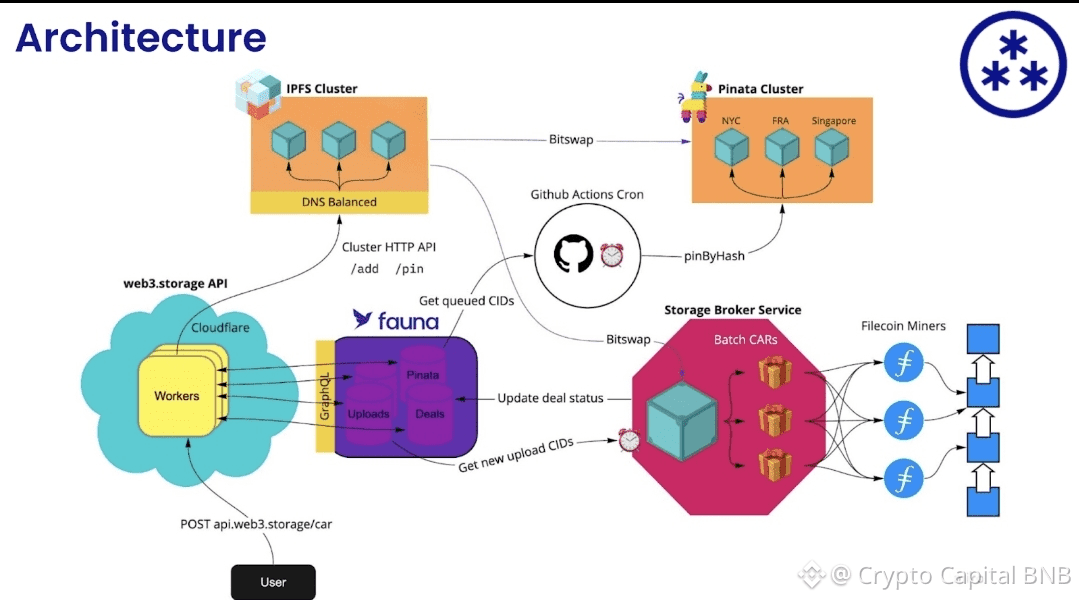
It was storage. Always storage.
Why this keeps happening (and why it’s understandable)
I don’t think most builders are malicious here. They’re practical.
From what I’ve experienced, fully decentralized storage has real trade-offs. Latency can be unpredictable. Tooling isn’t always mature. Debugging issues feels like trying to fix a bike while riding it downhill. And users? Users expect things to load instantly.
So teams take the shortcut.
They tell themselves, “We’ll decentralize storage later.” Or, “This part isn’t critical.” Or my favorite, “Users don’t really care where files are stored.”
Until something breaks.
Where Walrus ($WAL ) caught my attention
I came across Walrus during a late-night rabbit hole, reading about data availability and storage layers. What pulled me in wasn’t flashy branding or big promises. It was the framing.
Walrus isn’t pretending storage is a solved problem. It starts from the assumption that Web3 apps need a better way to store large blobs of data without quietly reverting to Web2 infrastructure.In simple terms — and I’m deliberately keeping this non-technical — Walrus is about making data storage feel native to decentralized systems, not an awkward add-on. Instead of treating storage as an afterthought, it treats it as first-class infrastructure.What I like is that it’s clearly designed with real app builders in mind. Things like predictable retrieval, verifiable availability, and the ability to handle large datasets aren’t marketing buzzwords. They’re responses to pain points people actually hit.I’ve talked to developers who openly admit that storage decisions keep them up at night. Not tokenomics. Not governance. Storage. Because once users start uploading content, you’re on the hook for keeping it accessible.
Why this matters more than people think
From a user perspective, centralized storage breaks the social contract of Web3.
You’re told, “No one can take this away from you.” But if a single company controls the files, that promise has an asterisk. Censorship resistance becomes conditional. Ownership becomes symbolic.From a builder’s perspective, centralized storage is a hidden liability. It’s cheap early on, sure. But as apps scale, costs rise, trust assumptions pile up, and you’re one policy change away from serious problems.And from an ecosystem perspective? It’s a quiet choke point. A lot of “decentralized” apps rely on the same few infrastructure providers. That’s not resilience. That’s concentration wearing a new outfit.
But let’s be real about the risks
I don’t think @Walrus 🦭/acc — or any decentralized storage solution — is a magic fix.
Decentralized storage still has challenges. Performance consistency isn’t guaranteed. Incentive models need to hold up long-term. There’s always the question of who’s actually storing the data and why they’ll keep doing it when market conditions shift.
And adoption is hard. Developers won’t switch unless tooling is genuinely easier, not just ideologically cleaner. Users won’t tolerate slower load times just to make a philosophical point.
So yeah, skepticism is healthy here.
I’ve been burned before by infrastructure projects that sounded great on paper and fell apart under real usage. Anyone who’s been around long enough has.
Still, something feels different this time
What makes me cautiously optimistic is that the conversation is changing. Storage is no longer an invisible layer everyone ignores. People are starting to ask uncomfortable questions.
If your app depends on centralized storage, is it really decentralized?
If your NFT image lives on a server you don’t control, who owns it?
If your social dApp can be taken offline by a single company, what exactly did we build?
Projects like #Walrus don’t answer all of that overnight. But they push the ecosystem to confront the gap between what we say Web3 is and how it actually works.
And honestly, I’d rather deal with messy, imperfect decentralization than clean, convenient illusions.I’m not all-in. I’m watching. Testing. Waiting to see how real usage plays out. But at least now, when someone tells me their app is “fully decentralized,” I know exactly where to look next.
Right at the storage layer.
