Saya dulu berpikir bahwa begitu sebuah token sudah ada di dompet saya, jumlahnya hanya boleh berubah jika saya membeli, menjual, atau mentransfernya.
bStocks membuat saya menyadari ada kemungkinan lain.
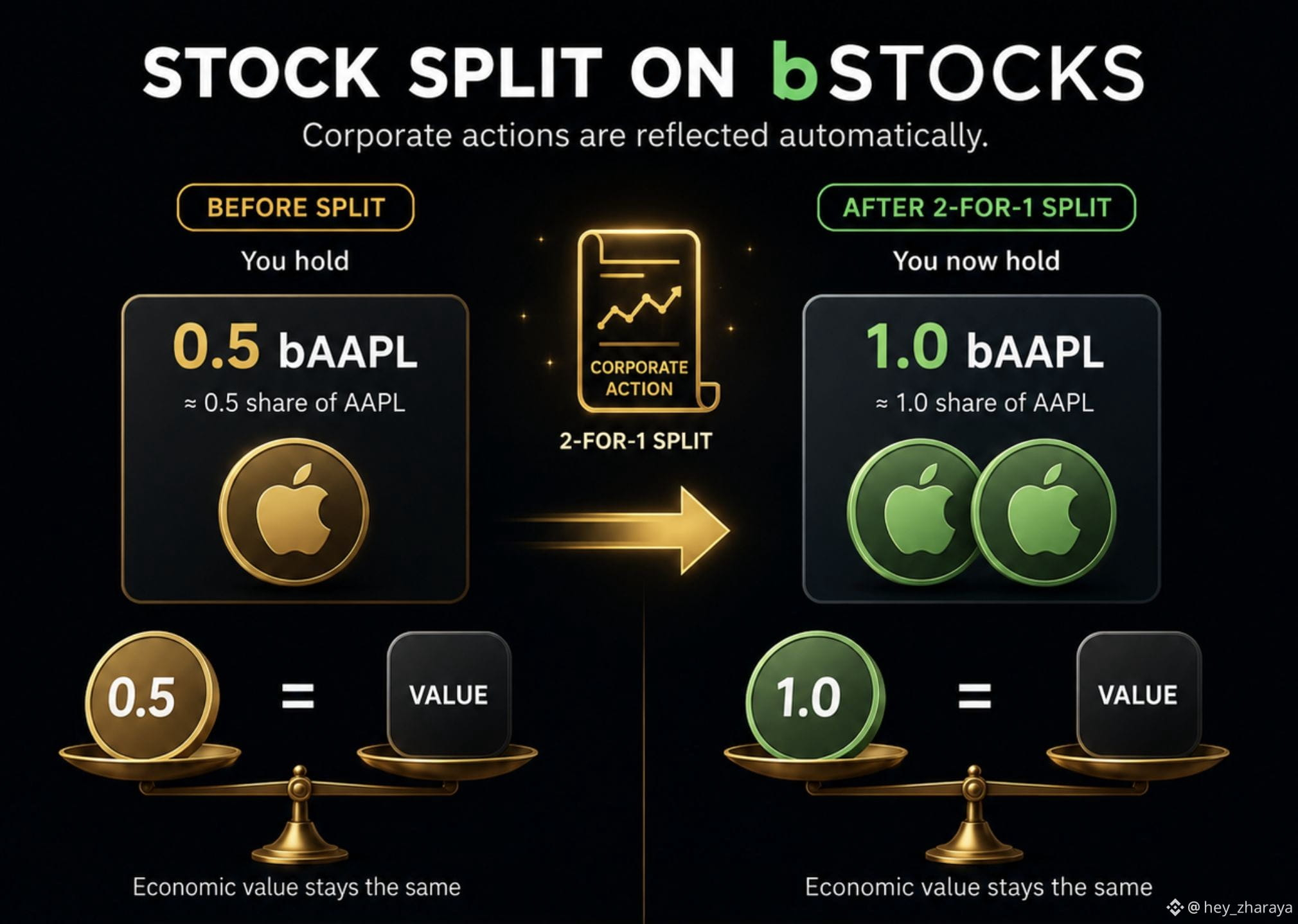
Ambil contoh split saham 2-untuk-1 yang sederhana.
Jika saya memegang 0.5 bStock sebelum split, aksi korporat tersebut tidak mengharuskan saya untuk menjualnya, mengonversinya, atau mengganti apa pun secara manual.
Mekanisme Multiplier menyesuaikan posisi secara otomatis.
0.5 bStock saya bisa menjadi 1.0 bStock, sementara nilai yang direpresentasikan oleh posisi tetap setara secara ekonomi karena harga saham yang mendasarinya menyesuaikan akibat split.
Awalnya ini terdengar seperti detail teknis yang kecil.
Tapi saya pikir ini menunjukkan sesuatu yang jauh lebih menarik tentang tokenisasi aset dunia nyata.
Token yang mewakili sebuah saham tidak bisa begitu saja ada di-chain dan mengabaikan apa yang terjadi pada perusahaan yang menjadi dasarnya.
Saham berubah.
Mereka melakukan split.
Mereka membayar dividen.
Aksi korporat terjadi.
Jadi, representasi tokennya harus turut merespons peristiwa-peristiwa tersebut.
Dengan bStocks, Binance menjelaskannya melalui mekanisme Multiplier: aksi korporat seperti stock split dan dividen bisa tercermin secara otomatis pada saldo token.
Itu mengubah cara saya memandang saham yang ditokenisasi.
Bagian yang menarik bukan hanya soal menaruh aset terkait saham di BNB Chain.
Bagian yang lebih sulit adalah menjaga agar representasi on-chain-nya tetap tersinkron dengan peristiwa yang terjadi dalam keuangan tradisional.
Dan jembatan di antara dua sistem itulah—kemungkinan besar—bagian dari bStocks yang paling ingin saya pahami sekarang.
Pernahkah Anda memikirkan apa yang harus terjadi pada sebuah tokenized stock ketika saham aslinya melakukan split?
#bstockscis @BinanceCIS
bStocks membuat saya menyadari ada kemungkinan lain.
Ambil contoh split saham 2-untuk-1 yang sederhana.
Jika saya memegang 0.5 bStock sebelum split, aksi korporat tersebut tidak mengharuskan saya untuk menjualnya, mengonversinya, atau mengganti apa pun secara manual.
Mekanisme Multiplier menyesuaikan posisi secara otomatis.
0.5 bStock saya bisa menjadi 1.0 bStock, sementara nilai yang direpresentasikan oleh posisi tetap setara secara ekonomi karena harga saham yang mendasarinya menyesuaikan akibat split.
Awalnya ini terdengar seperti detail teknis yang kecil.
Tapi saya pikir ini menunjukkan sesuatu yang jauh lebih menarik tentang tokenisasi aset dunia nyata.
Token yang mewakili sebuah saham tidak bisa begitu saja ada di-chain dan mengabaikan apa yang terjadi pada perusahaan yang menjadi dasarnya.
Saham berubah.
Mereka melakukan split.
Mereka membayar dividen.
Aksi korporat terjadi.
Jadi, representasi tokennya harus turut merespons peristiwa-peristiwa tersebut.
Dengan bStocks, Binance menjelaskannya melalui mekanisme Multiplier: aksi korporat seperti stock split dan dividen bisa tercermin secara otomatis pada saldo token.
Itu mengubah cara saya memandang saham yang ditokenisasi.
Bagian yang menarik bukan hanya soal menaruh aset terkait saham di BNB Chain.
Bagian yang lebih sulit adalah menjaga agar representasi on-chain-nya tetap tersinkron dengan peristiwa yang terjadi dalam keuangan tradisional.
Dan jembatan di antara dua sistem itulah—kemungkinan besar—bagian dari bStocks yang paling ingin saya pahami sekarang.
Pernahkah Anda memikirkan apa yang harus terjadi pada sebuah tokenized stock ketika saham aslinya melakukan split?
#bstockscis @BinanceCIS