
Is Bitcoin Just a Chart, or the Foundation of a New Global Economy?
By CryptoOracle_PK
Every generation witnesses moments when the world quietly moves toward a new financial system. Most people fail to recognize these moments until history has already turned them into reality. Today, my question is not about Bitcoin's price—it's about Bitcoin's place in history.
Over the past several days, I haven't been looking at Bitcoin merely as a trader. I've been analyzing it from the perspective of governments, economies, and global power. The more I study Bitcoin's four-year cycle, the more I feel we may be standing at the beginning of a transformation that could reshape the financial world over the next few years.
Many analysts believe that if history repeats itself, Bitcoin could eventually reach $200,000. If that assumption proves correct, then the real question isn't how high Bitcoin can go—it's who will accumulate it before that happens.
That leads to a much bigger idea.
If a government—especially the United States—views Bitcoin as a strategic reserve asset for the future, would it prefer to accumulate it at high prices or lower prices?
The answer seems obvious.
Every intelligent investor prefers buying quality assets at a discount.
This is why I keep asking myself whether the current correction is simply another normal market cycle—or whether it also creates a natural opportunity for institutions and policymakers to build long-term positions.
I'm not claiming that this is exactly what's happening.
However, one principle of economics has remained true throughout history:
"Individuals and institutions tend to act in their own best interests."
That is why I don't study charts alone. I try to connect the bigger picture—global geopolitics, U.S. debt, regulatory developments, ETF flows, and even President Trump's public statements—to understand where the market may be heading.
President Trump's communication style also makes this discussion particularly interesting. He is well known for making unexpected statements, dominating media attention, and putting political opponents on the defensive. At times, a single comment has been enough to move global financial markets.
Is this simply his political style?
Or could it also be part of a broader negotiating strategy?
No one can answer that with certainty today.
Yet another question deserves attention.
If a president wants to be remembered in history, would winning elections alone be enough? Or would creating a financial revolution that reshapes the global economy leave a far greater legacy?
The cryptocurrency industry may be the first technological innovation capable of fundamentally transforming the monetary system itself. If the United States ultimately chooses to lead that transformation, the implications could extend far beyond investment returns—it could redefine global financial influence.
Of course, this remains a thesis, not an established fact.
But successful investors rarely wait until every answer is confirmed. They spend their time analyzing possibilities before they become obvious to everyone else.
Perhaps that is why the world's most successful investors don't simply ask:
"Where is Bitcoin today?"
Instead, they ask:
"Where could Bitcoin be five years from now, and who is quietly positioning themselves today?"
I could certainly be wrong.
Bitcoin may fall to $55,000, or it may begin its next major rally before ever reaching that level.
But one thing seems certain.
What looks today like a simple debate about price may one day become a chapter in financial history.
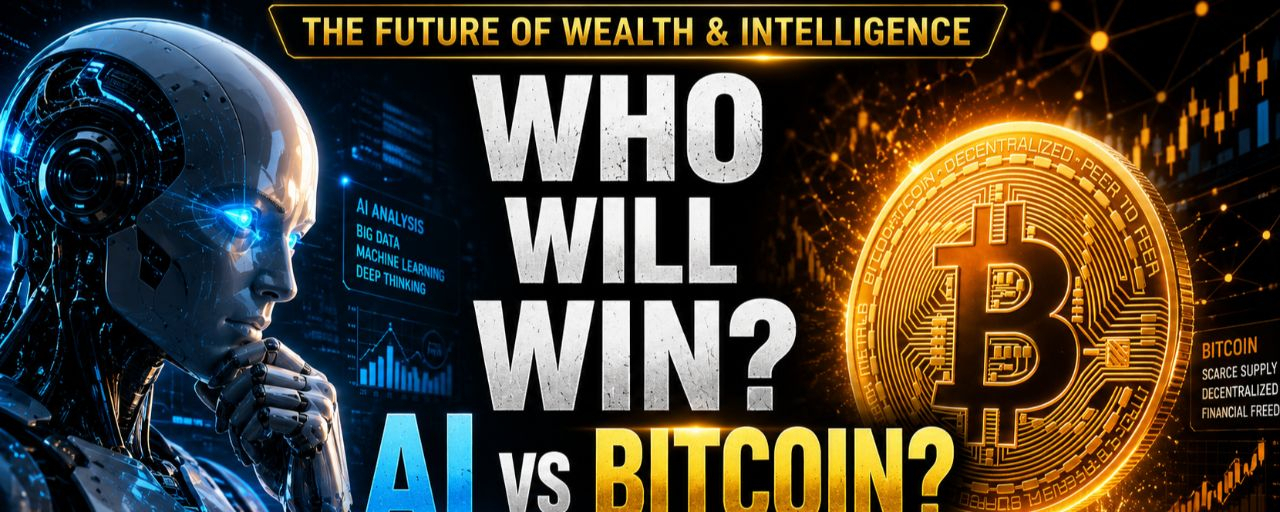
🤖 AI or ₿ Bitcoin—which do you believe will have the greater impact on the world's future over the next decade, and why?
#Bitcoin #BTC #AI #ArtificialIntelligence #Crypto #CryptoNews #CryptoCommunity #Blockchain #FutureTech #DigitalEconomy
✍️ CryptoOracle_PK
Institutional Thinking. Retail Execution.