
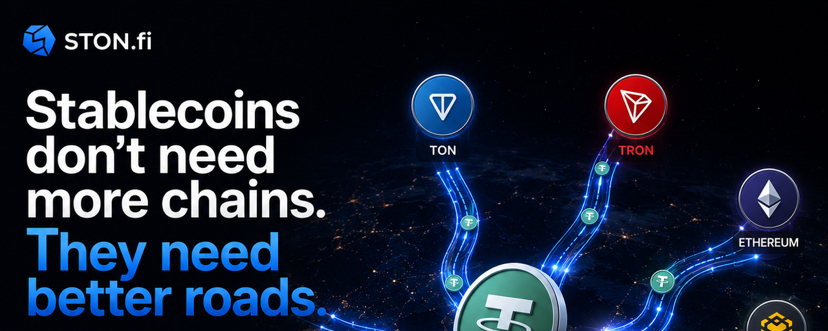

Saat orang-orang membahas stablecoin, percakapan biasanya berpusat pada satu pertanyaan:
“Yang mana yang Anda gunakan?”
USDT?
USDC?
USDG?
Tapi menurut saya, kita sudah bertanya pada pertanyaan yang salah.
Tantangan sebenarnya bukan memilih stablecoin.
Memindahkannya.
Hari ini, dolar yang sama ada di banyak blockchain.
USDT di TRON.
USDT di TON.
USDT di Ethereum.
USDT di Base.
USDT di BNB Chain.
USDT0 di Arbitrum.
Semuanya dipatok pada nilai yang sama, tetapi masing-masing hidup di dalam ekosistemnya sendiri.
Fragmentasi itu menciptakan pengalaman yang setiap pengguna kripto sudah sangat kenal.
Kamu melakukan bridging.
Tunggu.
Ganti jaringan.
Buka aplikasi lain.
Swap lagi.
Semoga semuanya terselesaikan dengan benar.
Dolar tetap stabil.
Pengalaman pengguna tidak.
Di sinilah infrastruktur mulai benar-benar berarti.
Bukan karena tiba-tiba orang peduli pada algoritma routing atau logika settlement.
Tapi karena mereka ingin prosesnya menghilang.
Infrastruktur terbaik bukan yang disadari pengguna.
Itulah yang tidak perlu mereka pikirkan.
Itulah sebabnya ekspansi terbaru STON.fi menarik perhatian saya.
TRON kini terhubung bersama TON dan banyak ekosistem EVM, memungkinkan stablecoin yang didukung berpindah melalui satu alur swap self-custodial, alih-alih memaksa pengguna melewati bridge dan antarmuka yang terpisah. (Blog STON.fi)
Dari sudut pandang pengguna, alurnya tetap sederhana:
• Pilih aset.
• Pilih rantai tujuan.
• Tinjau kuotasinya.
• Konfirmasi.
Di balik kesederhanaan itu, Omniston mengoordinasikan routing dan settlement agar pengguna menerima jumlah yang ditampilkan sebelum mengonfirmasi, sekaligus menyembunyikan sebagian besar kompleksitas yang mendasarinya. (docs.ston.fi)
Mengapa TRON penting?
Karena TRON telah menjadi salah satu rumah terbesar bagi likuiditas USDT.
Menghubungkan ekosistem itu dengan TON dan jaringan EVM utama bukan sekadar integrasi chain lainnya.
Hal ini memperluas likuiditas yang tersedia di dalam pengalaman pengguna yang sama.
Bukan memikirkan:
“USDT saya ada di chain yang mana?”
Pengguna bisa fokus pada:
“Ke mana saya ingin USDT saya pergi?”
Itu pertanyaan yang jauh lebih baik.
Saya kira ini mencerminkan tren yang lebih luas di DeFi.
Bertahun-tahun, industri bersaing dengan meluncurkan lebih banyak blockchain.
Kini fokusnya bergeser untuk membuat blockchain-blockchain tersebut bekerja bersama.
Produk yang menang mungkin bukan yang memiliki rantai paling banyak.
Merekalah yang membuat rantai hampir tidak terlihat.
Dan itulah masa depan yang patut dibangun.