

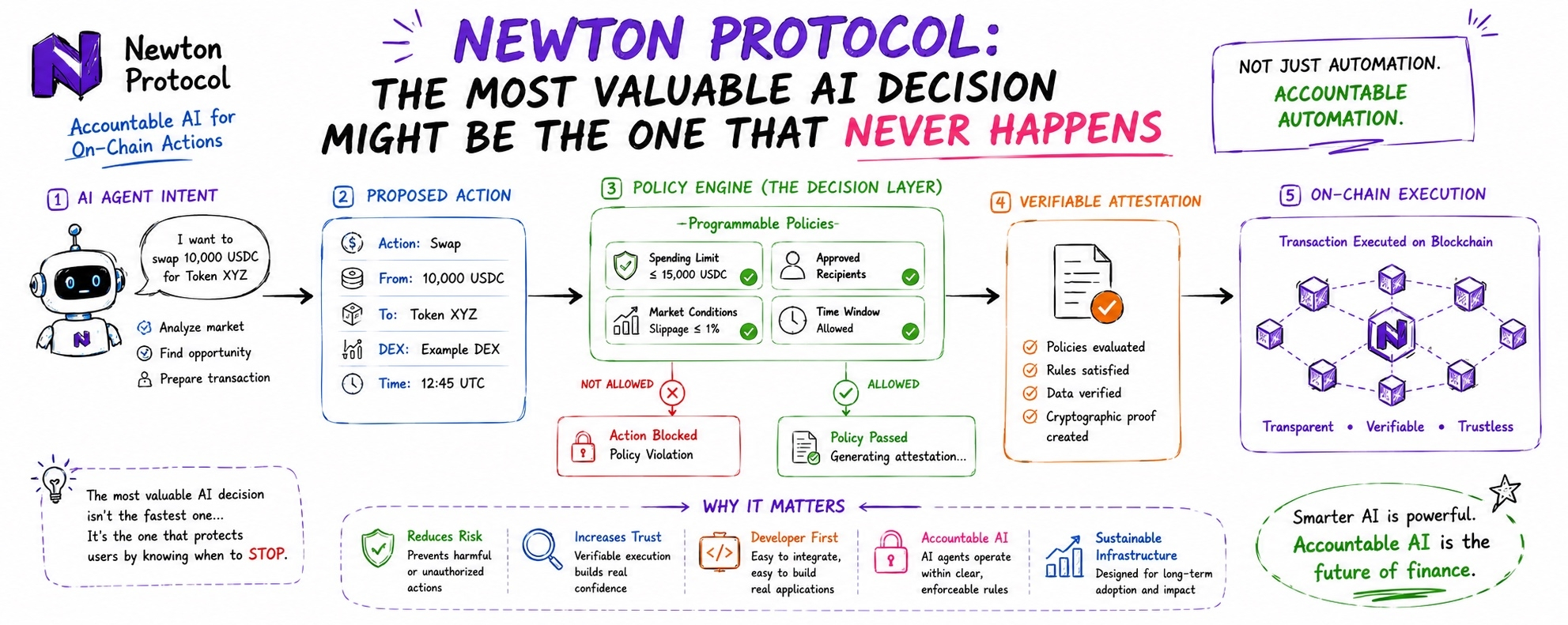

Saya sempat berpikir tentang AI secara berbeda minggu ini. Kebanyakan percakapan masih berputar pada apa yang akan diotomatisasi AI berikutnya—trading yang lebih cepat, portofolio yang lebih cerdas, analisis pasar yang lebih baik. Itu dulu juga sempat membuat saya terkesan. Namun belakangan ini, saya mulai mengajukan pertanyaan yang berbeda: apa yang menghentikan sebuah AI untuk membuat keputusan yang salah?
Perubahan cara berpikir itulah yang membawa saya ke @NewtonProtocol .
Semakin banyak saya membaca tentang arsitekturnya, semakin saya menyadari Newton tidak sedang berusaha membangun narasi AI yang lain. Newton mencoba memecahkan sesuatu yang jauh lebih membumi, tetapi jauh lebih penting: membuat tindakan otonom dapat dipertanggungjawabkan sebelum tindakan tersebut mencapai blockchain.
Bayangkan sebuah agen AI yang mengelola dana treasury atau mengeksekusi transaksi perdagangan. Sebuah transaksi bisa saja secara teknis sah, tetapi tetap melanggar batas pengeluaran, kebijakan internal, atau kontrol risiko. Menurut saya, di sinilah otorisasi yang dapat diprogram menjadi lebih berharga daripada otomasi mentah.
Yang menarik perhatian saya adalah pendekatan Newton yang mengutamakan kebijakan. Alih-alih mengasumsikan bahwa setiap keputusan AI layak dieksekusi, para pengembang dapat menentukan aturan yang harus dipenuhi oleh tindakan sebelum bergerak ke on-chain. Pemeriksaan tersebut kemudian dapat didukung oleh attestation kriptografis, menggantikan kepercayaan buta dengan bukti yang dapat diverifikasi. Itu perbedaan yang berarti.
Saya juga berpikir ini mengubah cara kita menilai infrastruktur AI. Industri sering merayakan model yang bisa melakukan lebih banyak, tetapi adopsi jangka panjang mungkin bergantung pada sistem yang tahu kapan sebaiknya tidak bertindak. Terkadang transaksi paling aman adalah yang tidak pernah dieksekusi karena aturan yang telah ditetapkan mencegahnya.
Salah satu hal yang patut diperhatikan adalah ekosistem pengembang. Infrastruktur yang kuat hanya menjadi berharga ketika para pembangun menciptakan aplikasi yang bermanfaat di atasnya. Jika Newton’s Mainnet Beta menarik pengembang yang menyelesaikan masalah nyata dengan kebijakan yang dapat diprogram, nilai jaringan akan bertumbuh melalui kegunaan, bukan spekulasi. Itu merupakan jalan yang lebih sehat daripada bergantung pada siklus hype.
Tentu saja, tidak ada yang menjamin keberhasilan. Kripto tidak kekurangan proyek yang secara teknis mengesankan tetapi kesulitan mendapatkan adopsi. Newton masih membutuhkan pembangun yang aktif, kasus penggunaan yang praktis, dan eksekusi yang konsisten. Itulah sinyal yang akan saya pantau jauh lebih dekat daripada kampanye pemasaran atau roadmap yang ambisius.
Bagi saya, bagian paling menarik dari Newton Protocol bukanlah bahwa protokol ini membantu AI membuat keputusan. Melainkan bahwa protokol ini mempertanyakan apakah keputusan-keputusan tersebut seharusnya terjadi sama sekali—lalu menyediakan cara untuk memverifikasi jawabannya. Ketika AI semakin terlibat dalam mengelola aset digital, saya percaya pertanyaan itu bisa menjadi sama pentingnya dengan kecerdasan di balik model itu sendiri.