
I’m going to describe Vanar Chain in a way that feels like a real conversation, because the real reason a project like this matters has less to do with technical bragging and more to do with how people actually behave online when they’re playing a game, supporting a creator, or interacting with a brand they genuinely love. Most people don’t wake up thinking about blockchains, they wake up thinking about fun, about progress, about rewards that feel fair, about communities where they belong, and about experiences that don’t make them feel stupid or confused. That’s the emotional truth sitting underneath Vanar’s direction, because when you build for gaming and brands, you’re building for audiences who will not tolerate friction for long, and if it becomes too complex, they leave without even arguing. We’re seeing the entire Web3 industry slowly accept that mass adoption does not happen by forcing users to learn crypto culture, it happens by making the technology disappear into the background so the experience stays in the foreground, and Vanar’s whole identity points toward that goal, because it’s trying to be the kind of chain where the user doesn’t feel like they are “using a chain,” they feel like they are playing, collecting, earning, and participating.
The first important choice Vanar makes is the decision to stay close to the Ethereum developer world through EVM compatibility, and I know that sounds like a developer-only detail, but it actually affects everybody because it determines how quickly real products can be built and how safely those products can be maintained. When a chain is EVM-compatible, it means builders can use familiar smart contract languages, familiar tooling, and familiar security habits, so they don’t waste months relearning basics, and they don’t get trapped inside a weird ecosystem with no support. They’re able to move faster, test more, audit more easily, and ship experiences that are stable enough for real players and real customers, and this matters because games and brand experiences are not patient; they need to launch, improve, fix mistakes, and scale without breaking every time they update. If it becomes easy for developers to build, we’re seeing an immediate ripple effect where more apps appear, more experimentation happens, and the ecosystem starts feeling alive instead of theoretical.
Now let’s walk through how Vanar works step by step in plain human language, because once you understand the flow, you stop thinking of blockchain as magic and start seeing it as a structured system that either earns trust or loses it. A player or user does something inside a game or app, maybe they earn an item, maybe they buy a digital collectible, maybe they upgrade something, maybe they trade a reward with another user, and that action creates a transaction request in the background. That transaction is like a signed message saying, “I want this action to happen under these rules,” and it gets sent to the network where validator nodes receive it, check it, and decide whether it follows the rules of the chain and the rules of the smart contract involved. If it’s valid, the transaction is executed in the EVM environment where smart contract logic runs in a predictable way, and once execution completes, the result gets recorded into a block, and that block becomes part of the chain’s permanent history. This is the heartbeat of the system: request, verification, execution, recording, and final confirmation, and when it works well, it feels smooth like a normal app, but when it works badly, it feels like lag, confusion, and fear, which is why infrastructure choices matter so much for gaming and mainstream audiences.
A big part of the Vanar conversation is consensus, because consensus is basically the way a network decides what is true, what gets included, and who is trusted to produce blocks. Vanar uses a model where block production is handled by a set of validators under a Proof of Authority style approach, and it describes a reputation-driven path for validator participation as it expands. The human reason projects start with an authority-based model is usually performance and stability, because a controlled validator set can coordinate faster and keep block production consistent, and that consistency is extremely valuable when you want consumer experiences to feel reliable. But the human worry that comes with that is also real, because people ask whether it is open enough, whether it can resist pressure, whether it can evolve into something broader, and whether the validator story is more than a plan. This is where the reputation layer becomes important, because it is supposed to guide how validators are added based on credibility and reliability, so the network can gradually become more diverse without losing the stability that games and brands require. If they prove this over time with real validator growth and transparent rules, trust becomes easier, but if it stays vague, skepticism becomes a weight the ecosystem has to carry.
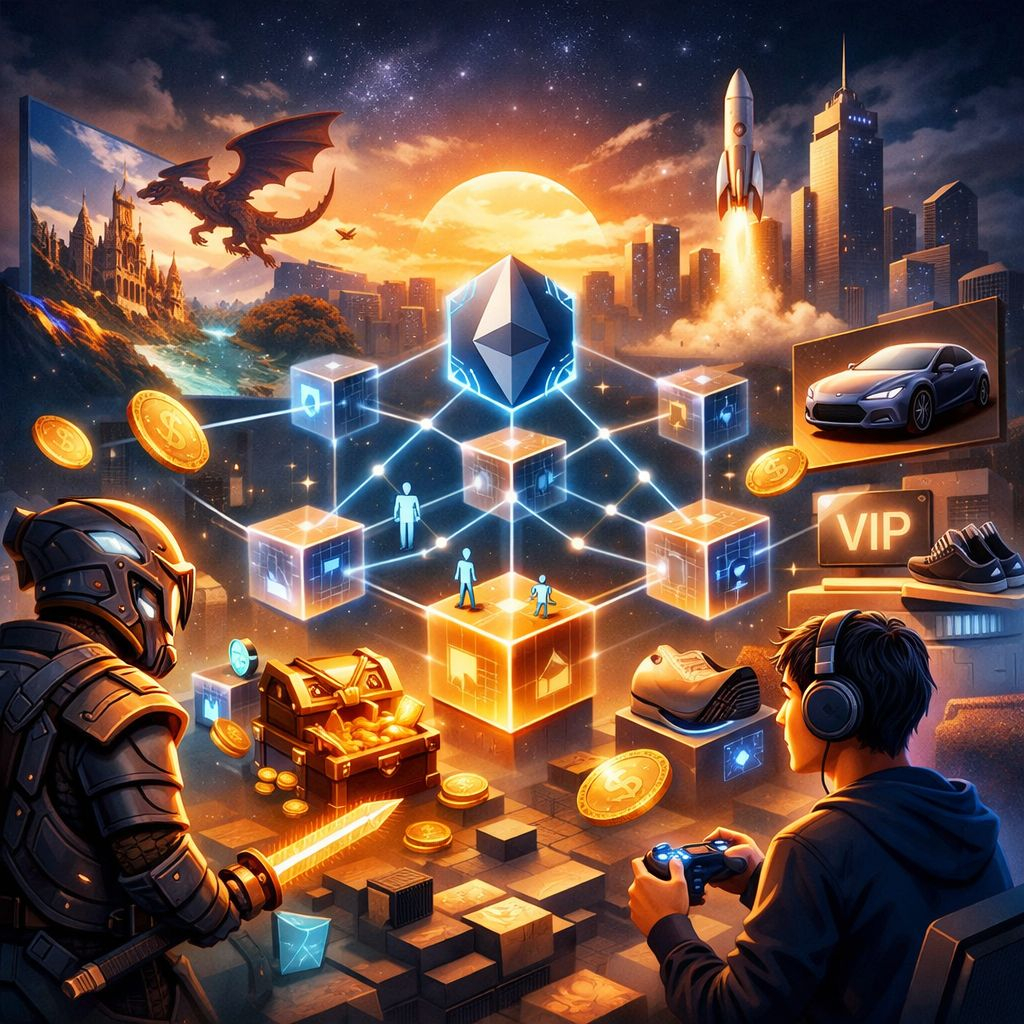
So why is gaming such a central part of this story, and why do brands fit into the same narrative. Gaming makes sense because it already teaches people to value digital items, not only because of money, but because of effort, identity, and achievement. When someone earns something rare through time and skill, they feel a personal connection to it, and they want it to last, and they want the story behind it to stay attached to their account and their identity. Brands fit because brands are no longer satisfied with short campaigns that vanish; they want loyalty systems that feel meaningful, they want communities that feel like membership, and they want digital products that can become part of a person’s identity instead of being a temporary link in a feed. Web3 can serve both worlds when it is done properly, because ownership can become provable, transfers can be fair and transparent, membership can be verified, and limited drops can remain collectible without relying on a single company’s database. If it becomes normal for a gamer to truly own what they earn and for a fan to truly keep what they collect, we’re seeing the exact moment when blockchain stops being a concept and starts being an invisible layer of everyday life.
When builders create a real on-chain economy on Vanar, the chain becomes the truth layer and the app becomes the feeling layer, and both layers must work together or the whole thing collapses. Developers write smart contracts that define what an item is, how it is minted, how it is owned, how it is traded, and what rules prevent abuse, duplication, or hidden manipulation. The game client or brand app then interacts with those contracts to create real actions, and the best designs are the ones where the user feels like they are doing normal app actions while the chain quietly handles verification and ownership in the background. We’re seeing a strong push across the industry toward hiding confusing wallet steps and making onboarding feel like a normal login, because mainstream users do not want to learn crypto behavior before they’re allowed to enjoy the product. That’s why the “simple, trusted experience” promise matters so much, because simplicity is not just design, it’s survival, and trust is not just marketing, it’s the result of consistent behavior over time.
If you want to judge whether Vanar is actually moving toward its goal, you have to watch the right metrics, and most people watch the wrong ones first. Token charts can tell you sentiment, but they don’t tell you whether a chain is becoming a reliable home for games and brands, and that is a different standard. The network metrics that matter include confirmation time consistency, average fee stability, failure rates during high traffic, uptime, and the way performance holds up when real users arrive at the same moment for an event, a drop, or a tournament. The ecosystem metrics that matter include how many real products are live, how many daily active users interact with contracts through real apps, how well new users convert from install to first meaningful action, and most importantly how many of them return after a week and after a month, because retention is where gaming lives or dies. On the trust side, the metrics include how the validator set evolves, how many independent validators participate, how transparent onboarding rules are, and whether governance feels stable enough for long-term builders to bet their product on it. If those signals move steadily in the right direction, we’re seeing real growth, not just noise.
But a human explanation must also admit the risks, because this space can be beautiful and brutal at the same time. The first risk is centralization perception and governance trust, because starting with a controlled validator set means the project must prove, not just claim, that it can broaden participation in a fair way. The second risk is security, because gaming economies and brand ecosystems can attract attackers when value is involved, and complex contracts, marketplaces, and integrations increase the surface area for exploits, and one high-profile incident can damage belief across the entire ecosystem. The third risk is competition, because the world is full of chains promising speed and low fees, and developers will follow users and reliable tooling, not slogans. The fourth risk is user experience, because mainstream audiences do not forgive complexity; if onboarding is confusing, if transactions feel slow, if fees feel unpredictable, or if support feels weak, they simply won’t come back. The fifth risk is reputation, because brands and major studios protect their public image fiercely, and they avoid environments that feel unstable, so the ecosystem needs maturity, clarity, and consistency even when the broader crypto market becomes chaotic.
If the future unfolds in the healthiest way, it will not look like one big moment, it will look like many small moments that quietly add up. More games and experiences will go live, performance will stay stable even when traffic spikes, the validator story will become clearer and more diverse over time, and users will stop thinking about the chain because the chain stops interrupting them. We’re seeing a world where blockchain becomes like internet infrastructure, something you only notice when it fails, and the chains that win are the ones that behave predictably and support creators and developers without drama. If Vanar keeps focusing on what consumer products need, which is stability, simplicity, and a credible path toward stronger decentralization, then the ecosystem can grow into something that feels less like a risky experiment and more like a natural layer of modern digital life.
I’m not saying Vanar is guaranteed to dominate, because nothing in this space is guaranteed, but I do believe there is something powerful in aiming directly at how people actually live online, because gamers and mainstream communities don’t want complicated systems, they want feelings: excitement, pride, fairness, and belonging. If Vanar keeps turning technical choices into smooth user moments, and if they keep building trust through steady performance and transparent growth, then it can help shape a future where digital ownership feels simple, safe, and human, and where creativity and community are rewarded in ways that last.
